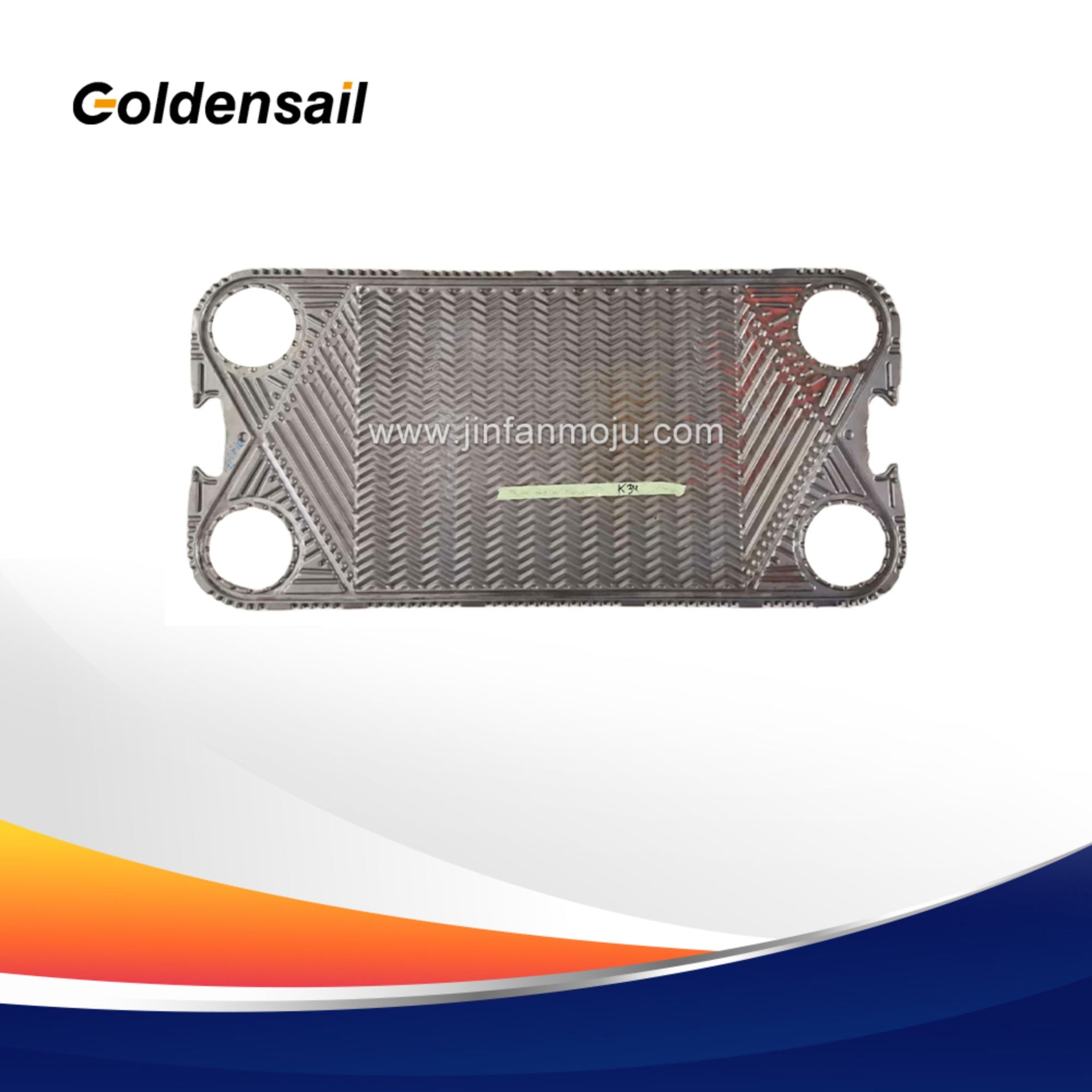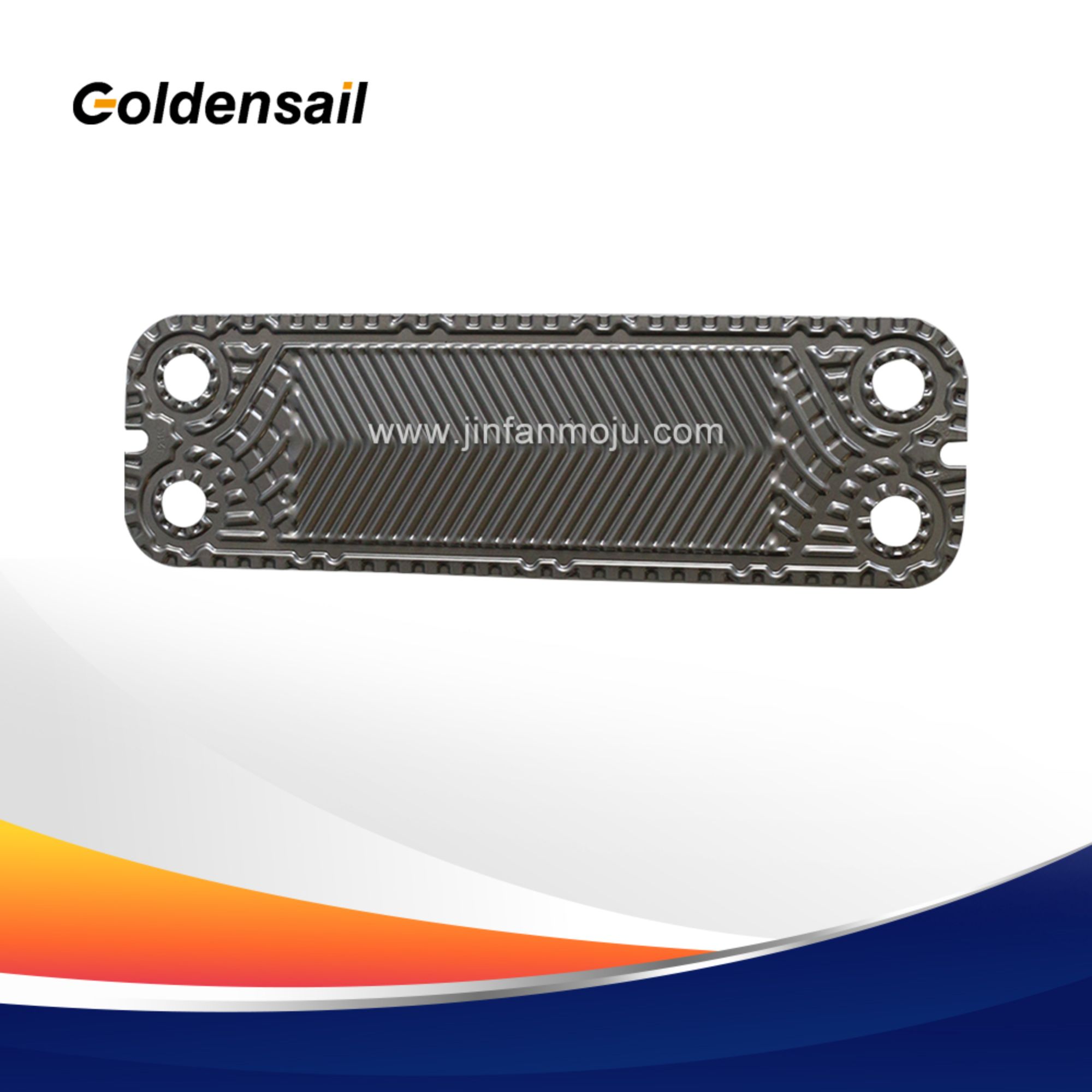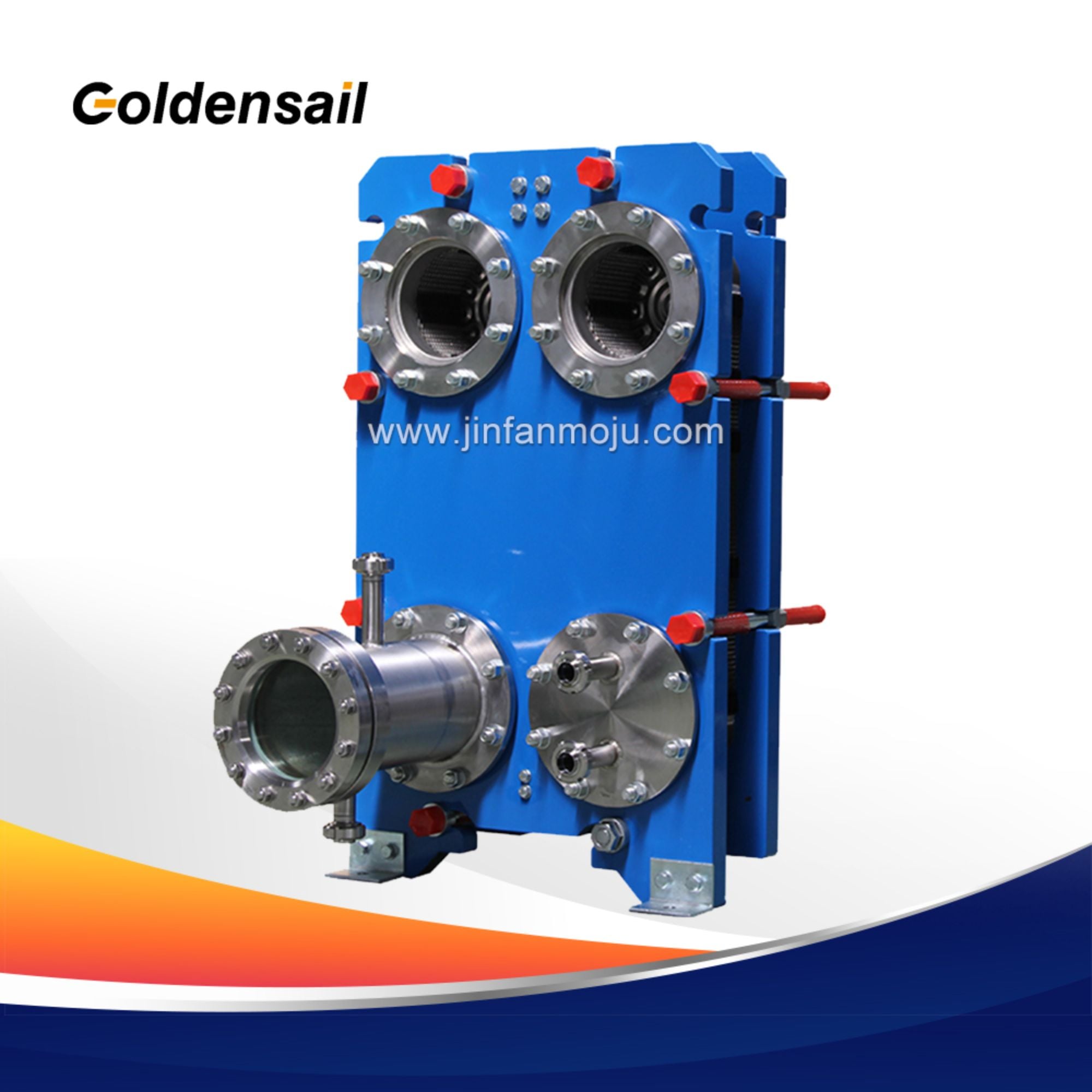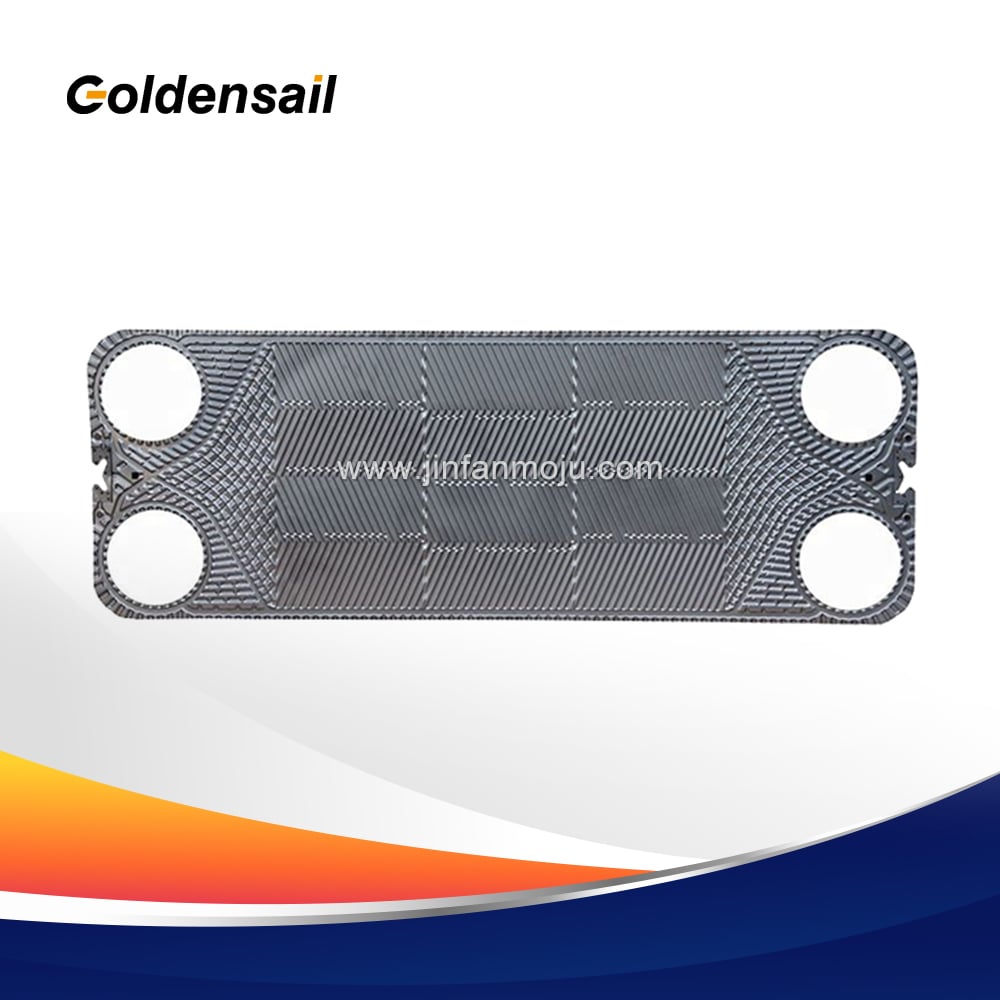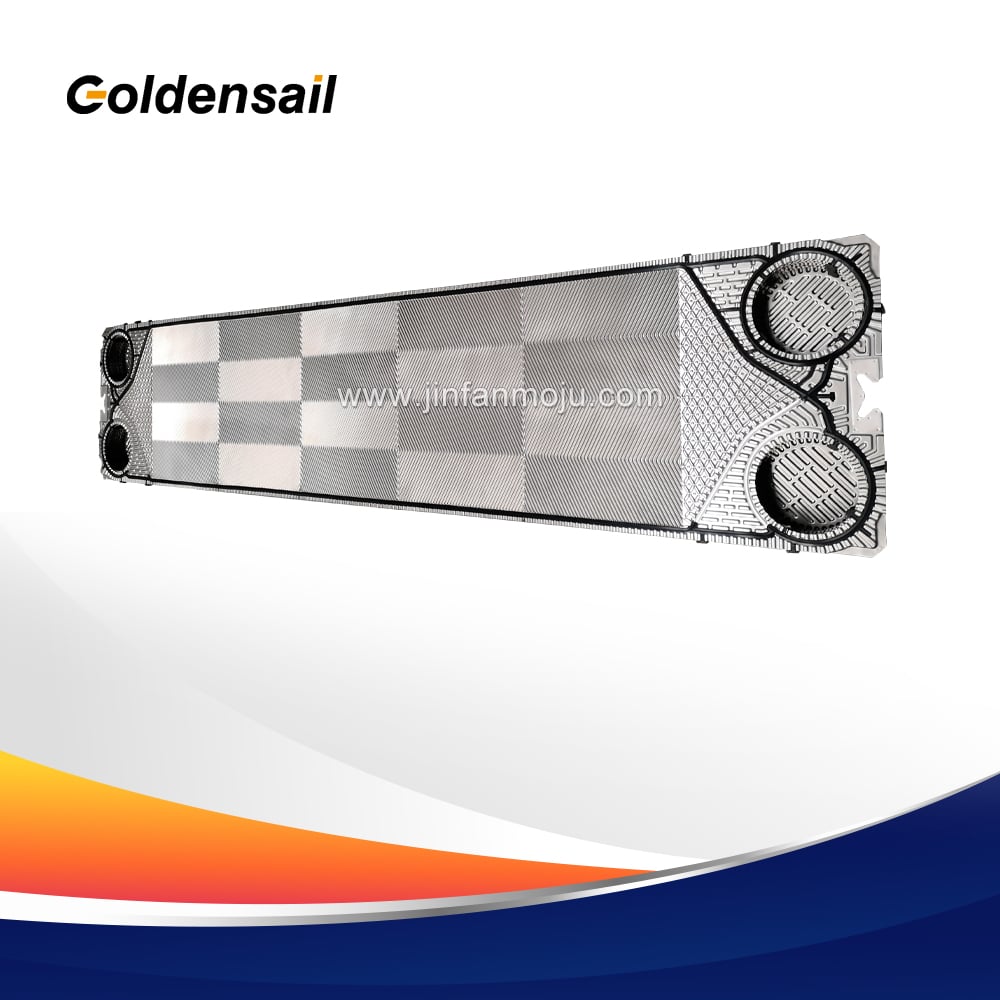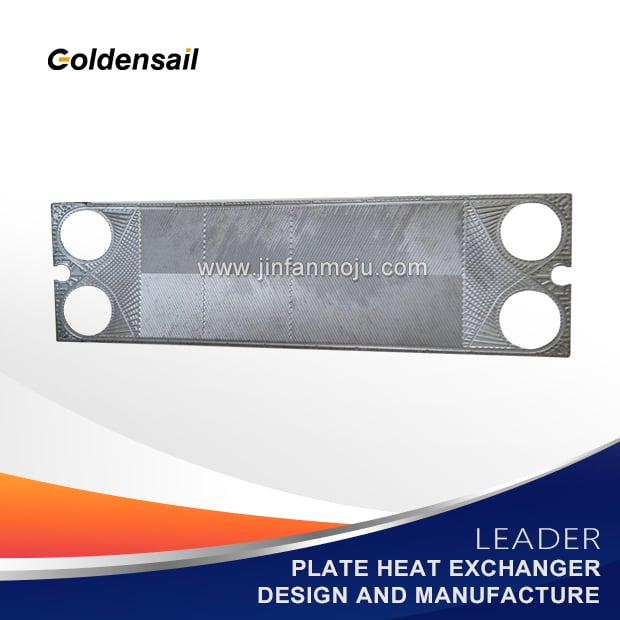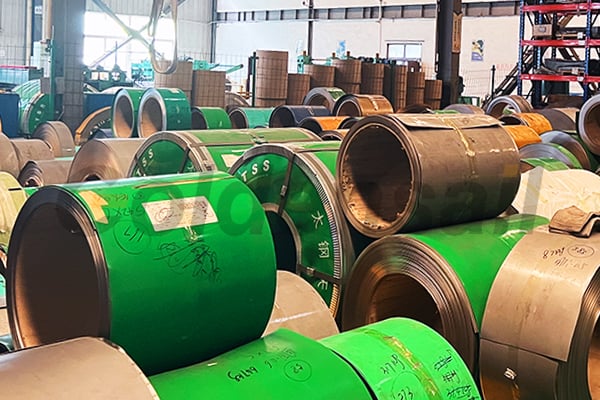
The material of the Heat Exchanger Plates is a critical factor influencing both the performance and service life of a Plate Heat Exchanger. Corrosion resistance determines whether the equipment can remain free from pitting and stress corrosion cracking when exposed to media such as those containing chloride ions; for instance, while 316L stainless steel faces a significantly higher risk of failure in high-temperature, high-chloride environments, titanium remains virtually immune. Mechanical strength dictates pressure-bearing capacity and plate thickness—higher-strength materials allow for thinner designs, which in turn reduce thermal resistance. Heat transfer performance is governed by thermal conductivity; although stainless steel outperforms titanium in this regard, the use of thinner titanium plates can effectively compensate for this difference. The service life of a Plate Heat Exchanger depends directly on its corrosion allowance and its ability to maintain structural integrity over time—for example, titanium can operate reliably in seawater for over 20 years. Consequently, material selection cannot be based solely on the type of fluid; it requires a comprehensive evaluation that accounts for temperature, concentration, chloride ion content, and specific operating conditions.
Selecting PHE Plate material involves balancing corrosion resistance, mechanical strength, thermal conductivity, processability, and cost. From general-purpose 304/316L stainless steel to titanium materials specializing in chloride ion corrosion, to nickel-based alloys for extreme working conditions, each material corresponds to specific application boundaries.
| Plate Material | Key Characteristics | Typical Applications | Corrosion Limits |
|---|---|---|---|
| AISI 304 | General-purpose 18/8 austenitic grade: lowest cost and easy to press, suited to clean low-chloride water. |
• Clean and potable water |
× Pitting above roughly 200 ppm chloride |
| AISI 316L | Molybdenum lifts pitting resistance, extending 316L into chloride-bearing and mildly acidic process media. |
• General industrial and cooling water |
× Molybdenum does not raise the chloride stress-cracking threshold |
| Titanium | Near-immune to neutral chlorides and seawater, the default for brine, marine and desalination cooling. |
• Seawater and brackish water cooling |
× Not for dry chlorine gas, hydrofluoric acid, fuming nitric acid or anhydrous methanol |
| Nickel-based alloys (Hastelloy) | Nickel-molybdenum-chromium alloys for strong, mixed and oxidising acids where stainless and titanium fail. |
• Hydrochloric and concentrated sulphuric acid |
× Highest cost and longest lead time |
| 254 SMO and other high-alloy steels | 6% molybdenum super-austenitic steel with roughly double the pitting resistance of 316L, below titanium. |
• High-chloride cooling water and closed loops |
× Not for reducing acids such as hydrochloric acid |
| Selection Priority | Clean water with low chloride | Chloride-bearing industrial water and dilute acids | Seawater, brine, strong acids or high-chloride water |
Note: Material suitability cannot be settled from the fluid name alone. Review chloride concentration, operating temperature, pH, dissolved oxygen, and flow velocity against the manufacturer's corrosion data before fixing a grade. Contact us
The influence of PHE Plate material on the service life of a Plate type Heat Exchanger is fundamentally determined by how well the material enables the equipment to resist primary failure mechanisms under specific operating conditions. Extending the service life of such a heat exchanger hinges on identifying the dominant failure mechanism for a given set of operating conditions and selecting a material that provides an adequate safety margin against that specific mechanism.
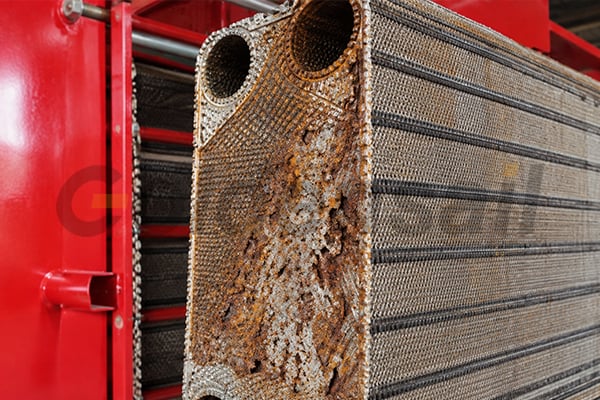
Corrosion is the most frequent cause of premature PHE Plate failure; the corrosion resistance rating of a chosen material directly dictates whether the equipment can function reliably within a specific medium. A classic example involves 316L stainless steel. In one specific application—featuring steam at 200–300°C on the hot side and a sodium hydroxide (NaOH) solution containing chloride ions (Cl⁻) on the cold side—a heat exchanger designed for a 30-year service life began to leak after only about six months of operation. The failure was caused by stress corrosion cracking (SCC): residual tensile stresses—introduced during the cold-stamping process of the plates—acted in combination with chloride ions in the medium to initiate cracks at the peaks and troughs of the corrugations, a process further accelerated by the high-temperature environment. Among the various forms of corrosion-related failure in austenitic stainless steels, stress corrosion cracking accounts for approximately 50% of cases, making it the most critical and dangerous failure mode.
When the operating temperature exceeds a certain threshold, creep—the slow, plastic deformation of a material under high temperature and constant stress—becomes the primary factor limiting its service life. At this point, the choice of material directly dictates the upper temperature limit at which the equipment can safely operate. For common austenitic stainless steels (such as 304 or 316L), the creep rate accelerates significantly above 350°C, becoming the critical bottleneck for service life. To overcome this limitation, it is necessary to upgrade to nickel-based alloys (such as Inconel 600/625 or Hastelloy). Thanks to their superior high-temperature strength and creep resistance, nickel-based alloys can be utilized in extreme environments reaching temperatures of 600°C or even above 900°C.
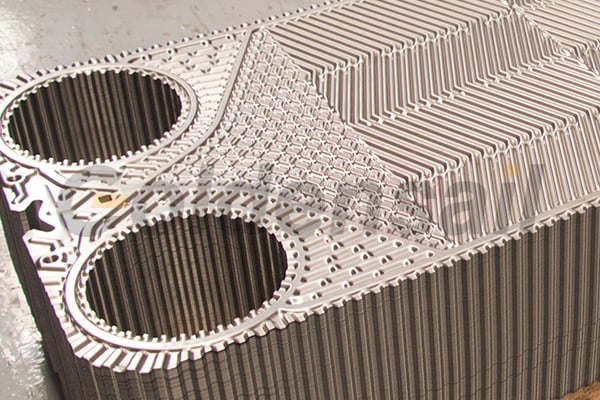
| Plate Material | Pitting Resistance | Chloride SCC Threshold (CLSCC) | Practical Position and Key Limit |
|---|---|---|---|
| AISI 304 | A very narrow pitting window; breakdown begins at very low chloride levels | Approx. 20 °C | Only for low-temperature duties with very low chloride; no margin left for a process upset |
| AISI 316L | Moderate, and strongly dependent on temperature | Approx. 50 °C | The entry-level choice for mildly chlorinated media, provided temperature and residual stress are strictly controlled |
| 2205 Duplex | A marked step up in pitting resistance | Near-immune | The cost-performance turning point for medium-chloride duties; its binding limit is the lower crevice-corrosion temperature boundary |
| 904L / 254 SMO | High; at 60 °C it holds chloride levels in the thousands up to the 15,000 ppm range | High threshold | Fills the gap between stainless steel and titanium for high-chloride duties |
| Titanium | Effectively immune | Effectively immune | The benchmark for seawater and high-chloride brine; its only limitation is a crevice-corrosion tendency in hot concentrated chlorides, which palladium-stabilised grades extend further |
Note: Threshold values are indicative and assume a specific chloride level, temperature, pH, dissolved oxygen content and stress state. Actual limits shift with water chemistry and with plate geometry, so they must be confirmed against the Plate Heat Exchanger manufacturer's corrosion data and the measured analysis of the duty before a grade is fixed.
Even when corrosion is effectively controlled, the alternating pressures and thermal cycles experienced by Heat Exchanger Plates during long-term operation can still lead to fatigue damage; the material's strength determines its capacity to resist this cumulative degradation. Localized high-stress zones—such as the peaks and valleys of the plate corrugations or the contact points—serve as primary sites for the initiation of fatigue cracks. The failure process involves the nucleation and propagation of micro-cracks until they penetrate the entire thickness of the plate; notably, this occurs without any visible signs of plastic deformation, making such failures insidious. The fatigue strength of the material directly influences its service life: duplex stainless steels or Hastelloy alloys, for instance, can exhibit 20% to 40% higher fatigue strength than standard 304 stainless steel, allowing them to endure a greater number of stress cycles. Furthermore, in operating conditions characterized by significant pressure fluctuations, increasing the plate thickness (e.g., by 0.1–0.2 mm) can enhance fatigue resistance—though this necessitates a careful trade-off between structural strength and heat transfer efficiency.
The process fluid determines the minimum corrosion resistance threshold that the material must meet, with chloride ion concentration serving as the most significant differentiating variable. The interplay between chloride ion concentration and temperature establishes the primary critical boundary. While 304 stainless steel is suitable for environments with low chloride content and temperatures not exceeding 120°C, it becomes susceptible to pitting corrosion when chloride levels are elevated or in the presence of weak acids or bases. Although 316L offers superior pitting resistance due to its molybdenum content, its tolerance for chloride ions is also highly temperature-dependent; in environments with high temperatures (>60°C) and high chloride concentrations, 316L plates are highly prone to stress corrosion cracking. Consequently, a selection of 316L that is deemed "acceptable" for use in chloride-containing water at ambient temperature may fall outside the safe operating envelope once the temperature exceeds the 60°C threshold.
Impurities and the specific nature of the process fluid can introduce failure mechanisms beyond those caused by chloride ions. Solid particles within the fluid can induce erosion-wear, damaging the passive film and acting synergistically with corrosion to accelerate degradation. Furthermore, substances such as cleaning agents used in the food industry (e.g., NaOH, nitric acid) or chemicals encountered in industrial processes (e.g., sulfuric acid, hydrochloric acid) each require specific corrosion-resistant material systems. Even if chloride ion concentrations remain within a "safe range," these impurities or co-existing substances can independently shorten the service life of the material.
Rising temperatures not only accelerate general corrosion but, more critically, can shift the failure mode from relatively visible localized thinning to unpredictable stress corrosion cracking. The 60°C threshold for 316L in chloride-containing environments is a classic example of such a transition in failure modes. When selecting materials, one must not rely solely on "compatibility" at ambient temperature; it is essential to verify that the chosen material remains within the safe operating zone at the maximum expected operating temperature. Additionally, fluctuations in pressure and temperature impose cumulative mechanical damage over time. Frequent start-stop cycles, pressure surges, or rapid temperature fluctuations can induce fatigue micro-cracks in the high-stress regions of Heat Exchanger Plates—such as the peaks and valleys of their corrugations—eventually leading to through-wall leaks. The fatigue strength of a material determines how many such cycles it can withstand. Duplex stainless steels or nickel-based alloys, for instance, offer 20% to 40% higher fatigue strength than standard 304 stainless steel, providing a greater service-life margin under fluctuating operating conditions. If the operating environment is subject to severe fluctuations, relying on 304 stainless steel may not be safe, even if the process medium itself is only "mildly" corrosive.
The material of the heat exchanger plates typically accounts for 40% to 50% of the total equipment cost. Titanium plates can cost three to four times as much as 304 stainless steel, while 254SMO or nickel-based alloys can be even more expensive—sometimes several times the price of 304. Based solely on the unit purchase price, stainless steel might appear to be the "more economical" choice. However, an incorrect material selection merely shifts costs from the procurement phase to the operational phase; the cost of an unplanned shutdown is typically ten times that of a planned one. It is essential to analyze the total lifecycle cost rather than focusing exclusively on the initial quote. In seawater applications, for example, titanium plate heat exchangers can last over 15 years, whereas standard stainless steel might only last 3 to 5 years. The costs associated with frequent replacements, production losses from downtime, and ongoing maintenance often offset—or even exceed—the initial price premium for titanium within just a few years. Conversely, using titanium in standard freshwater or HVAC applications would mean paying an unnecessary premium for a non-existent corrosion risk—another form of inefficient resource allocation.
The key variables in decision-making are the "certainty" of corrosion risk and the "unacceptability" of downtime. While gasketed (demountable) plate heat exchangers allow for the replacement of individual plates, the actual risk of corrosion is amplified if the equipment design or installation location makes cleaning and inspection difficult; an undetected, early-stage pitting corrosion could develop into a through-wall leak between scheduled maintenance intervals. In such scenarios, selecting a material with a higher corrosion resistance rating essentially serves to compensate for limited maintenance accessibility through an increased material margin.
The plate pattern, plate thickness, and forming process of the original equipment constitute the ultimate rigid constraints. It is essential to verify the original equipment model, plate specifications (external dimensions, corrugation angle and depth, plate thickness and extent of thinning, port locations, suspension and positioning mechanisms, and gasket groove geometry), as well as the specific material grade and its metallurgical condition. A similar external appearance does not imply interchangeability; differences in corrugation parameters or plate thickness can alter flow channels, pressure-bearing capacity, clamping dimensions, and heat transfer performance. Furthermore, a mismatch in material grade can invalidate any prior analysis regarding corrosion resistance and structural strength.
Additionally, one must adhere to the manufacturer’s requirements, including the specified plate material, compatible gaskets, required clamping torque, permissible material upgrade options, and warranty terms. If, for instance, stainless steel plates are to be replaced with titanium or a higher-grade alloy, it is necessary to confirm that the original plate pattern can be successfully formed using the new material, that the frame’s clamping capacity is sufficient, and that the gaskets are compatible with both the process medium and the new material. The correct approach is to verify these details using the equipment nameplate, technical drawings, and the manufacturer’s selection documentation—consulting the original manufacturer or a qualified technical specialist if necessary. A replacement material should never be selected based solely on a similar external appearance.
Not sure which material is right for your application?
Contact JINFAN for professional support in selecting compatible replacement Heat Exchanger Plates based on your process media, operating temperature, chloride concentration, and original equipment specifications. We help you identify the right PHE Plate material and model to ensure reliable performance, reduce premature corrosion, and minimize unnecessary replacement costs. Contact us today to discuss your requirements and find the right replacement plates for your plate heat exchanger.
Get in touchThere is no single best grade. Plate material is selected by matching the alloy to the water chemistry, not to the application name. Chloride concentration, operating temperature, pH, dissolved oxygen and flow velocity decide which corrosion mechanism is active, and the grade is then chosen to sit outside that mechanism's range.
As a practical ladder: 304 for clean, low-chloride water and closed loops; 316L for general industrial cooling water, dilute acids and most food duties; 254 SMO where chloride is high but titanium is not justified; titanium for seawater, brine and desalination; nickel alloys such as Hastelloy where strong or mixed acids attack both stainless steel and titanium. Each step up widens the operating window but adds cost, and in some cases limits the available plate patterns and pressure rating. Overspecifying is a genuine cost: titanium in clean cooling water adds price without extending life, because the limiting factor there is gasket ageing and fouling, not corrosion.
In chloride-bearing duties, yes, and the reason is the failure mode rather than the strength of the metal. Titanium is effectively immune to chloride pitting and to chloride stress corrosion cracking, so the two mechanisms that perforate stainless plates are removed. What remains is fouling, erosion at high velocity, crevice attack in hot concentrated chlorides, and gasket life.
In clean, low-chloride water the advantage largely disappears. There the life of a stainless plate is set by water treatment, cleaning interval and gasket replacement, and a titanium plate reaches the same point at higher cost. Titanium pays back where chloride or seawater would otherwise cut stainless life to a few years.
No single figure applies, because the same grade can serve three years or twenty depending on the water. In controlled closed loops with low chloride, correct water treatment and regular cleaning, 316L plates commonly run around 10 to 15 years. In high-chloride, open or poorly treated systems, 304 plates can perforate within a few years.
The spread comes from the chemistry, not from the grade name. A plate is only 0.4 to 0.8 mm thick, so there is no corrosion allowance: a penetration rate of 0.1 mm per year is enough to open a leak in a few years, while a tenth of that rate is negligible. That is why the useful question is not how long stainless steel lasts, but what the chloride level, temperature and oxygen content are, and which mechanism will act first.
Generally no. Seawater carries roughly 19,000 ppm chloride together with high dissolved oxygen, which sits well beyond the pitting and crevice-corrosion range of 316L. Plates in direct seawater service typically fail at the gasket groove or beneath deposits, often within a few years, so 316L should not be specified for a seawater-wetted path.
Titanium is the standard choice for once-through seawater and brine. 254 SMO widens the window for brackish water or lower-temperature seawater, but it still carries crevice-corrosion risk and needs verification against the actual water analysis. Where seawater cools a closed secondary loop, 316L may remain acceptable on the clean side, provided the circuits are properly separated and the plate is not exposed to seawater if a leak develops.
Four mechanisms account for most plate failures. Chloride pitting begins as a small pit that penetrates the thin wall. Crevice corrosion develops under gaskets, deposits or scale where oxygen is depleted. Chloride stress corrosion cracking follows residual stress from pressing and clamping, usually above a temperature threshold that falls as chloride rises. Uniform and erosion-corrosion thin the plate in high-velocity, abrasive or acidic service.
Operating practice amplifies all four. High temperature accelerates every reaction; stagnant flow and fouling create crevices; chlorinated or hypochlorite-treated water raises the oxidising load; and galvanic contact at the ports or frame can drive attack on the less noble metal. Because there is no corrosion allowance, the first visible sign is often a leak rather than a measurable wall loss, so water chemistry records and cleaning history are the real early-warning system.
Usually yes, if the plate pattern and dimensions match. Titanium plates can be fitted into an existing frame in place of stainless plates, and this is a common remedy where the original plates failed by chloride attack.
Re-check the whole unit rather than only the plate. The pressure rating may change with plate material and thickness, the gasket must suit the new duty, and the thermal performance should be recalculated if the pattern or thickness differs. It is also worth confirming the original failure mechanism first: if the plates failed through fouling, erosion or gasket leakage rather than corrosion, titanium will not change the outcome and the investment is better spent elsewhere.
 EN
 AR
 FR
 DE
 PT
 RU