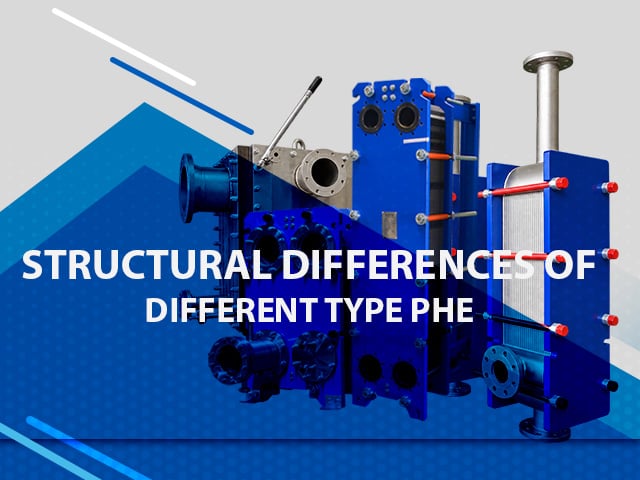
While all are plate heat exchangers, the gasketed, semi-welded, and fully welded types—despite their shared ability to achieve efficient heat transfer within a compact footprint—involve distinct trade-offs regarding plate connection methods, sealing structures, and maintainability, making them suitable for vastly different operating conditions. Gasketed units excel in flexibility, featuring gasket seals and easy disassembly; semi-welded units combine welding with gaskets to strike a balance between corrosion resistance and maintainability; and fully welded units prioritize superior temperature, pressure, and safety ratings through all-welded sealing, albeit at the cost of some ease of disassembly for maintenance. This article compares these types across four dimensions—construction, sealing, maintenance, and operating conditions—to help you select the most suitable option based on cleaning requirements, fluid characteristics, temperature and pressure parameters, and operating costs.
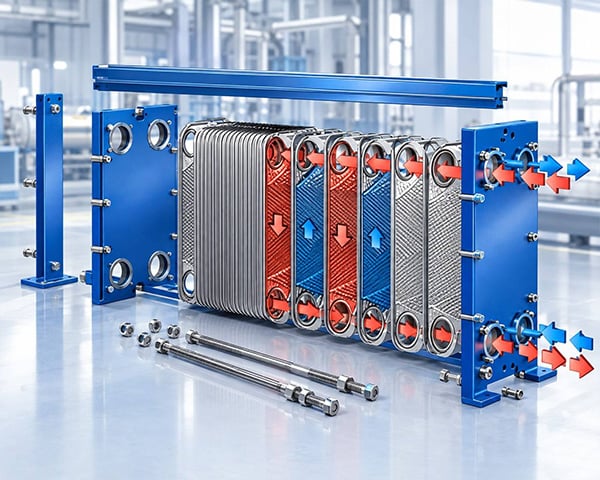
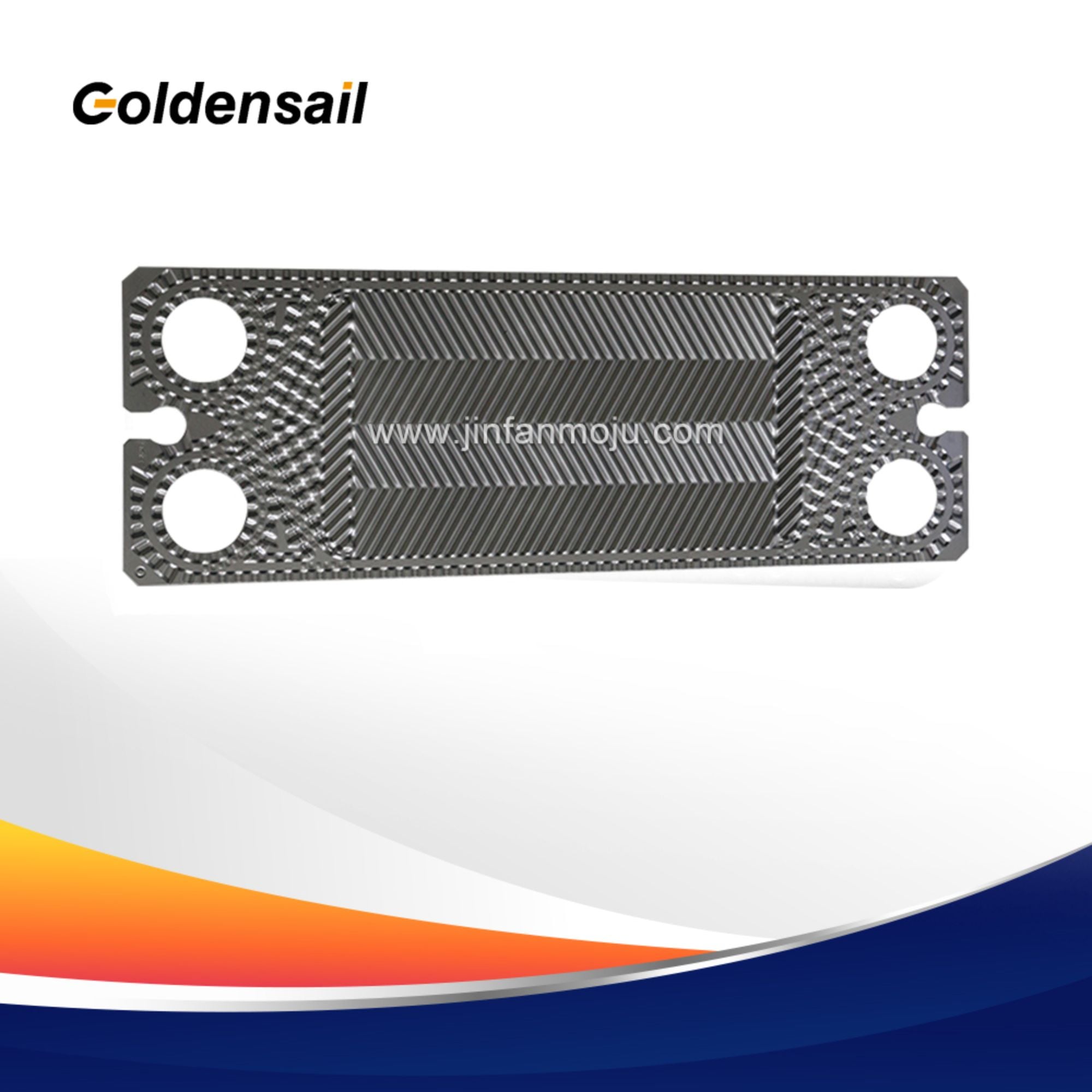
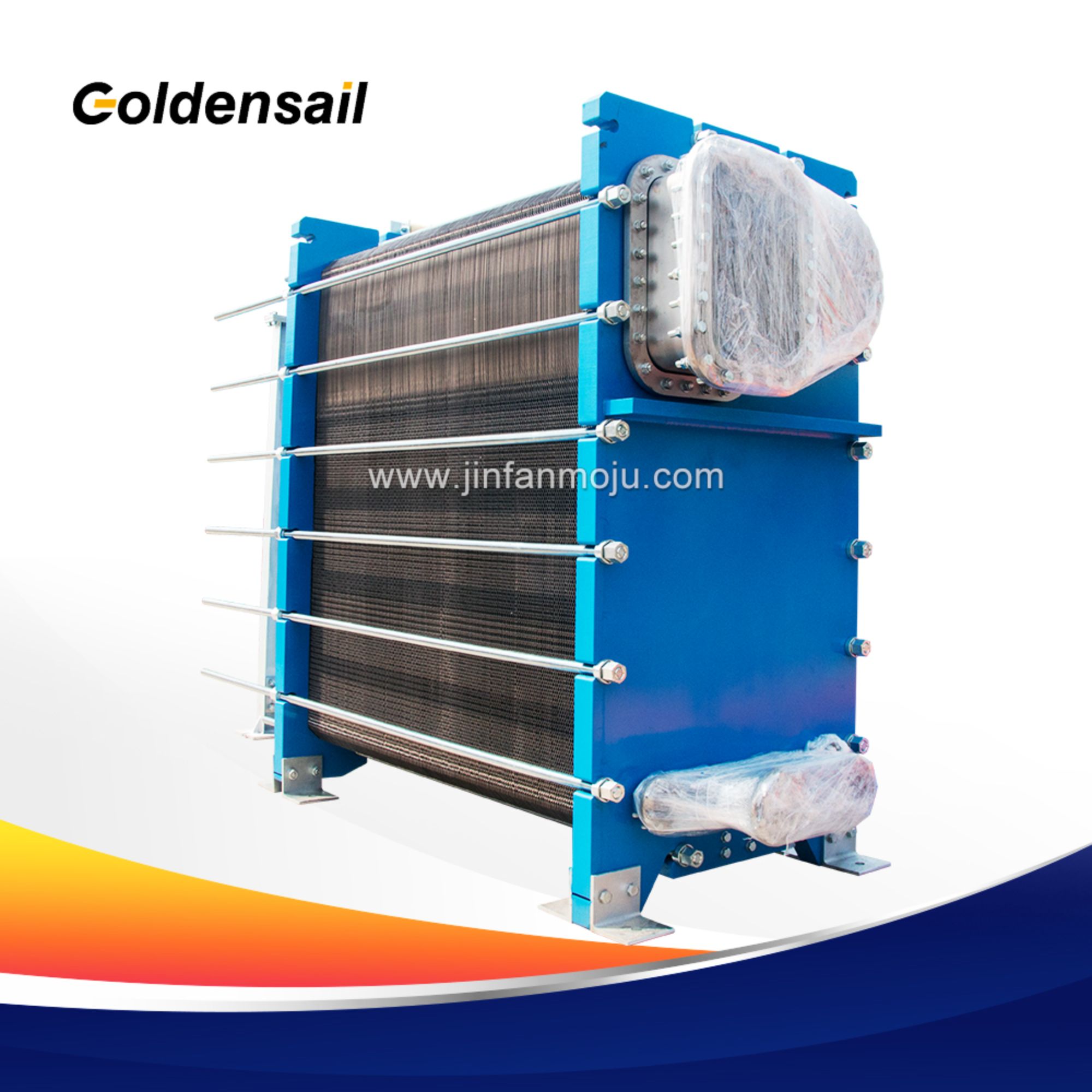
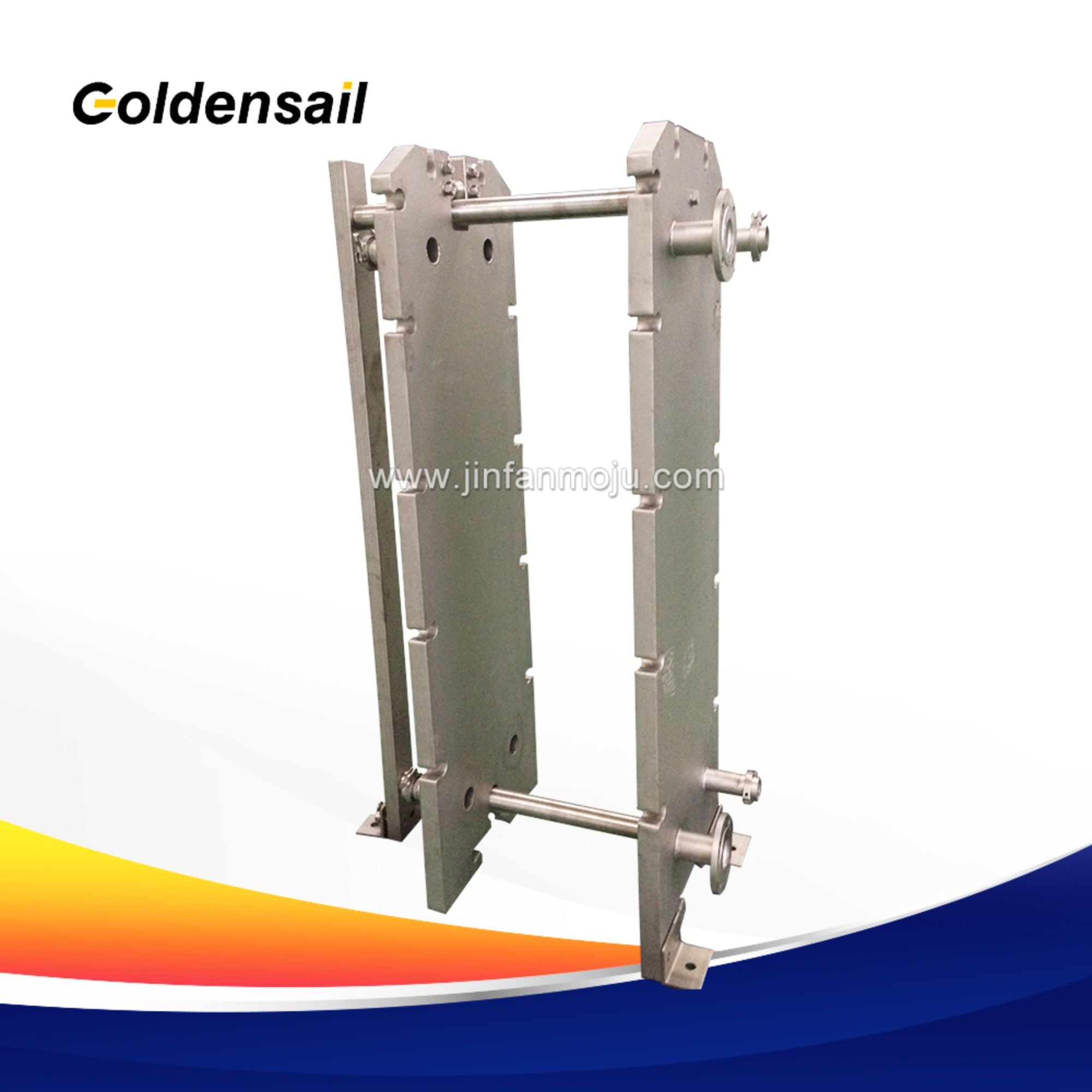
Gasketed Plate Heat Exchangers feature a frame-based design. Their core assembly consists of a stack of corrugated plates, a fixed pressure plate, a movable pressure plate, tightening bolts, and sealing gaskets. The PHE Plates are stacked within the frame and compressed as a unit by the tightening bolts, creating alternating flow channels for hot and cold fluids; Heat Exchanger Gaskets placed between the plates ensure that fluids flow within their respective channels without cross-leakage. Maintenance is straightforward: by loosening the tightening bolts and moving the movable pressure plate, the plate pack can be opened to clean, inspect, or replace plates and gaskets. Additionally, the unit's capacity can be adjusted by adding or removing phe plates to meet changing heat transfer demands. Consequently, this structure is particularly well-suited for systems requiring regular maintenance, cleaning, or future capacity expansion.
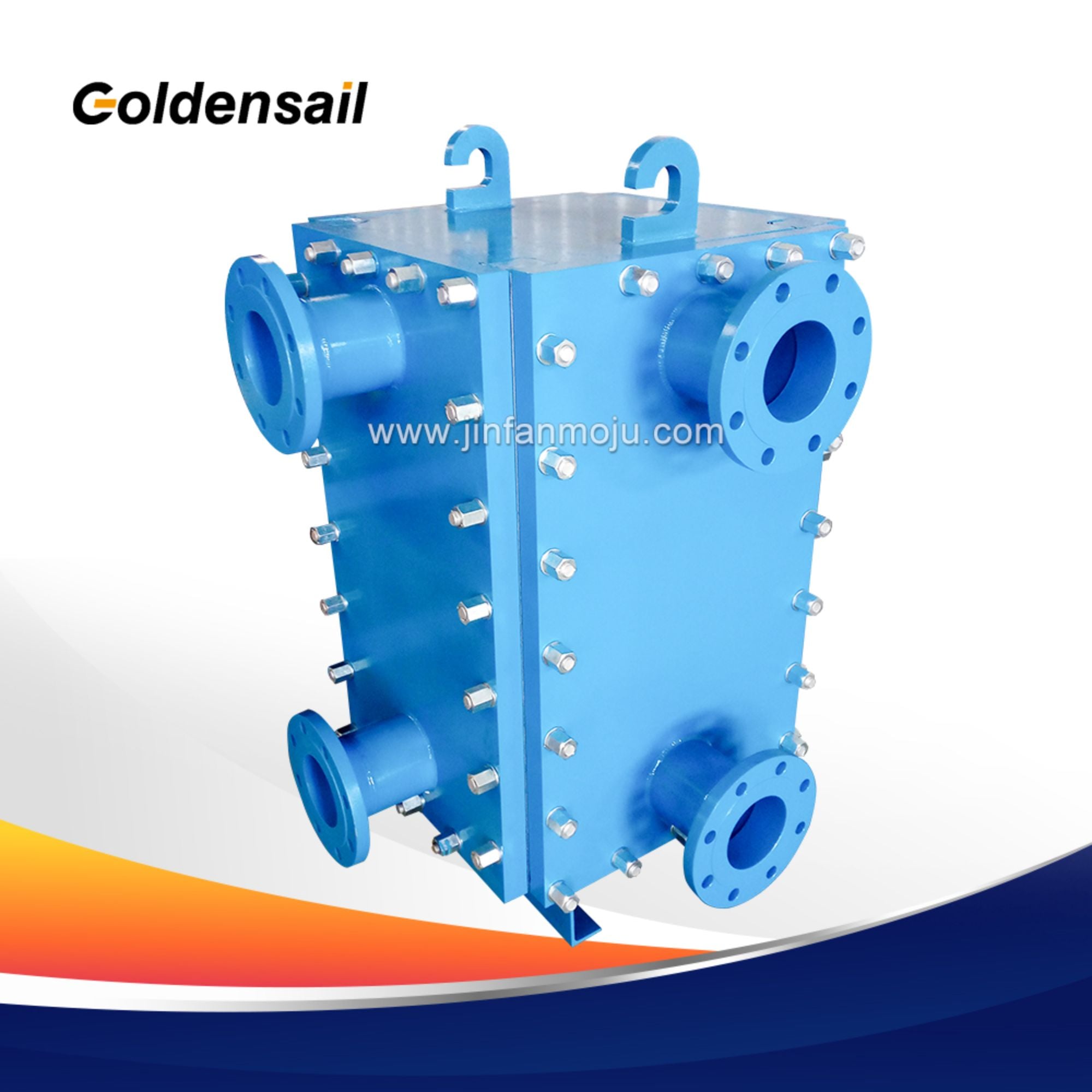
In Welded Plate Heat Exchangers, the heat transfer plates utilize a welded construction; the plates are joined by welding to form a sealed plate pack or channel structure, thereby reducing or eliminating the need for traditional gasket seals on the process fluid side. Depending on the manufacturer's design, these units can utilize various configurations—such as welded plate pairs, fully welded plate packs, or fully welded structures with outer shells—to accommodate different media and operating conditions. By replacing gasket seals with welded seals, this type of heat exchanger is particularly well-suited for applications with stringent requirements regarding sealing reliability, temperature, pressure, or media compatibility. However, it should be noted that a "fully welded" structure does not imply the total absence of gaskets at all interfaces, external connections, or auxiliary seals; the term typically refers to the sealing method for the process media side (i.e., the plates or plate pack), whereas flanges, nozzles, and certain external auxiliary connections may still employ gaskets depending on the design.
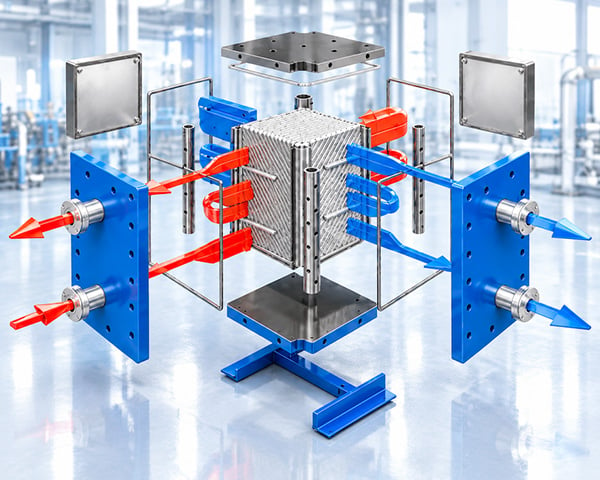
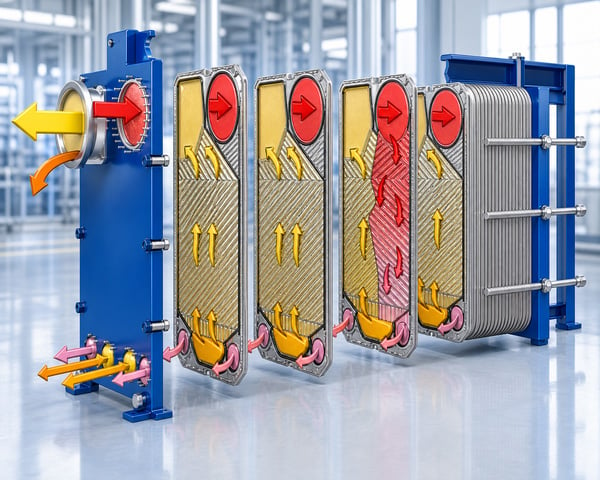
Structurally, the Semi-welded Plate Heat Exchanger falls between the gasketed and fully welded types: two PHE Plates are first welded together to form a plate pair (creating a welded channel), and multiple pairs are then stacked within a frame. Heat Exchanger Gaskets are used to seal the spaces between these pairs, thereby forming a gasket-sealed channel on the other side. This configuration allows corrosive, highly permeable, or gasket-incompatible media to flow through the welded channels—avoiding direct contact with gaskets—while relatively benign media flow through the gasket-sealed channels, facilitating disassembly, cleaning, and maintenance. It is frequently used in applications where the medium on one side is corrosive, highly permeable, or incompatible with standard gaskets, striking a balance between corrosion resistance, leak prevention, and maintainability. Note: Specific sealing structures and flow channel configurations depend on the manufacturer's design.
| Comparison Dimension | Gasketed | Semi-Welded | Fully Welded |
|---|---|---|---|
| Plate Connection | Mechanically clamped | Selected channels welded, gaskets normally between plate pairs | Main heat transfer channels welded |
| Process-Side Sealing | Gaskets | Combination of welding and gaskets | Mainly welded sealing |
| Disassembly | High | Moderate, design-dependent | Generally low |
| Maintenance | Fully openable: mechanical cleaning, gasket and plate replacement | Gasketed section serviceable; welded section is harder to repair | Usually needs specialist service |
| Gasket Reliance | High | Partial | Low on the process side |
| Media Suitability | Depends on gasket and plate material | Suited to specific corrosive or permeable fluid combinations | Depends on weld material, construction and design |
| Selection Priority | Maintenance, cleaning and capacity expansion | Specific media and sealing requirements | Demanding duties and process-side sealing |
Note: Temperature resistance, pressure resistance, and media compatibility cannot be determined solely by the structural designation; the specific model, materials, and manufacturer's design parameters must be consulted.
The advantages of Gasketed Plate Heat Exchangers include replaceable gaskets and ease of assembly/disassembly; sealing integrity can usually be restored after a failure simply by replacing the gaskets and re-tightening the unit. Sealing performance depends largely on the compatibility between the gasket material and the process medium. Selecting the appropriate gasket material (such as Viton, NBR, EPDM, FKM, PTFE, etc.) based on the medium, temperature, and concentration allows for reliable sealing across a wide range of operating conditions; however, incompatibility between the gasket and the medium can lead to issues such as swelling, hardening, cracking, or contamination of the medium.
A disadvantage is that gaskets are prone to aging and permanent compression set after prolonged exposure to temperature, pressure, and the process medium, resulting in reduced preload and diminished sealing capability. Consequently, maintenance intervals are heavily influenced by operating conditions, necessitating regular inspections and periodic replacement. Furthermore, gaskets represent a relatively vulnerable point in the sealing system, posing a risk of leakage—particularly under conditions involving extreme temperatures, pressure fluctuations, or frequent start-stop cycles. Therefore, regular checks for signs of leakage, gasket condition, and clamping bolt preload are required, with timely retightening or replacement performed as necessary.
The advantage of Fully Welded Plate Heat Exchangers lies in the reduction of gasketed sealing points on the process side, thereby lowering the risk of leakage caused by gasket aging, compression set, poor medium compatibility, or permeation. This design offers superior sealing reliability in applications involving high temperatures, high pressures, corrosive fluids, and highly permeable media. However, there are associated disadvantages and risks: the sealing performance of the welded channels depends heavily on weld quality. Defects such as lack of fusion, porosity, or cracking—or long-term exposure to fatigue, thermal cycling, pressure fluctuations, and corrosion—can still lead to leakage. Additionally, leak detection and repair are relatively difficult with fully welded structures. Therefore, a welded structure cannot be simply equated to absolute zero leakage; it merely replaces some gasketed seals with welded ones. Actual selection requires a comprehensive assessment of weld integrity, operational stresses, corrosion allowance, and potential leakage risks from gaskets on the other side or at external connections, with the specific sealing structure determined by the manufacturer's design.
Regarding the sealing performance of Semi-welded Plate Heat Exchangers, a key advantage is the use of welded channels for the process medium. This reduces or even eliminates reliance on traditional gaskets on that side, thereby avoiding issues such as swelling, aging, permeation, and leakage caused by direct contact between gaskets and media that are corrosive, highly permeable, subject to high temperatures and pressures, or require special material compatibility. Consequently, these exchangers offer superior sealing reliability and safety under demanding operating conditions.
However, the sealing system is not entirely "gasket-free"; depending on the specific design, gaskets may still be used for the flow channels on the other side, flange connections, or external auxiliary connections. Thus, risks associated with gasket material compatibility, aging, compression set, and leakage remain, necessitating appropriate material selection based on operating conditions and regular inspections. Furthermore, the sealing reliability of welded channels depends heavily on weld integrity; defects such as lack of fusion, porosity, or cracks—or exposure to prolonged thermal cycling, pressure fluctuations, and corrosion—can lead to weld leakage. Additionally, leak detection and repair for fully welded structures are relatively difficult. Therefore, the fully welded solution requires a comprehensive assessment of weld quality, non-destructive testing, pressure testing, and leakage risks on the gasketed side, with the specific sealing structure and flow channel configuration determined by the manufacturer's design.
When selecting equipment, the purchase price is merely the starting point. What truly drives the total cost of ownership is cleaning, maintenance, spare parts, downtime, and service life.
Gasketed (detachable) units allow for the removal of clamping bolts and movable pressure plates to fully disassemble the plate pack; this design is suitable for frequent cleaning (including mechanical methods) and future capacity expansion, while also facilitating routine inspections for gasket condition and plate fouling or corrosion. Semi-welded units consist of welded plate pairs, with sealing between pairs still provided by gaskets; the feasibility and extent of cleaning depend on the specific structure of the plate pairs and gaskets—the gasketed side is generally accessible for maintenance, whereas welded channels require targeted chemical cleaning or specialized treatment. Fully welded units replace gaskets with welded channels on the process side, meaning some internal areas cannot be directly disassembled like gasketed models; this necessitates pre-planned cleaning strategies (such as CIP chemical cleaning) and an assessment of available professional maintenance capabilities.
For gasketed units, the frequency of gasket replacement depends on the process medium, temperature, and startup/shutdown cycles; while spare parts are readily available and replacement is relatively easy, frequent gasket changes incur labor and downtime costs. Semi-welded units require managing both gaskets and welded plate pair spares, representing a moderate level of maintenance complexity. Fully welded units require fewer gaskets, but damage to welded channels is difficult to repair—often necessitating factory return or specialized welding—which can lead to longer downtime and higher demands regarding spare parts and personnel expertise.
Analysis should encompass procurement costs, energy consumption, maintenance expenses, downtime losses, and expected service life, rather than focusing solely on the initial quote. Gasketed units offer ease of maintenance but entail higher costs for gaskets and downtime; semi-welded units strike a balance between corrosion resistance and maintainability; fully welded units reduce gasket-related maintenance but face challenges regarding cleaning and welding repairs. No single structure is inherently the most economical; the true low-cost choice is the solution that best aligns with specific operating conditions, maintenance capabilities, and operational goals.
Gasketed Plate Heat Exchangers are typically the preferred choice when equipment requires periodic cleaning and inspection, potential future expansion of heat transfer area, and compatibility between the process media and available gasket materials. These units are assembled using a frame and clamping bolts, with sealing provided by gaskets; the assembly can be dismantled to clean, inspect, or replace plates, and capacity can be flexibly adjusted by adding or removing plates, making them suitable for projects requiring frequent mechanical cleaning or phased capacity expansion. This design offers ease of maintenance and is commonly used in applications such as HVAC, general industrial heat exchange, and food processing. However, they are unsuitable if the process media causes excessive gasket swelling, aging, or contamination, or if operating temperatures and pressures exceed gasket capabilities; in such cases, semi-welded or fully welded units should be considered.
All-welded Plate Heat Exchangers may be considered when process-side media are unsuitable for traditional gasket sealing—such as in cases involving corrosive or highly permeable fluids, high temperatures and pressures, or material incompatibility—or when operating conditions impose specific requirements regarding pressure, temperature, or sealing configuration. Their welded flow channels reduce the number of gasketed sealing points on the process side, thereby enhancing sealing reliability; however, factors such as weld quality, thermal cycling, fatigue, and corrosion must be evaluated, and the presence of gaskets on the opposing side or at external connections must be verified. These units are suitable for chemical, energy, oil and gas, and other industrial processes where specific design validation has been performed; selection should be based on a combination of manufacturer specifications and actual operating conditions.
A Semi-welded Plate Heat Exchanger is an appropriate choice when the medium on one side is corrosive, highly permeable, or imposes strict compatibility requirements that make direct contact with the gasket unsuitable, yet the other side requires easy access for cleaning and maintenance. In this configuration, pairs of plates are welded together to form channels for the more demanding medium, while gaskets are used to seal the spaces between these welded pairs, facilitating cleaning and maintenance on the non-welded side; this approach balances the sealing requirements of specific media with the need for easy maintenance on the other side. Such designs are commonly found in certain refrigeration applications and specific chemical processes. The specific sealing structure and flow channel configuration are determined by the manufacturer's design.
Thermal Duty: The heat load the unit must transfer; it sets the required surface area.
Flow Rate: Flow per side fixes channel velocity, and velocity drives plate size and turbulence.
Inlet and Outlet Temperatures: These four temperatures give the LMTD; the tightest approach point usually limits the design.
Operating and Design Pressure: Operating pressure is normal running; design pressure is the higher value the unit is built and tested to.
Media Composition: Concentration, chloride content and suspended solids decide which plate and gasket materials survive.
Allowable Pressure Drop: The pressure loss the system tolerates caps usable velocity, so it trades against heat transfer.
Cleaning Requirements: How the unit will be cleaned decides whether a gasketed, semi-welded or fully welded construction is possible.
Materials and Gasket Compatibility: Plate material and elastomer must resist both fluids across the full temperature range.
The final selection follows from the thermal calculation, pressure drop verification, material choice and the manufacturer's design limits together — no single parameter above decides it on its own.
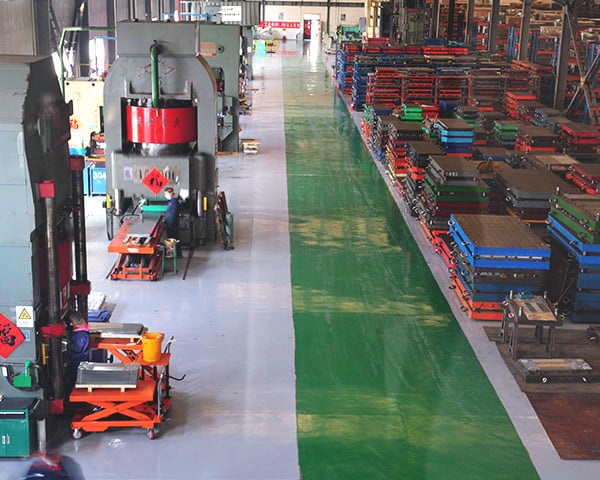
JINFAN is a plate heat exchanger business, with more than 35 years of manufacturing experience and over 8,000 customers served. The product range covers gasketed plate and frame type, fully welded type, plate and shell type, welded BLOC and semi-welded heat exchangers, along with plate evaporators, condensers and more than 10 other types. We also supply the parts that decide a heat exchanger's service life: heat exchanger plates, gaskets and moulds, including for the major international PHE brands.
Send us the media, flow rate, inlet and outlet temperatures, working pressure and allowable pressure drop for each side. Our engineers will run the thermal calculation, verify the pressure drop, confirm the materials, and come back with the construction that fits your duty — gasketed, semi-welded or fully welded. If a simpler construction covers it, we will tell you so.
Get in touchRank the two fluids against three criteria: the cost of a leak on that side, including safety, product contamination and environmental exposure; how difficult that side is to inspect or repair in place; and how aggressive the fluid is toward elastomer gaskets. The side that scores worse goes into the welded channels.
When both sides score high, a semi-welded unit stops being an option, because the gasketed side simply inherits the failure mode. The selection then moves to a fully welded construction, or to a plate-and-shell unit where pressure or condensing duty calls for it.
Judge pressure first, then media. If both sides operate beyond what elastomer sealing can hold, the pressure decides the construction, and any design that leaves gaskets in the high-pressure loop is ruled out no matter how benign the fluid is.
Media then settles the remainder. An aggressive fluid on the lower-pressure side still has to be sealed by welding if it attacks the gasket compound. High pressure on both sides combined with one aggressive fluid usually pushes the selection from semi-welded to fully welded or plate-and-shell.
Yes. Welding removes the gasket from the welded channel pairs only. Gaskets between plate pairs and at the frame remain, and they age the way gaskets always do, hardening, swelling or losing elasticity with temperature and chemical exposure.
That is why a semi-welded unit is not maintenance-free. It reduces the number of gasket-sealed joints on the demanding side rather than removing gasket care from the maintenance plan. Treat gasket condition as a scheduled inspection instead of waiting for a leak to announce it.
Yes. Welded construction rules out opening the plate pack, so it is the wrong choice when the duty demands frequent mechanical cleaning, when fouling is heavy and unpredictable, or when heat transfer area may have to be added later.
In those cases a gasketed unit fits better, or a welded BLOC design with removable side plates where mechanical access and welded channels are both required. Specifying fully welded for extra safety, then finding the pack cannot be opened, is an expensive correction.
No. The number of welded channel pairs and the frame are fixed at the design stage, and there is no field conversion from semi-welded to fully welded. If the duty moves beyond the limits of the gasketed side, the unit has to be re-selected for the new conditions.
The gasketed side therefore deserves the same scrutiny as the welded one when the unit is specified: fluid composition, expected temperature and pressure, cleaning method, and any planned process changes. Settling these before the order is placed is what keeps a semi-welded choice valid for the life of the unit.
—
- How to Choose the Right Plate Heat Exchanger for Your Process
- Welded vs Gasketed Plate Heat Exchanger, Which to Choose?
- Gasketed type vs. Welded Plate Heat Exchangers in Data Center Liquid Cooling
- Plate Heat Exchanger Calculator Online
- What is Welded Plate Heat Exchanger
 EN
EN
 AR
AR
 FR
FR
 DE
DE
 PT
PT
 RU
RU