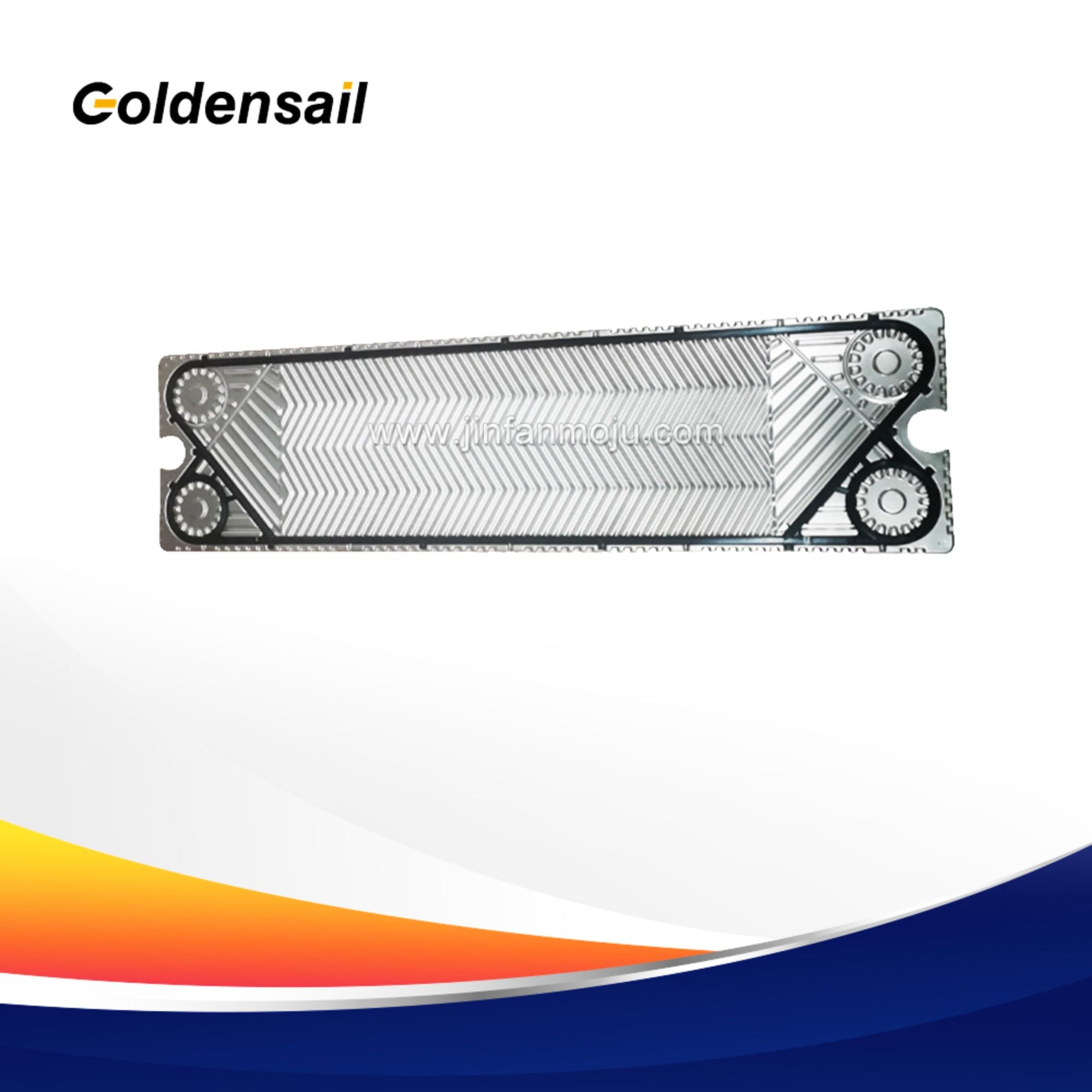
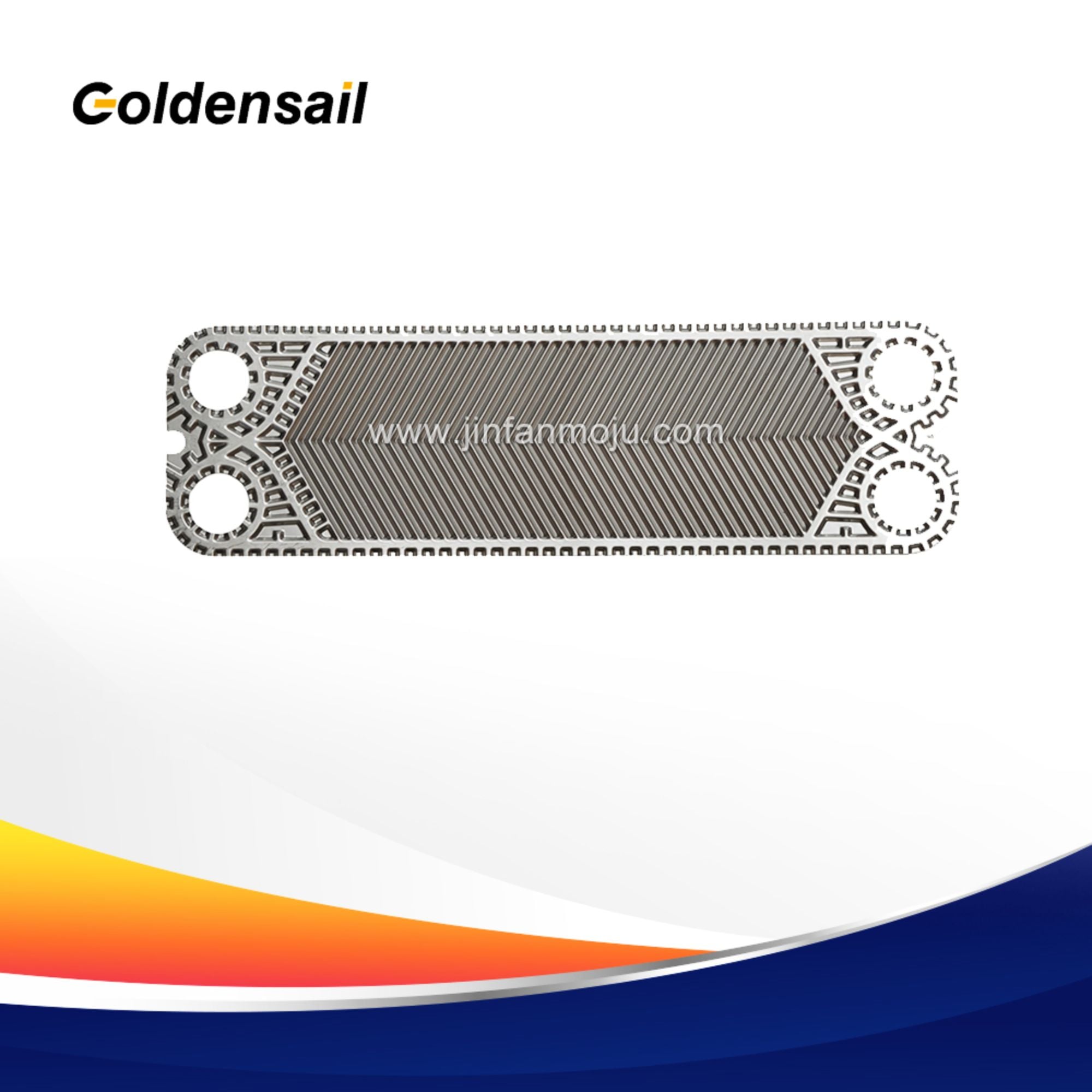
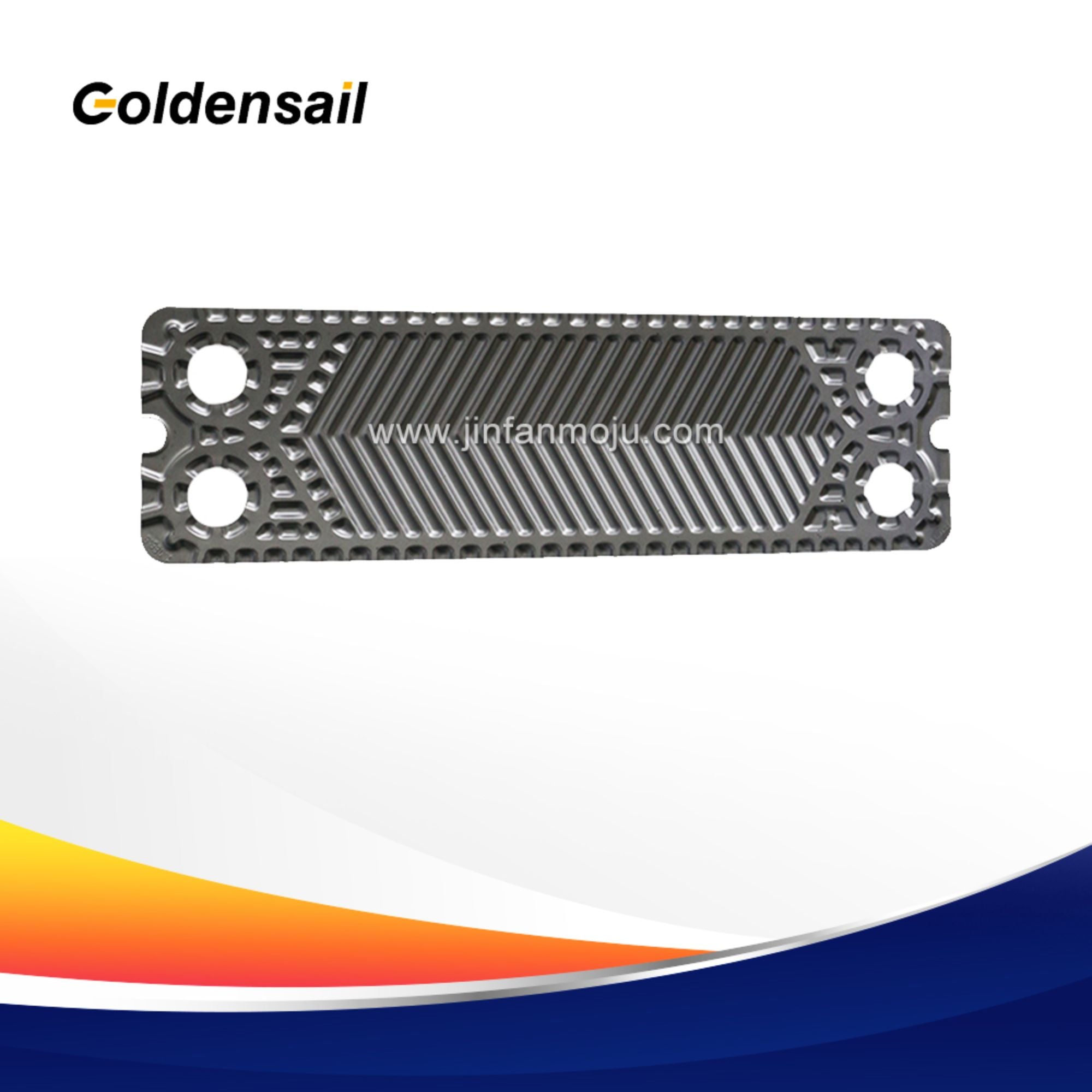
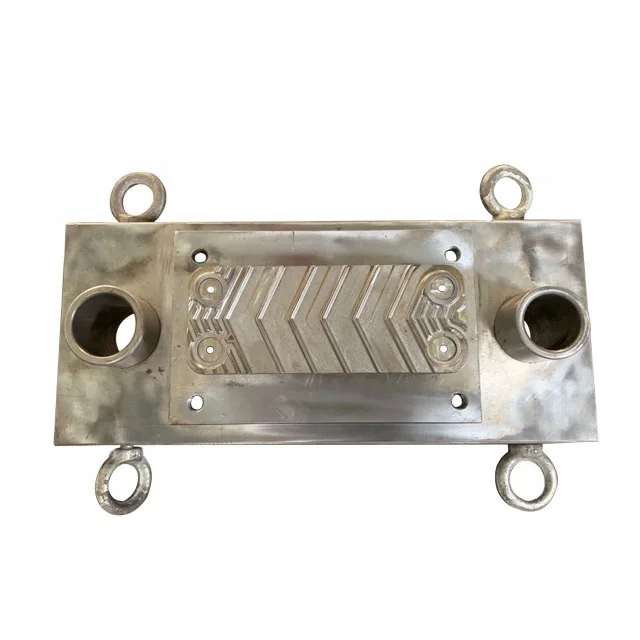
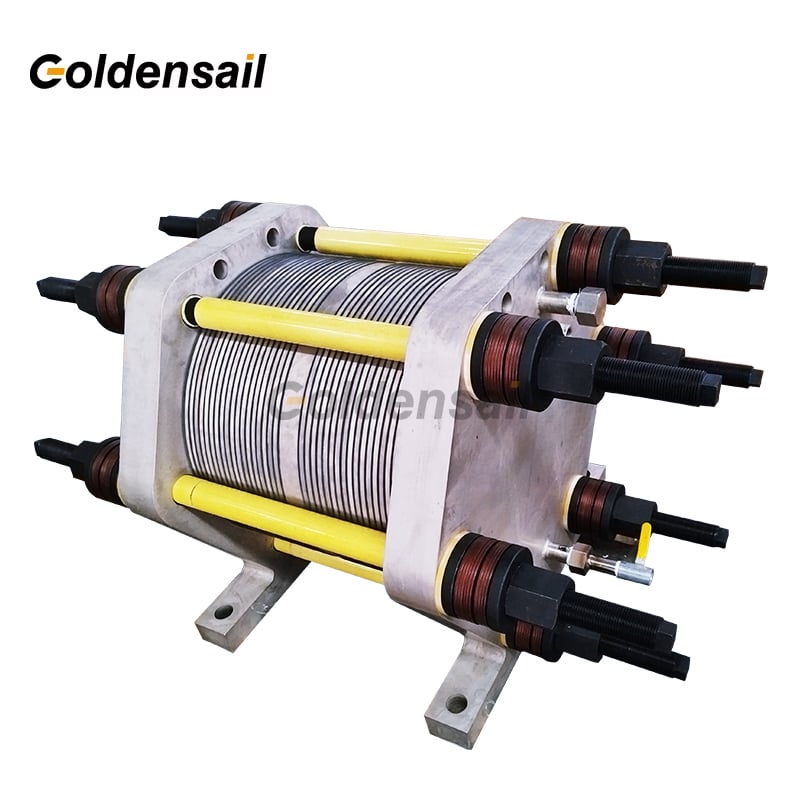
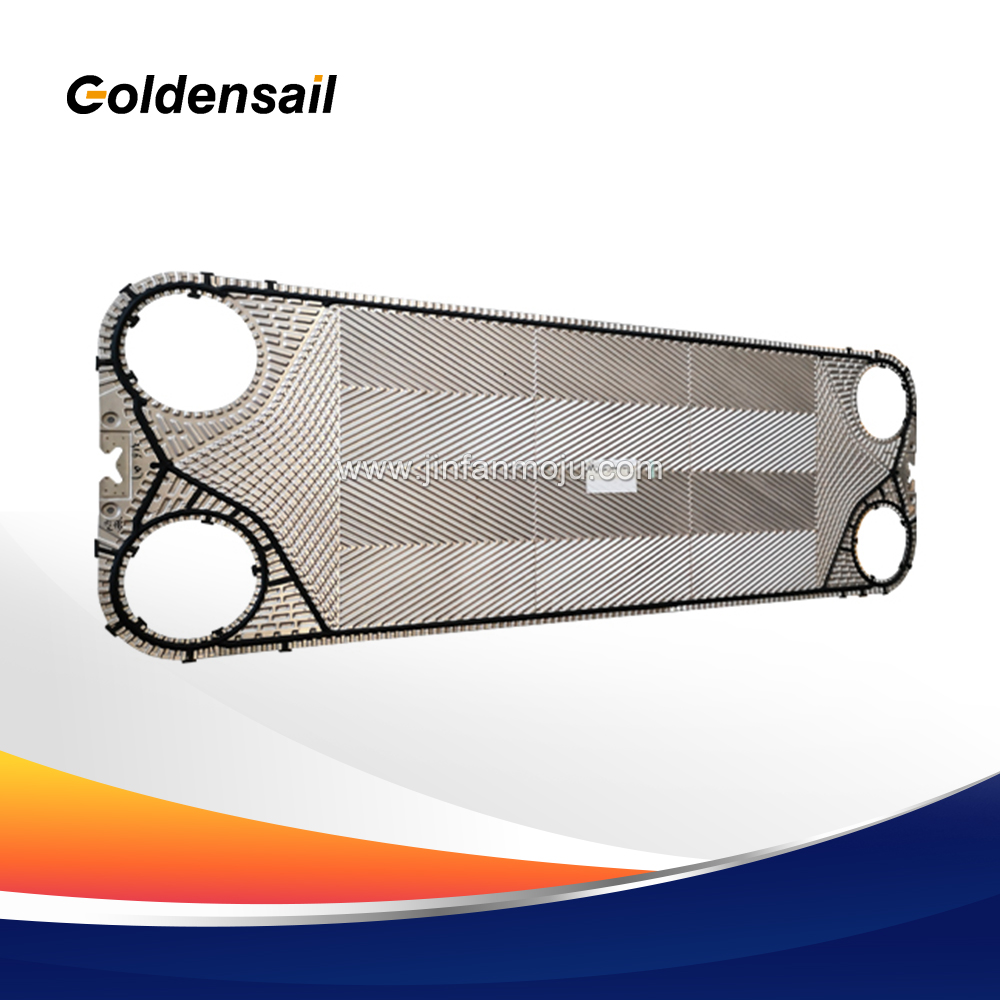
A Plate Condenser is a highly efficient and compact heat exchange device used to condense steam or gaseous media into liquid. A Plate type Condenser consists of a series of stamped, corrugated PHE plates made of stainless steel or titanium alloy, stacked together. These plates are separated by gaskets or welding, forming channels for the alternating flow of hot and cold media.
Compared to traditional shell-and-tube condensers, the biggest advantage of Plate Condensers is that the plates function as both heat exchange elements and flow channels. This allows them to have a volume that is often only 25% to 50% of that of shell-and-tube condensers for the same heat transfer load, making them particularly suitable for systems handling clean fluids or operating under vacuum conditions.
The working principle of a Plate Condenser is based on efficient indirect heat exchange and phase change heat transfer. Its design details fully embody the concept of enhanced heat transfer:
1.1 Flow Channel Design
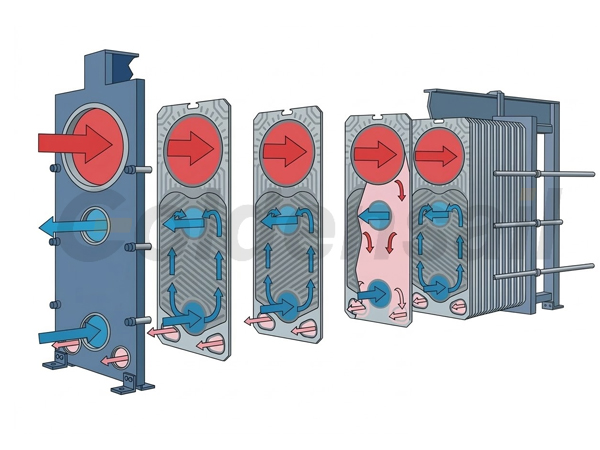
The corrugated PHE plates are stacked together. The corrugations between the plates not only increase the turbulence of the fluid but also greatly expand the effective heat transfer area. Typically, to optimize condensation, the steam-side channels are designed to be wider to reduce the pressure drop upon steam entry; while the cooling medium-side channels are relatively narrower to maintain high flow rates and turbulence, thereby improving the heat transfer coefficient and reducing fouling.
1.2 Condensation Process
Hot steam enters the wide steam channels from the top inlet. As the steam flows over the plate surface, its heat is transferred through the thin plates to the cooling medium (usually water) on the other side. Upon encountering the cold surface, the steam condenses into liquid on the plate walls. Due to the special corrugated design of the plates, the condensate is guided into the grooves and quickly drained away under surface tension, avoiding the formation of a heat-resistant liquid film on the heat exchange surface that hinders heat transfer, thus achieving efficient condensation.
1.3 Multifunctional Integration
A single Plate Condenser can not only achieve condensation but also simultaneously cool superheated steam and further cool the condensate, reducing the need for additional equipment.
2.1 Extremely High Heat Transfer Efficiency
Due to the strong turbulence generated by the plate corrugations, the overall heat transfer coefficient of Plate Condensers is typically 2-4 times higher than that of shell-and-tube condensers.
2.2 Compact Structure, Space Saving
While performing the same heat exchange task, Plate type Condensers occupy significantly less space and weigh far less than shell-and-tube condensers, making them ideal for space-constrained installation environments, such as ships or retrofit projects.
2.3 Low Investment Cost
Less metal is required to achieve the same heat exchange area, resulting in relatively lower costs.
2.4 Easy Cleaning and Maintenance
For Plate type Condensers with removable gaskets, the equipment can be opened for mechanical cleaning, or it can be circulated and cleaned using an online cleaning system.
2.5 Precise Temperature Control
Due to the small fluid retention, the response to changes in process parameters is fast, facilitating precise temperature control.
| Type | Sealing Method | Advantages | Disadvantages | Typical Applications |
|---|---|---|---|---|
| Gasketed type | Rubber Gasket Sealing | Easy to clean and expand; low maintenance cost | Lower temperature and pressure resistance; gaskets may age over time | Food & Beverage, Pharmaceutical, General Chemical Processing |
| Welded type | Laser / Resistance Welding | Handles high temperature and pressure; no gasket leakage risk | Non-detachable; difficult to clean and repair | Petrochemical, Refrigeration, Oil & Gas Processing |
| Brazed type | Copper / Nickel Brazing | Compact structure; high pressure resistance; relatively low cost | Non-detachable; difficult to clean if clogged | HVAC Refrigeration, Heat Pumps, Small Industrial Cooling |
| Plate and Shell type | Shell + Plate Core Structure | Extremely high pressure resistance; large capacity; excellent sealing | Complex structure; high manufacturing cost | Large Refineries, Power Plants, High-Temperature & High-Pressure Processes |
4.1 Food and Beverage Industry
Widely used in multi-effect evaporation systems in sugar factories (e.g., condensation of steam after syrup and juice evaporation), alcohol distillation, dairy concentration, etc., its hygienic design and easy cleaning features are highly valued.
4.2 Chemical and Pharmaceutical Industries
Used for condensing and refluxing steam from the top of reaction vessels or recovering solvents. For heat-sensitive materials, Plate Condensers effectively prevent material degradation due to their small retention time and short residence volume.
4.3 Refrigeration and Air Conditioning
As a key component in chillers and heat pump systems, it condenses refrigerant vapor. Brazed plate condensers are widely used in this field.
4.4 Power and Industrial Energy Conservation
Used as a steam condenser in small thermal power plants or waste heat recovery systems. Air-cooled plate condensers, in particular, are used in water-scarce areas to cool steam discharged from turbines.
4.5 Marine Engineering
Due to its compact structure and corrosion resistance (titanium can be used), it is well-suited for cooling systems on space-constrained ships and offshore platforms.
 EN
EN
 AR
AR
 FR
FR
 DE
DE
 PT
PT
 RU
RU