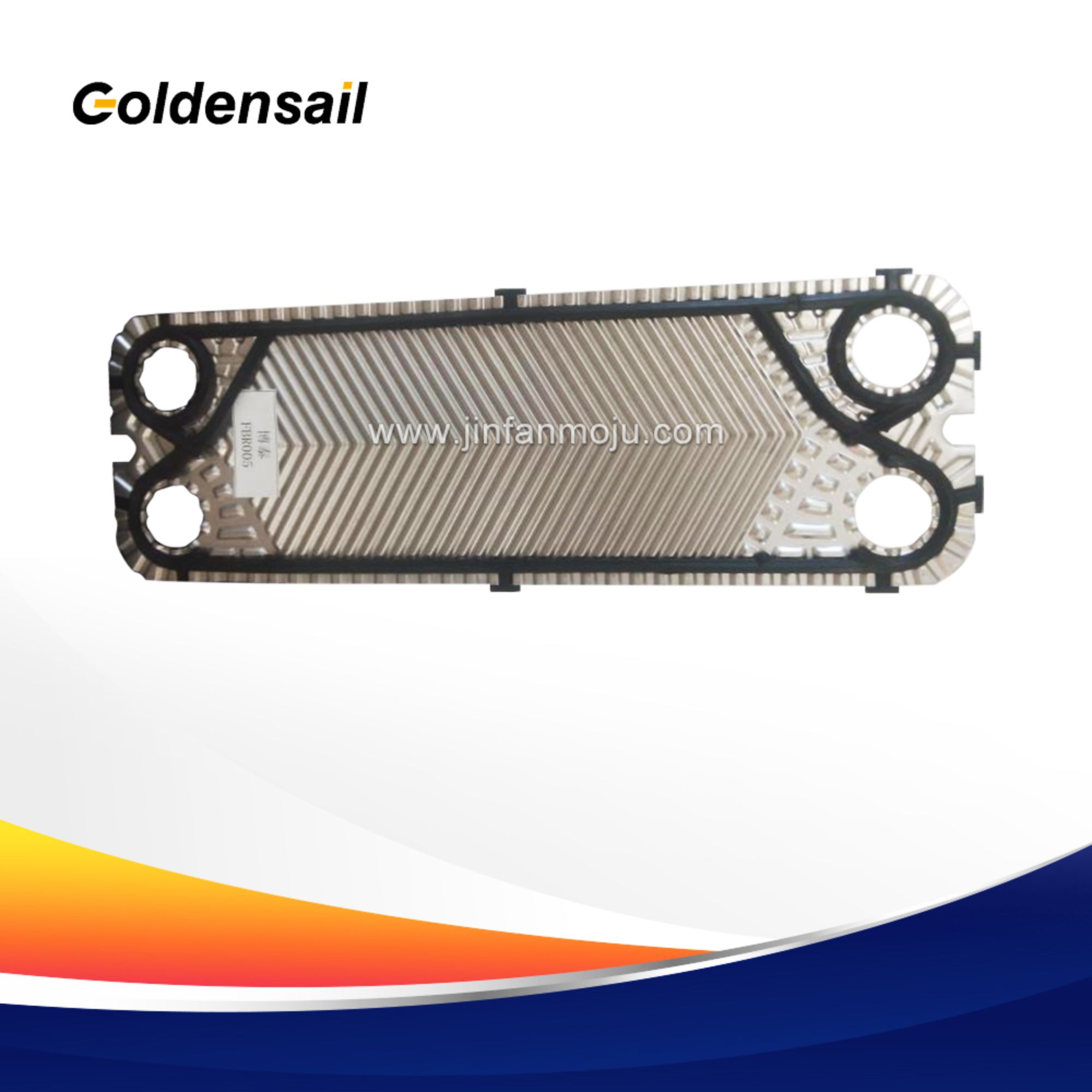
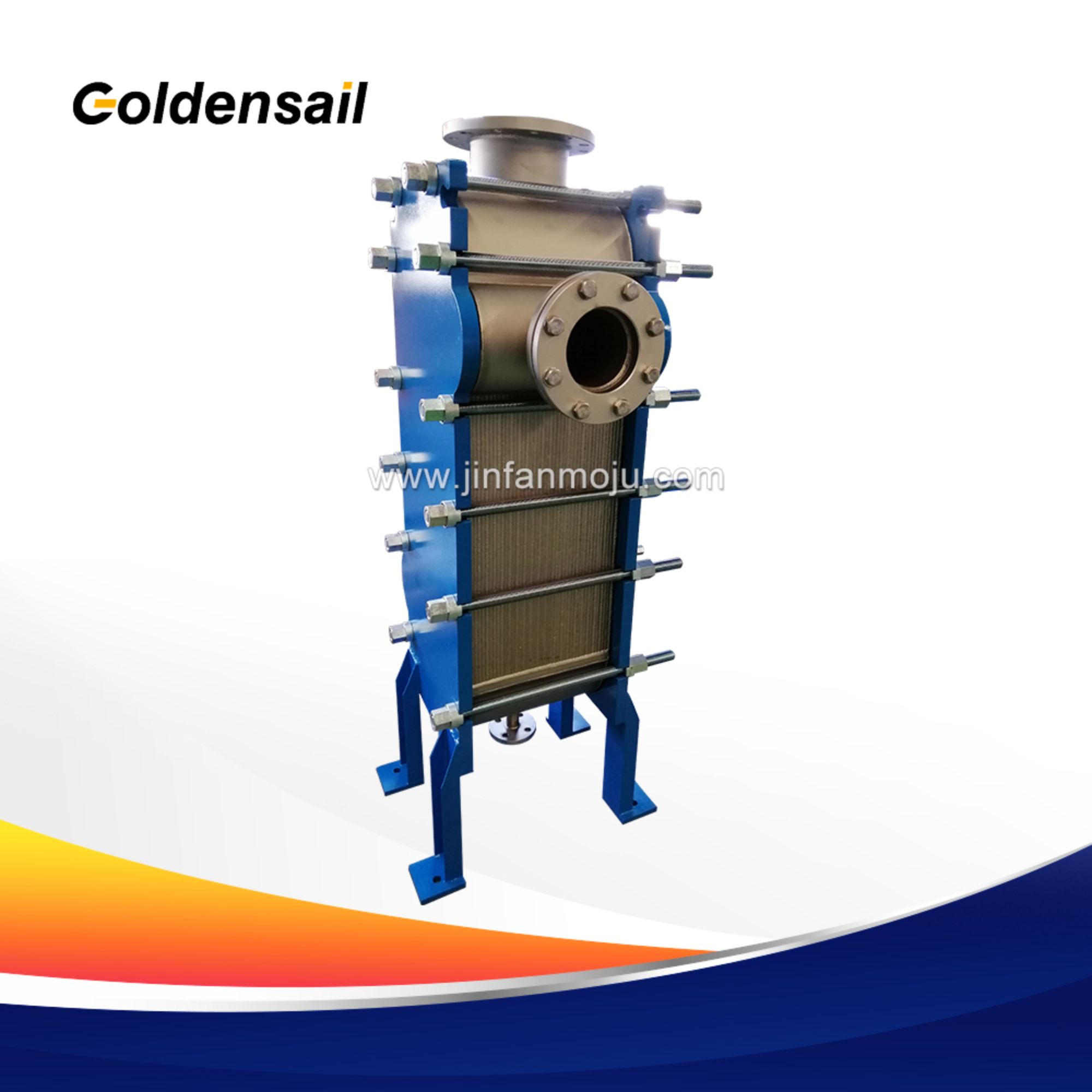
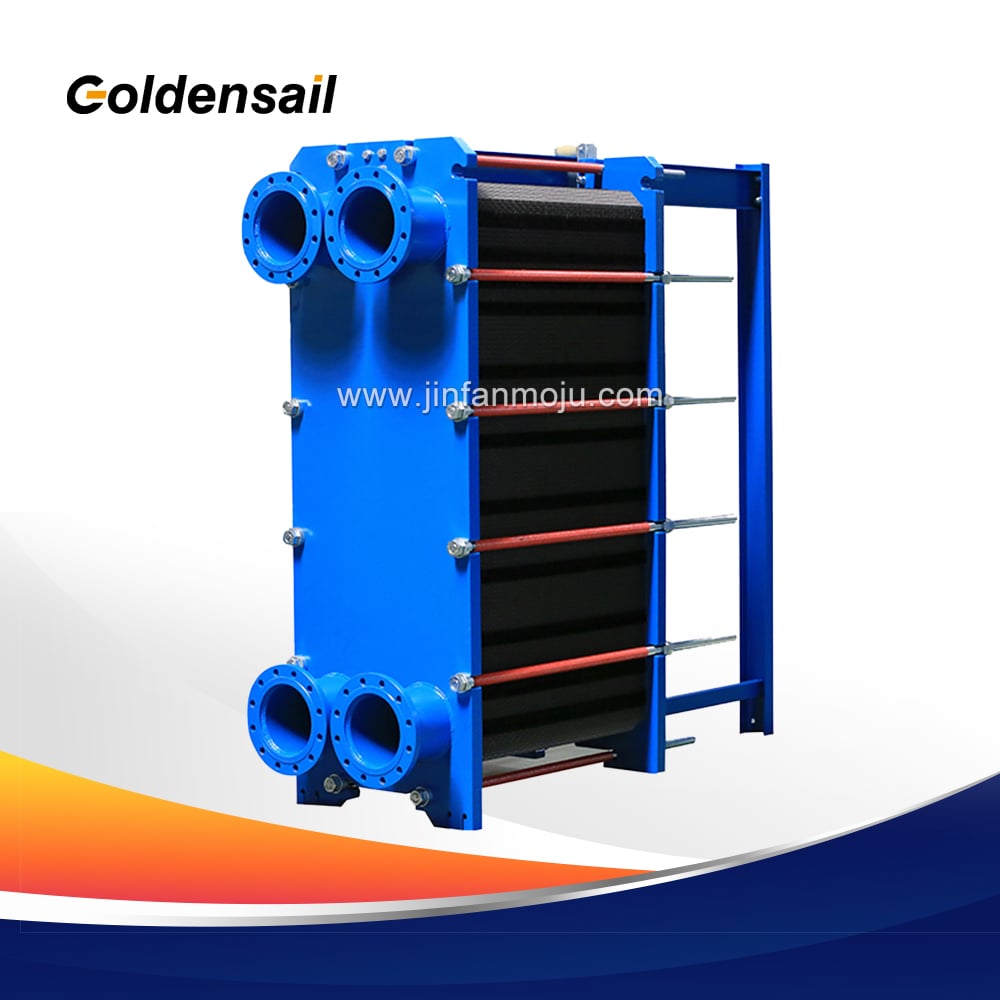
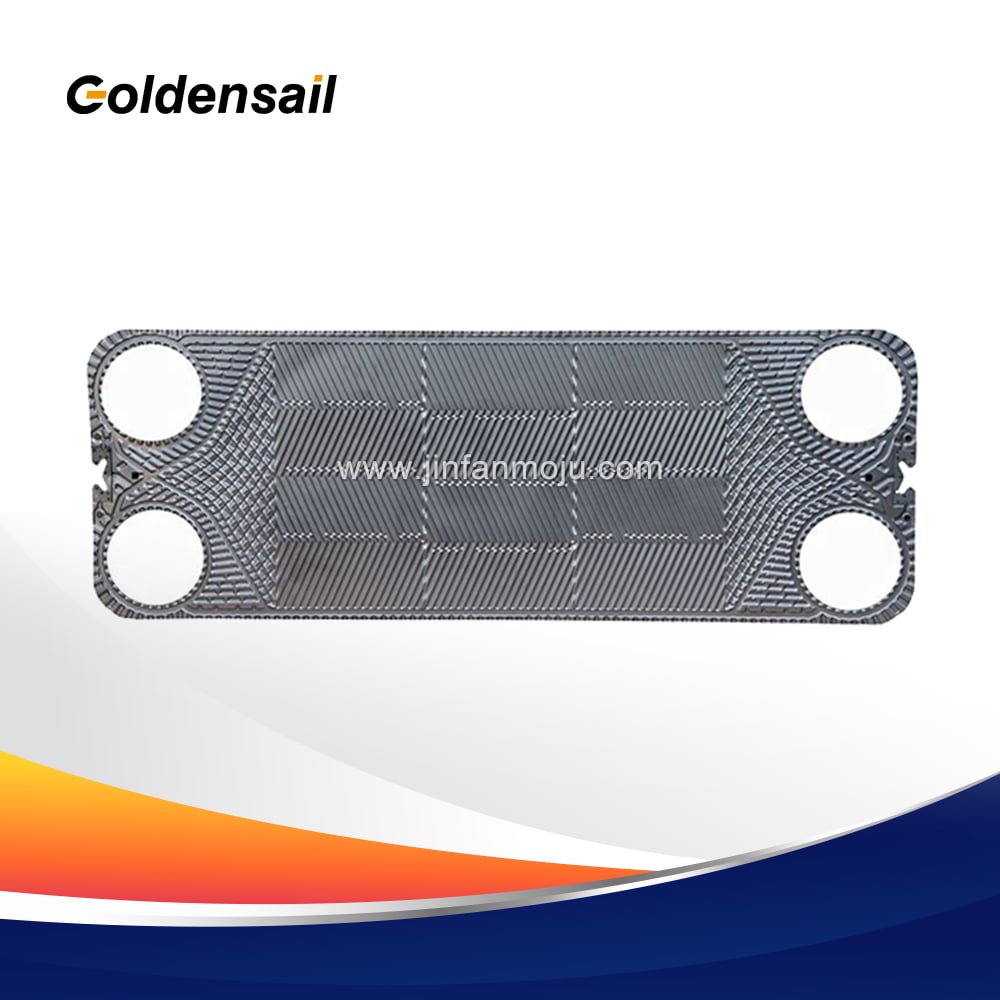
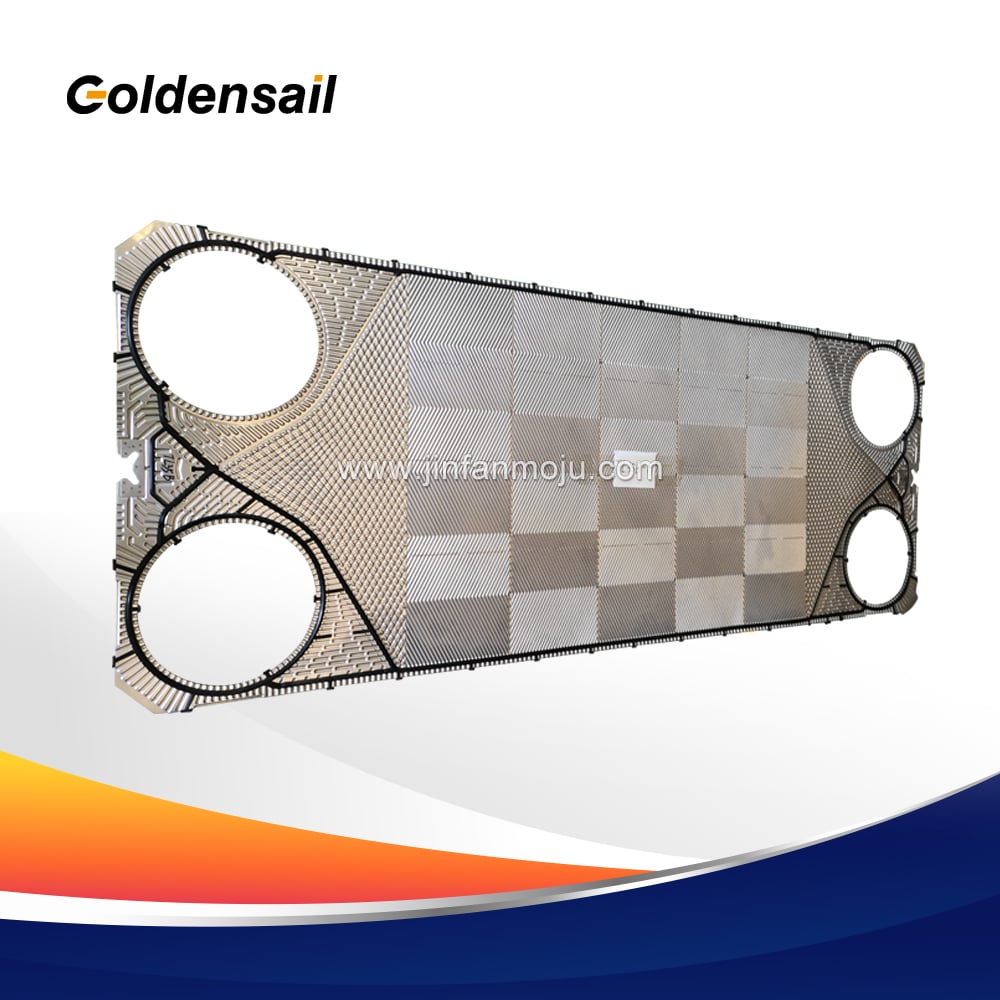
Traditional heat exchangers encounter numerous pain points in the heat exchange industry when handling "dirty, viscous, solid-containing, and fibrous" media, including difficult media flow, frequent clogging, fiber entanglement, severe scaling, and excessively high cleaning costs. Wide Gap Plate Heat Exchangers ( Free Flow Plate HX) expand the channel width, allowing particles and fibers to pass through unimpeded. At the same flow rate, the pressure drop of Wide Gap Heat Exchangers is only 1/4 or even less than that of traditional heat exchangers. Simultaneously, the use of contactless or low-contact plate designs prevents impurities from being trapped between contact points, making it difficult for fouling to adhere, fundamentally solving the pain point of high maintenance costs associated with traditional heat exchangers.
Conventional plate heat exchangers typically have a plate spacing of 2-4mm, while Wide Gap HX can achieve over 10mm. Some structures employ "contactless" or "single-sided contact" support, allowing solid particles, fibers, flocculent matter, and crystalline slurries to pass smoothly, completely eliminating the risk of clogging.
The wide flow channel features a special herringbone or straight large corrugation, creating periodic turbulence at low flow velocities, which scours the plate surface and prevents scale buildup. Even during long-term operation, the fouling rate is significantly lower than that of shell-and-tube or other plate heat exchangers.
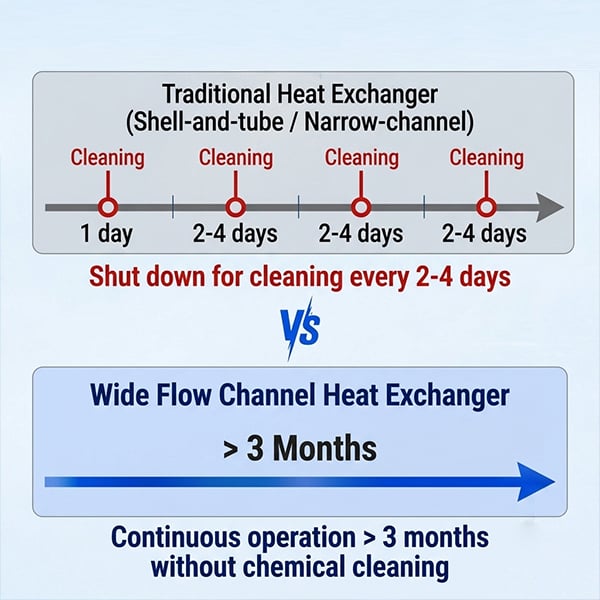
In applications such as papermaking black liquor and sugar mill mixed juice, traditional heat exchangers require shutdown for cleaning every 2-4 days; Wide Gap Heat Exchanger equipment can operate continuously for more than 3 months without chemical cleaning, greatly improving production continuity.
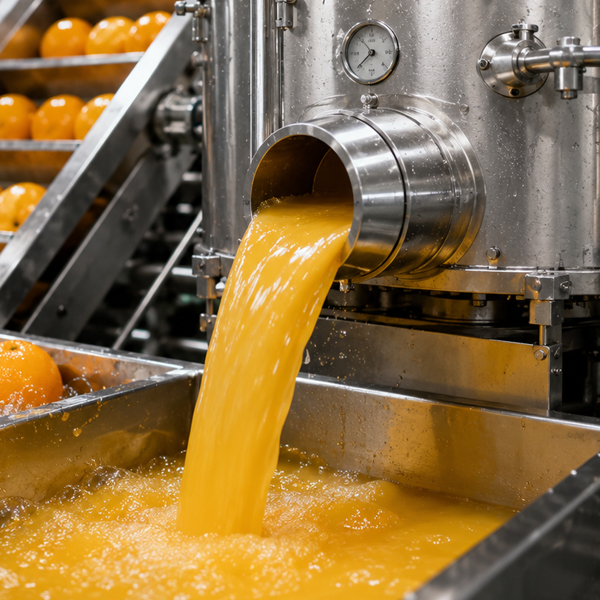
Wide Gap Plate Heat Exchanger can handle fluids with dynamic viscosities as high as 5000-10000 mPa·s (or even higher) (such as concentrated fruit juice, gelatinized starch slurry, fermentation mash, etc.), while the upper limit of viscosity for conventional plate heat exchangers is typically only 500-1000 mPa·s.
Wide Gap Heat Exchanger allows for suspended solid particles in the fluid with a size of 6-15mm (depending on the specific model), and a solid content mass fraction as high as 25%-30%, such as decomposition slurry in alumina production and mine wastewater slurry.
For fibers with a length of 20-30mm (such as pulp, bagasse, and distiller's grains fibers), the wide flow channels allow them to pass smoothly without tangling, completely avoiding the industry pain point of tube bundle blockage in shell-and-tube heat exchangers.
Conventional plate heat exchangers are forced to be frequently disassembled and cleaned due to fouling and blockage. Each disassembly and reassembly causes gasket deformation and plate scratches. Wide Gap Plate Heat Exchangers can reduce the number of cleaning times per year by more than 90%, and extend the life of plates and gaskets by 2-3 times.
For high-temperature, high-pressure, or flammable and explosive media (such as solvent-containing materials), a fully welded wide gap plate heat exchanger can be selected, completely eliminating gaskets, eliminating leakage risk, with a pressure resistance of up to 3.0 MPa and a temperature resistance of over 350℃, requiring no maintenance during operation.
Due to the low pressure drop in the wide-channel design, even if a channel becomes partially blocked, the fluid can automatically bypass to an adjacent channel, preventing overall system failure and demonstrating extremely high system robustness.
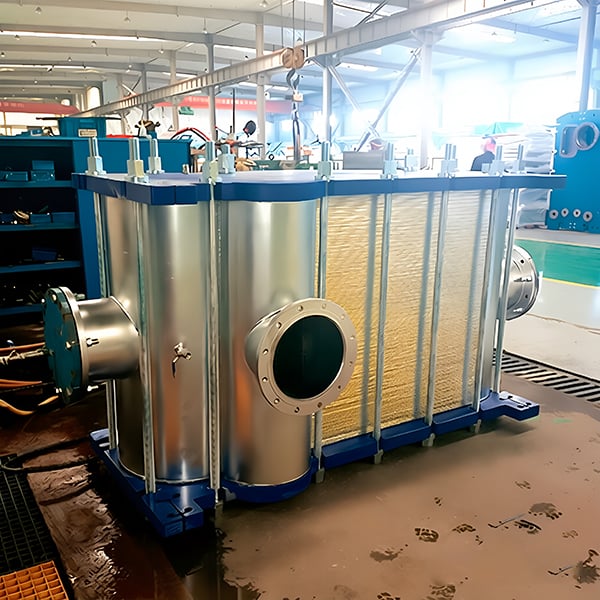
High heat transfer efficiency due to compactness: The plate thickness is only 0.6-1.0 mm, and the corrugated structure generates strong turbulence and boundary layer disruption, achieving an overall heat transfer coefficient (K-value) of 2000-6000 W/(m²·K), while shell-and-tube heat exchangers typically handle less than 800 W/(m²·K) for the same dirty media.
Even with process limitations allowing only lower flow velocities (0.2-0.5 m/s), turbulence is maintained within the wide flow channels, avoiding the severe scaling and drastic efficiency drop caused by laminar flow at low velocities in shell-and-tube systems.
The fully counter-current design allows for a temperature difference of only 1-2°C between the hot and cold fluid outlets, significantly improving heat recovery (recovering 15-25% more heat compared to the cross/mixed flow patterns of shell-and-tube systems). When used for waste heat recovery, the payback period is typically less than 6 months.
Locating only 1/5 to 1/3 the floor space of shell-and-tube systems. For the same heat exchange area of 300 m², shell-and-tube systems require approximately 30-40 m² of installation platform, while Wide Gap HX systems require only 8-12 m², making them particularly suitable for space-constrained retrofit projects. Lightweight design reduces civil engineering and hoisting requirements. The equipment weighs 50-70% less than shell-and-tube heat exchangers, eliminating the need for heavy foundations or large cranes, and shortening the installation cycle by more than half. Modular expansion offers flexibility. The number of plates can be easily increased or decreased to adapt to changes in heat load, whereas shell-and-tube heat exchangers require replacing the entire heat exchanger. Users can initially purchase 80% of the heat exchange area and expand later with minimal cash flow pressure.
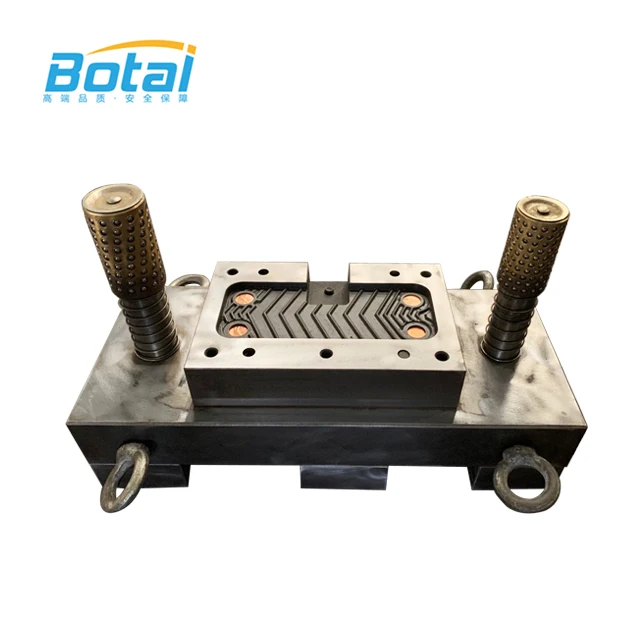
Overall savings of 30-50%. Although the initial purchase price of Wide Gap Plate Heat Exchangers may be slightly higher than standard plate heat exchangers (due to thicker plates and special molds), their total life cycle cost (LCC) is overwhelmingly superior to shell-and-tube heat exchangers.
| Cost Item | Wide Gap Plate Heat Exchanger | Shell & Tube Heat Exchanger |
|---|---|---|
| Initial Investment | Medium | High (Large Steel Structure Required) |
|
Installation Cost (Foundation & Lifting) |
Low | Very High |
|
Energy Consumption (Pump Power) |
Low (Low Pressure Drop) | High (High Tube Bundle Resistance) |
| Maintenance & Cleaning Cost | Very Low (1–2 Cleanings per Year) | Very High (Frequent Weekly Cleaning) |
| Spare Parts Cost | Low (Gaskets & Plates) | No Gaskets, but Tube Bundle Replacement Required |
| Total Cost Over 3 Years | Baseline | 40–60% Higher |
 EN
EN
 AR
AR
 FR
FR
 DE
DE
 PT
PT
 RU
RU