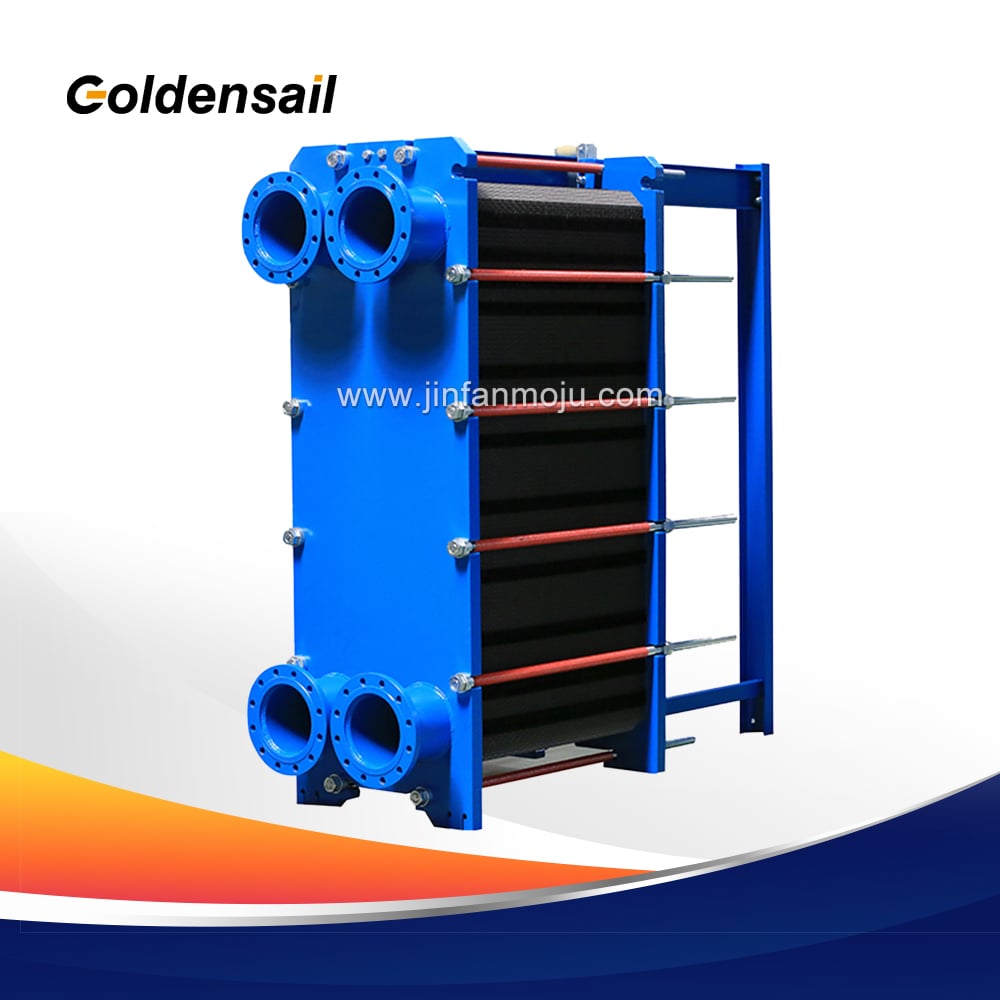
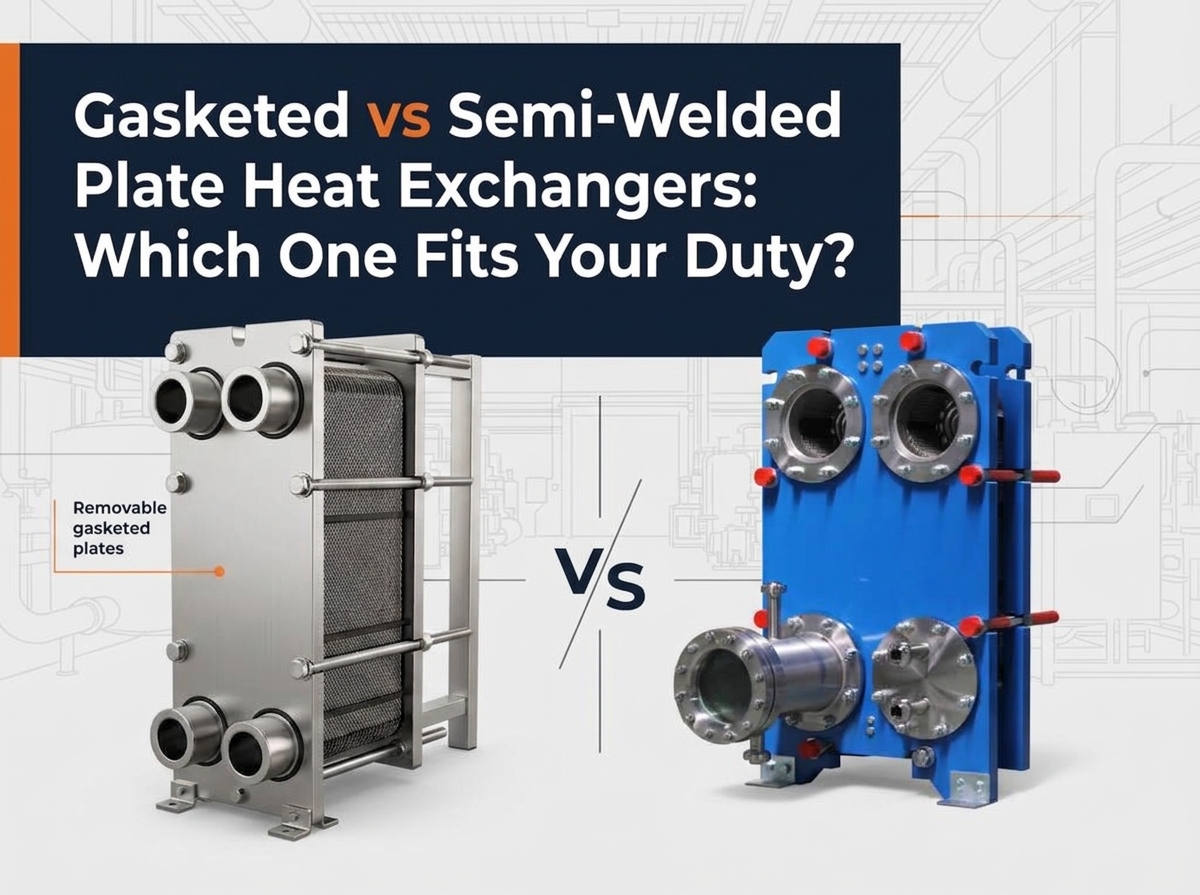
Plate Heat Exchangers (PHEs) have become core thermal equipment in the HVAC, chemical, food, and energy sectors due to their high heat transfer efficiency and compact structure. In industrial applications, the Gasketed and Semi-welded types are the two most representative products, depending on their sealing structure and maintenance methods. What separates them is how the plates are sealed together — and that single structural difference drives temperature and pressure limits, leak behavior, cleaning routines, and long-term cost. If you are comparing the two constructions for an upcoming duty, this article explains the mechanism behind each design, states the trade-offs plainly, and closes with a six-step checklist your engineering team can work through.
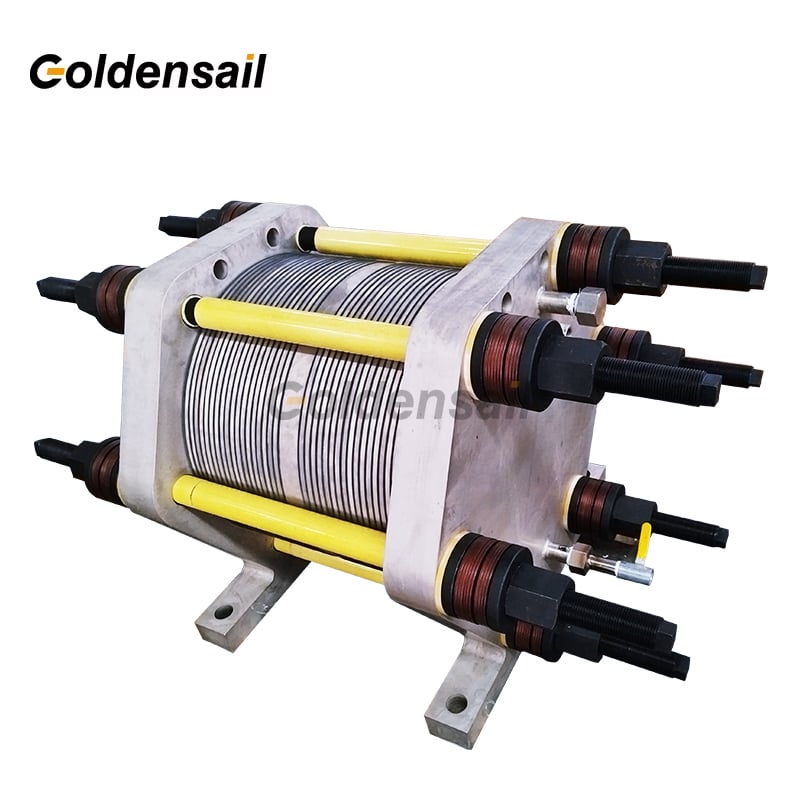
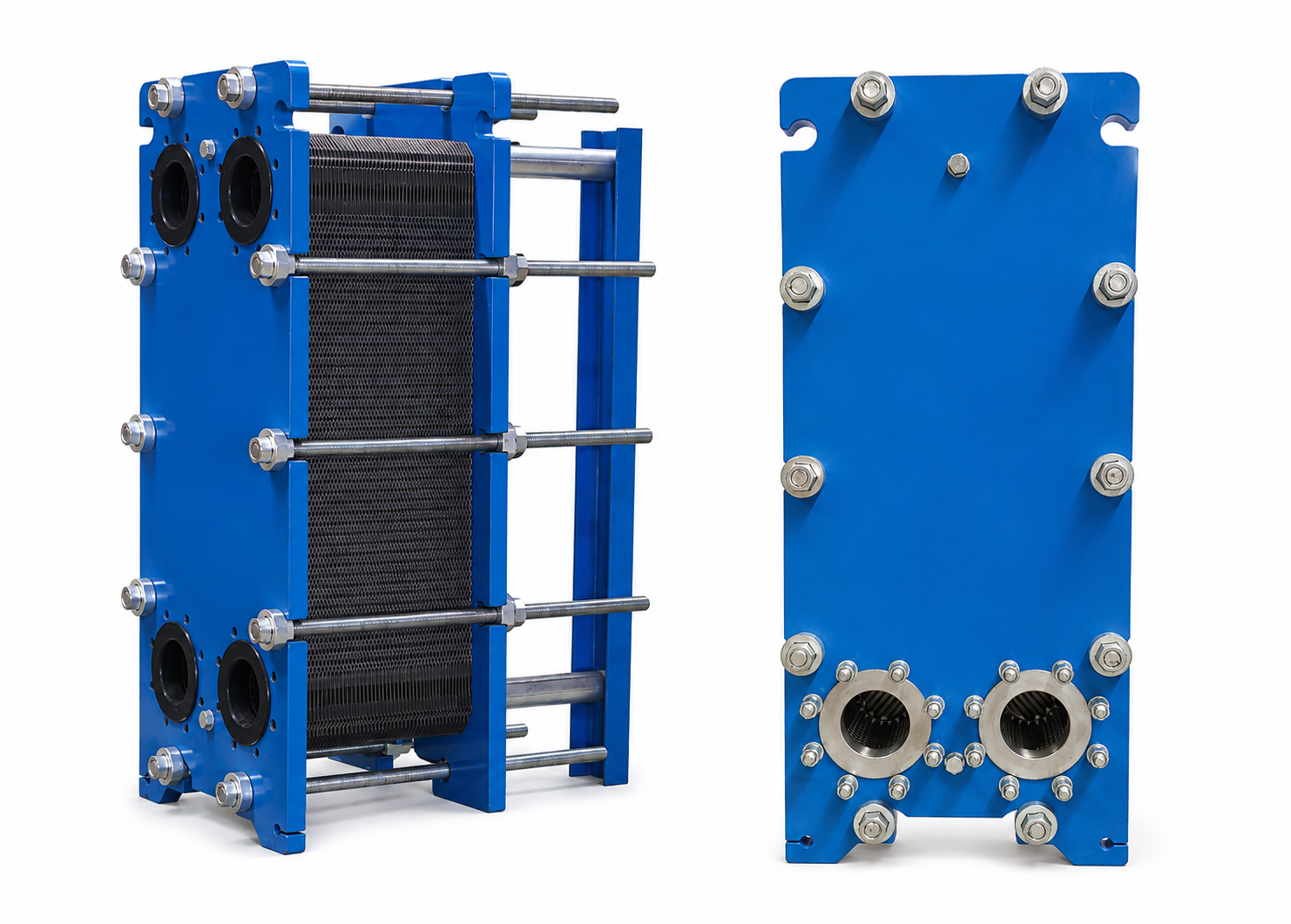
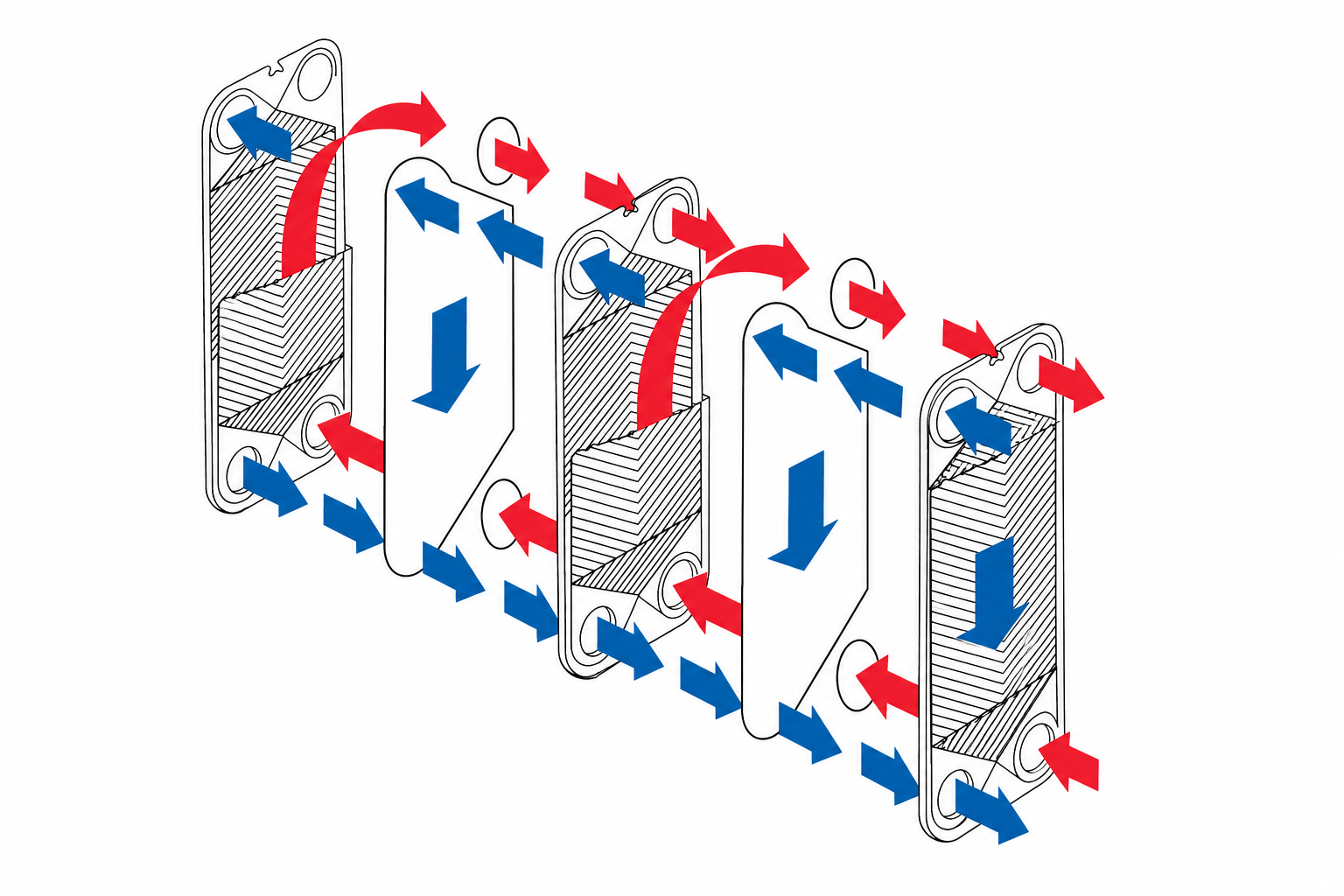
Get in touchThe flow channel of the Gasketed Plate Heat Exchanger is sealed by rubber elastic gaskets between heat exchanger plates. The PHE Plates are independently suspended from the upper and lower guide rods, allowing for complete physical disassembly. Its flow channel is an alternating stacked structure of "plate-gasket-plate". The Semi-Welded Plate Heat Exchanger employs a hybrid "weld + gasket" sealing mode. Two plates are laser-welded along their outer edges to form a closed "plate pair," with the internal flow channel of this pair being fully metal-sealed; while the external flow channel between the plate pairs relies on conventional gaskets for sealing. This creates a composite structure with alternating "welded flow channels" and "gasket flow channels".
Neither is "better" in general. Each is better for a defined set of duties.
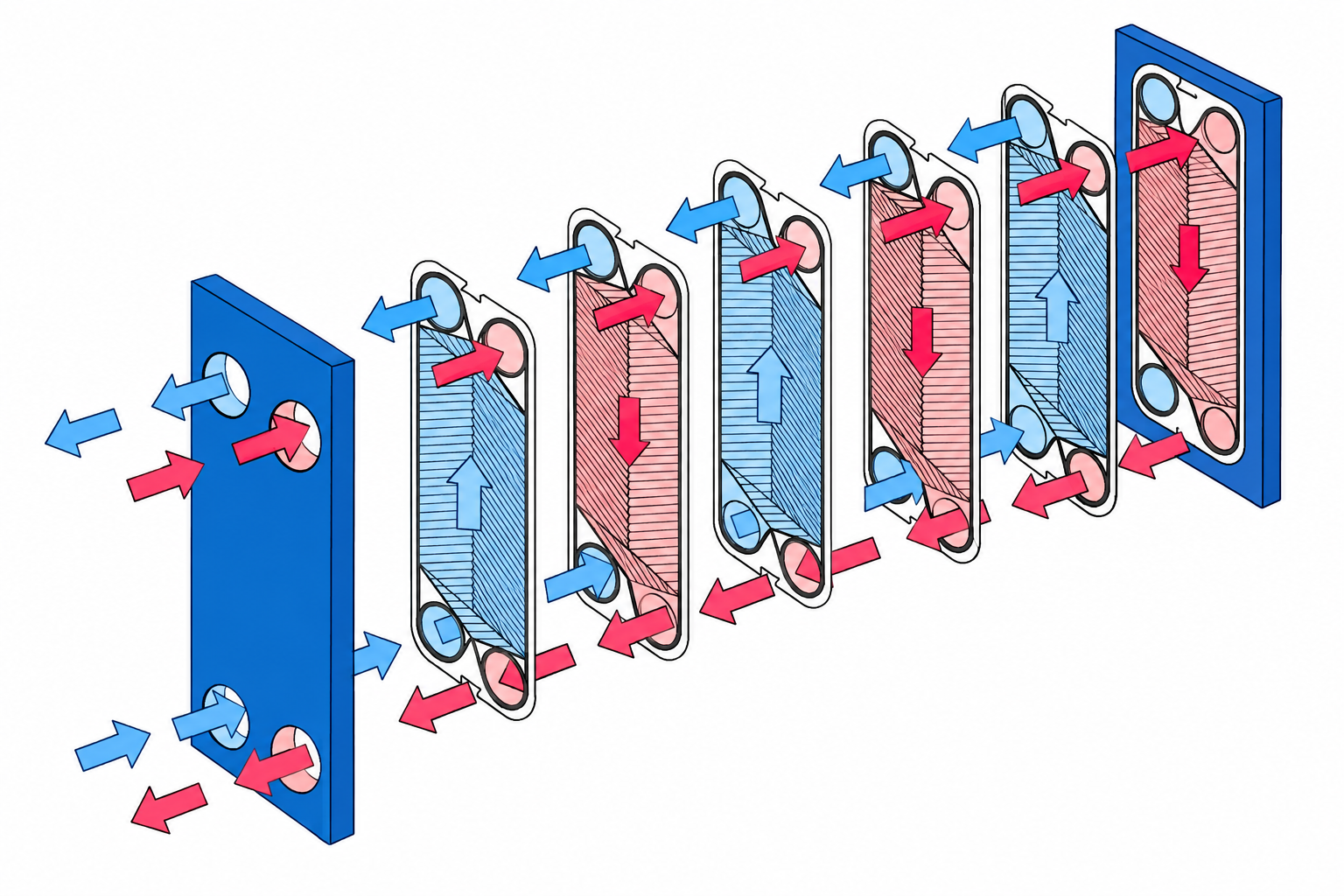
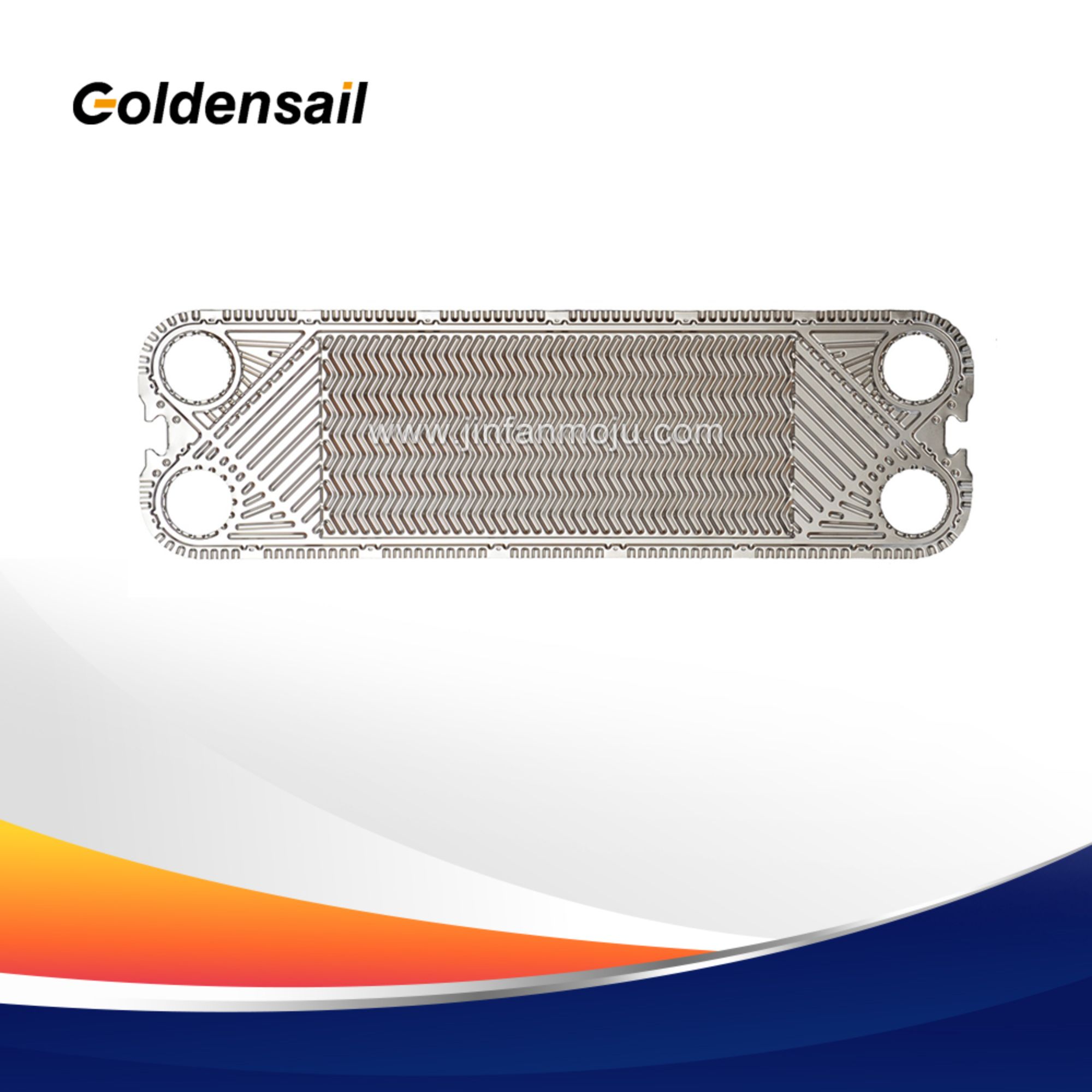
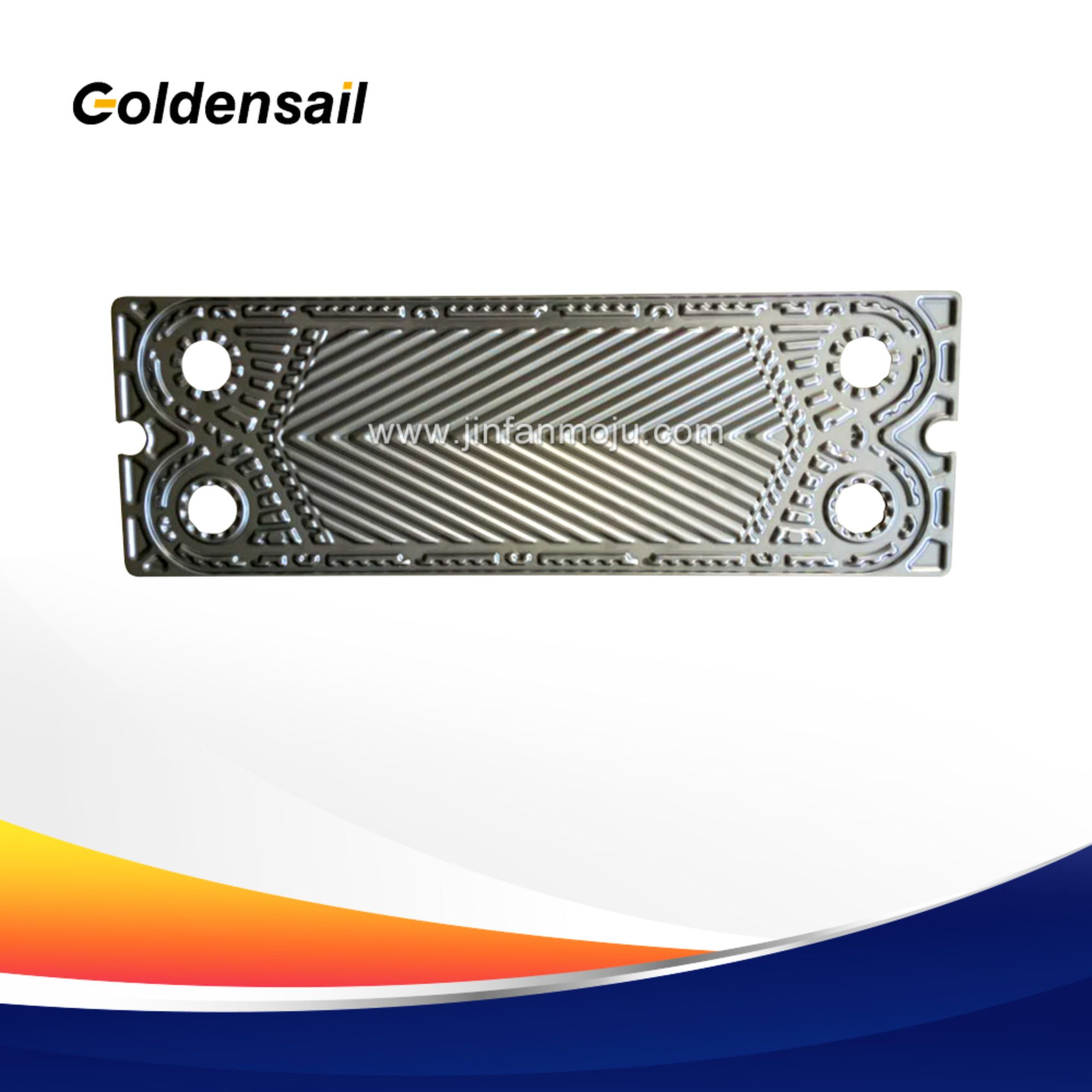
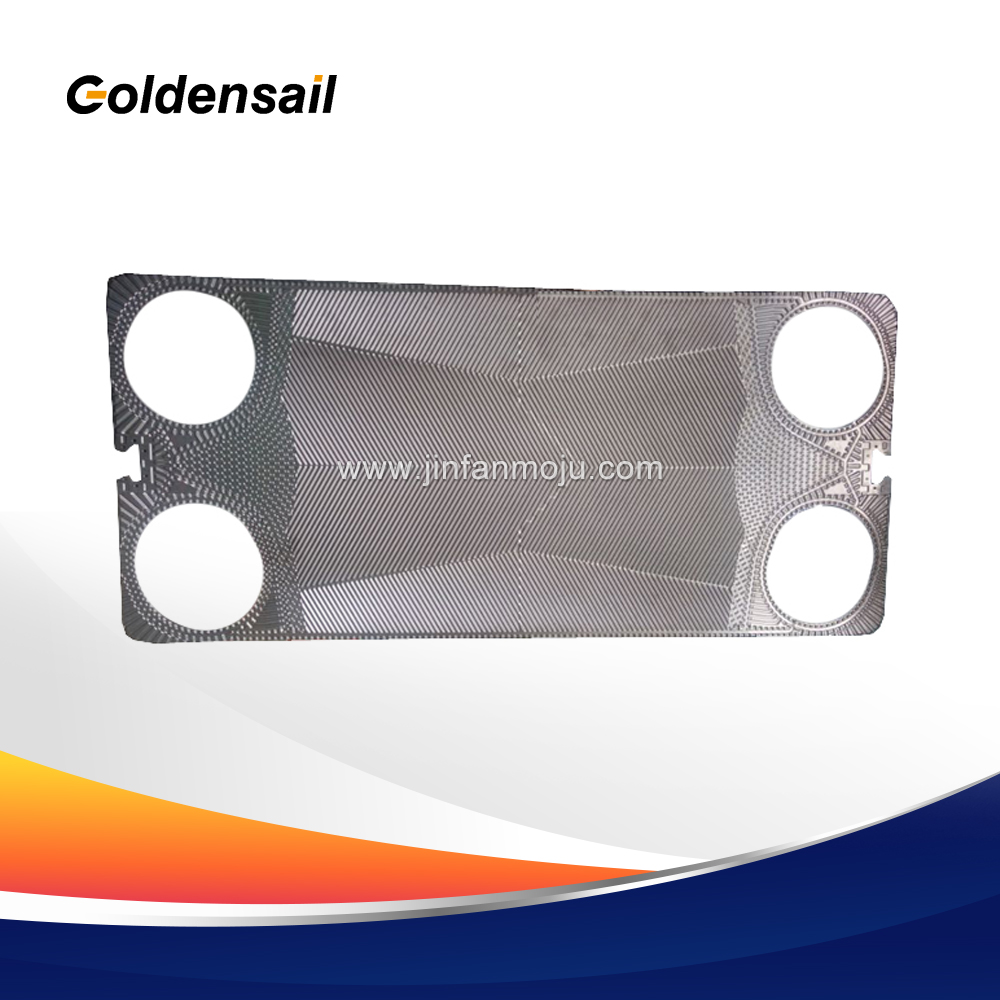
A Gasketed Plate Heat Exchanger is a stack of pressed plates (typically 0.5–0.6 mm in 304/316L stainless steel or titanium) hung in a frame between two pressure plates, with gaskets bonded or clipped into the plate grooves. Tightening the tie bolts compresses the gaskets, which both seal the channels and direct the flow: the chevron pattern pressed into each plate forces the fluid into turbulent motion even at low velocity, which is why a plate exchanger reaches heat transfer coefficients in the range of 3,000–7,000 W/(m²·K) — several times what a shell-and-tube unit manages in the same footprint.
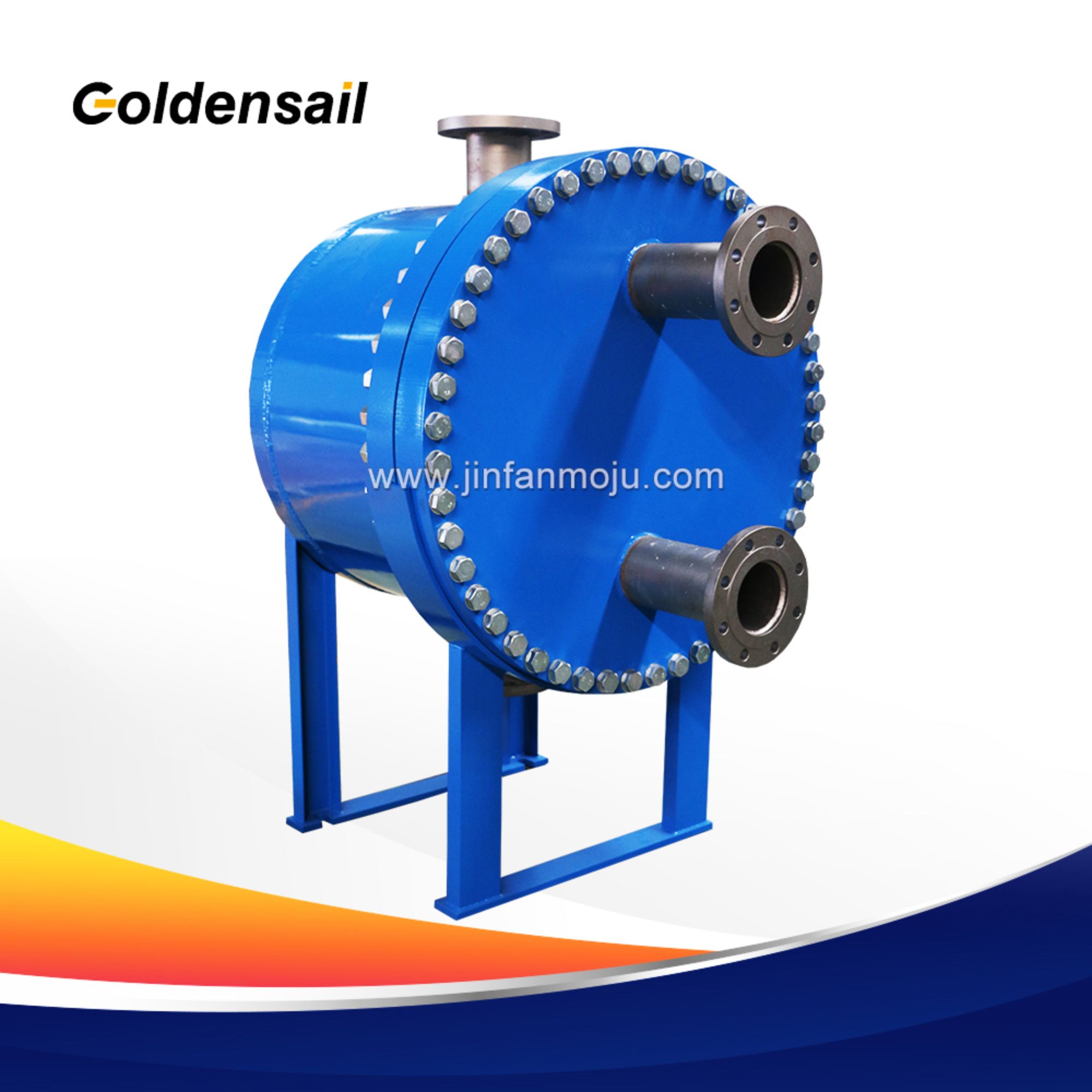
A Semi-welded Plate Heat Exchanger starts from the same pressed plates, but two plates are welded together around their edges — typically laser welding or TIG welding under argon shielding — to form a sealed channel pair. The process fluid flows through these welded channels, which have no gasket and no leak path between the two plates. The pairs are then stacked in the frame with narrower gaskets between them; the service fluid (cooling water, steam, brine) flows through those gasketed channels.
| Comparison Point | Gasketed PHE | Semi-Welded PHE |
|---|---|---|
| Seal Between Plate Pairs | Replaceable elastomer gasket | Laser/TIG weld, no plate-pair gasket |
| Channel Access | Fully openable on site | Welded pairs; only outer gaskets openable |
| Main Leak Risk | Gasket aging, misalignment, extrusion | Weld integrity (factory pressure-tested) |
| Typical Temperature Range | Up to ~180°C, limited by gasket material | Up to ~300°C or higher, gasket-free channels |
| Typical Pressure Range | Up to ~2.5 MPa (25 bar) | Up to ~4.0 MPa (40 bar) |
| Media Compatibility | Standard process fluids, food-grade duties | Corrosive, toxic, or leak-sensitive media |
| Cleaning | Full mechanical disassembly possible | CIP / chemical cleaning primarily |
| Capacity Changes | Add plates to the frame | Fixed pairs; requires new pairs or a new unit |
| Initial Cost | Lower | Higher |
| Life-Cycle Cost | Gasket replacement plus labor | Less routine maintenance, specialized repairs |
| Typical Applications | HVAC, food & beverage, general process | Chemicals, pharmaceuticals, refrigerants, oils |
The table gives the usual boundaries for both designs; actual ratings depend on plate material, gasket compound, and frame size.
In a gasketed unit, every plate pair carries a gasket, and every gasket is a wear item. Service life depends on temperature and media — a typical elastomer gasket lasts somewhere in the 3–8 year range under normal conditions, and the first signs are hardening, cracking, or permanent compression set at the groove. Because there are dozens of pairs in a large unit, the leak path exists at every one of them. A semi-welded unit compresses the leak risk from "every plate pair" down to the outer gaskets between pairs — a much smaller surface, and one that is still replaceable without welding work.
If your process requires opening the unit — for hygiene inspection, for manual brushing, or because the media leaves deposits that circulation cannot lift — the gasketed design is the only one that gives you that option. Semi-welded units rely on CIP cycles and chemical cleaning, which are effective for most fouling but cannot reach a blocked welded channel. Plants that run both types usually reserve the semi-welded units for media that fouls slowly, and keep the openable units for everything else.
Process throughput changes. With a gasketed unit, you can often add plates within the existing frame to raise capacity, and the frame's tightening range was designed for that. A semi-welded unit has a fixed number of welded pairs; increasing capacity means adding pairs — which is a factory operation — or installing a larger unit. If growth is likely, the gasketed route is the more flexible investment.
Comparing purchase prices alone misses most of the picture. The gasketed unit costs less up front but carries recurring gasket replacement and the labor to open, clean, and re-tighten the pack. The semi-welded unit costs more initially but removes most routine maintenance from the process side, and its real payback shows up in plants where gasket failures were causing downtime, product loss, or safety reviews. On a lifecycle basis, the cheaper construction is the one whose failure mode you can afford — which is why this decision should be made on media and access requirements, not on the initial quote alone.
Work through these six questions in order, and the right construction usually announces itself:
4.1 What is the media?
Corrosive, toxic, or aggressive chemicals point to welded channels; standard fluids, food products, and clean water point to gasketed.
4.2 What temperature and pressure?
Duties beyond roughly 180°C or 25 bar belong on the welded side; check the plate material for the exact limit.
4.3 How often must the unit be opened?
Frequent hygiene inspection or mechanical cleaning requires a gasketed design.
4.4 What is the cost of a leak?
If a weeping gasket means product contamination, a safety event, or an environmental fine, semi-welded sealing is cheap insurance.
4.5 Will capacity grow?
Planned expansion favors the openable design where you can simply add plates.
4.6 Compare lifecycle cost, not purchase price.
Add gasket replacement, labor, and downtime risk on one side; repair complexity on the other.
When the answers point in different directions, weigh questions 3 and 4 — access and leak consequence — because those are the ones that hurt in operation.
JINFAN manufactures both constructions — Gasketed Plate Heat Exchangers and a Semi-welded range — and we would rather point you to the one your duty actually needs than sell you the wrong seal. The deciding factors are media, temperature and pressure, and how the unit will be cleaned; if you can describe those, the selection is usually straightforward.
Share your operating conditions — media, temperature, pressure, and how often the unit is cleaned — and our engineers will recommend the right construction type, with a free selection check, within 24 hours. Send the duty to [email protected] or use the inquiry form, and you will get a recommendation you can take straight to your project review.
If your media is standard and your plant needs full access, ask for our Gasketed Plate Heat Exchangers — they remain the workhorse of food, HVAC, and general process duties. If your process media is aggressive or leak-sensitive, the Semi-welded Plate Heat Exchanger range is the construction designed for it. Either way, a unit sized for the real operating conditions beats a cheap unit sized for the brochure.
 EN
EN
 AR
AR
 FR
FR
 DE
DE
 PT
PT
 RU
RU