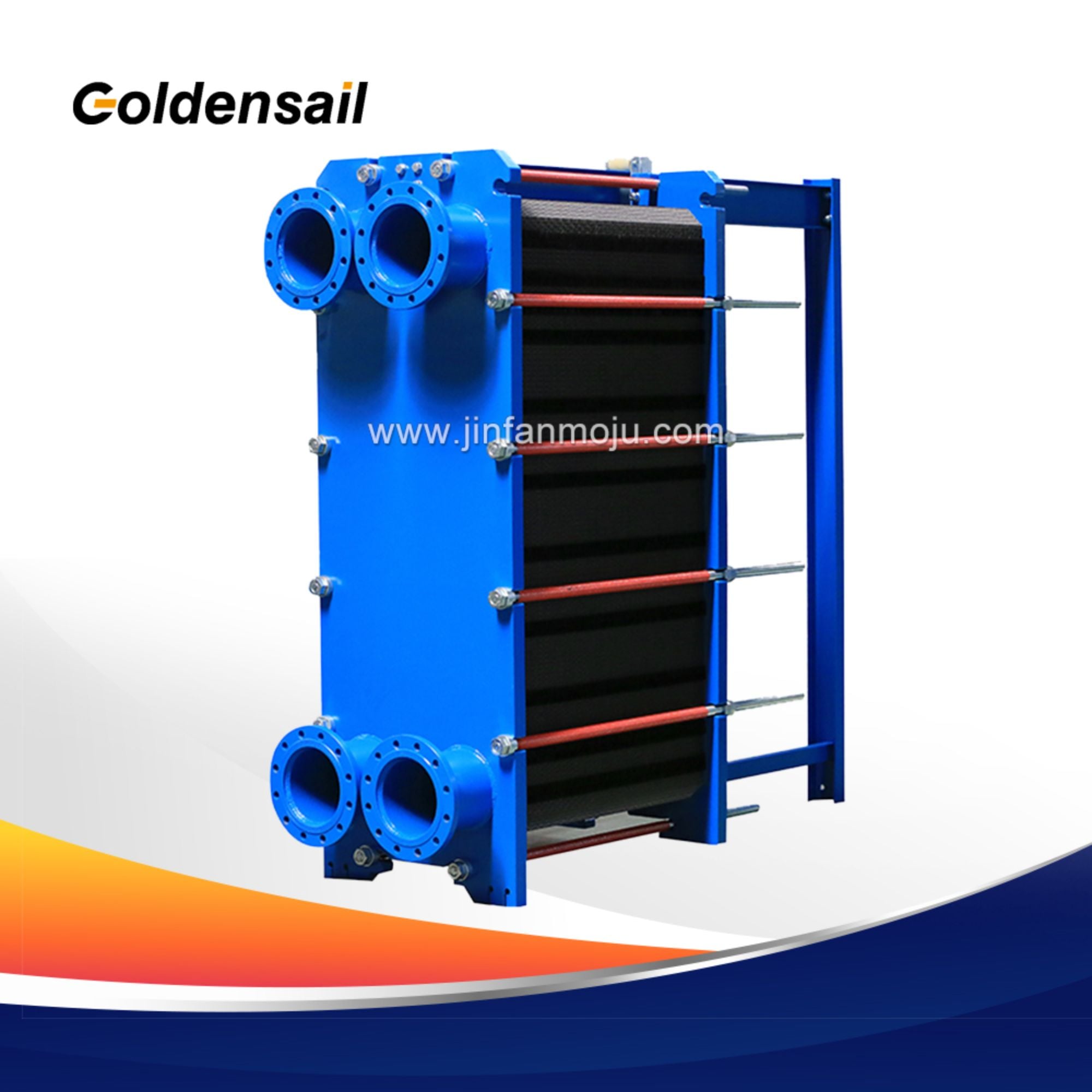
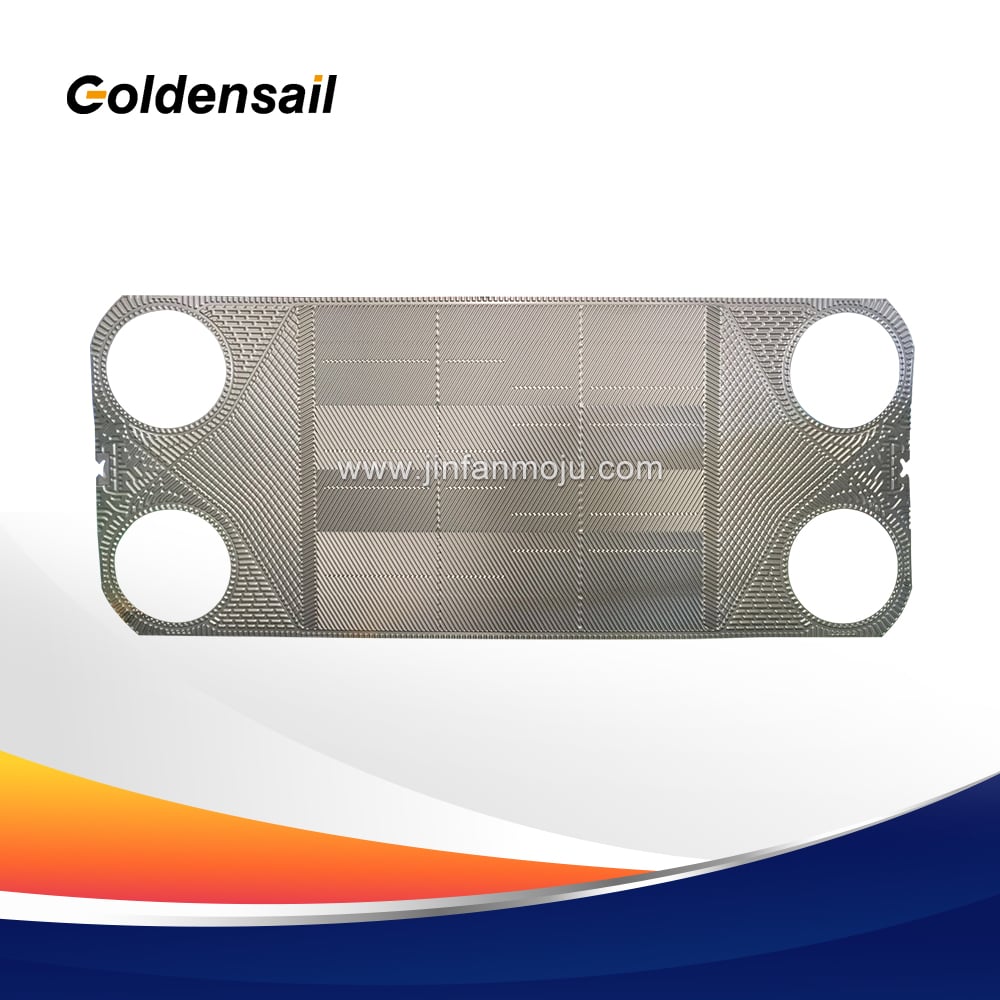
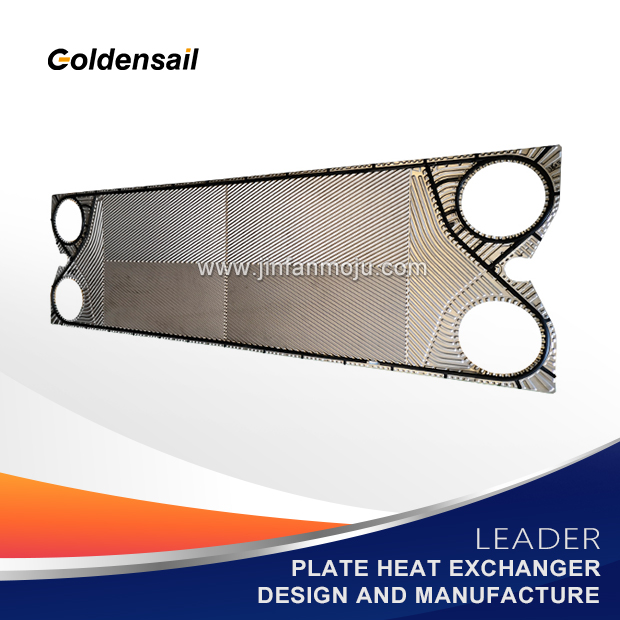
Wide-gap Plate Heat Exchangers feature wider fluid channels between plates, effectively addressing the issues of clogging and high pressure drop—common challenges when conventional plate heat exchangers are used to process media that are highly viscous, contain fibers or particles, or are prone to fouling. By "trading space for unimpeded flow," these exchangers retain the compact structure and high heat-transfer efficiency of standard plate heat exchangers while significantly broadening the scope of their application.
A Wide Gap Plate Heat Exchanger is designed with wider flow channels to accommodate fluids containing fibers, suspended solids, and other fouling-prone materials.
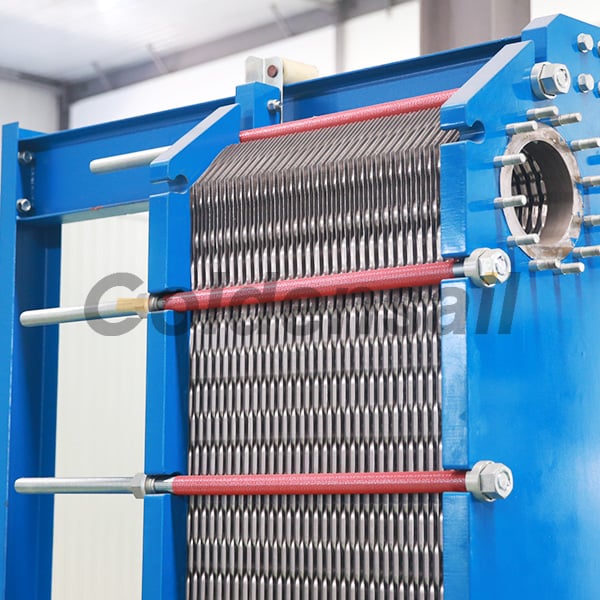
How the structure differs from a standard plate pack
A conventional PHE presses a chevron corrugation into every plate and lets the plates nest against each other at thousands of contact points, which locks the gap at roughly 2–4 mm. A wide gap pattern cuts most of those contact points back to the plate edge and presses the corrugation deeper, so the same frame carries a channel of 10 mm and more.
Core design features
Deep, open corrugation, support points moved out of the flow path, and an inlet distribution zone sized for solids rather than for clean liquids. Some patterns are contactless, others use single-sided contact, where only one plate in a pair carries support studs.
Media it is built for
Pulp and paper stock, sugar mixed juice and molasses, distillery stillage, wastewater sludge, fruit pulp, starch and mineral slurries — fluids that would blind a 3 mm channel within days.
The channel is formed by two adjacent plates sealed around the perimeter by a gasket. Its depth is set by the corrugation depth, the plate thickness and the way the two plates support each other. In a standard pack the plates touch at the bottom of every chevron, so the gap cannot exceed a few millimeters no matter how large the plate is.
A wide gap plate is pressed differently. The chevron angle is opened up, the corrugation is deeper, and the support points are reduced or removed, so the plates no longer define the gap by mutual contact — they are held apart by the gasket and the frame. That is what allows one nominal plate size to run a 10 mm channel instead of 3 mm. The plate itself stays thin, usually 0.5–1.0 mm, because the corrugation still provides the stiffness.
Hot and cold media flow in alternate channels and never mix. Heat crosses the plate wall by conduction, then transfers into the colder fluid through the boundary layer on the other side. Because the wall is thin stainless or alloy, its resistance is small compared with the two film coefficients, and the design effort goes into those films rather than into the metal.
The chevron pattern does two jobs at once: it keeps the fluid turbulent at low velocity, and it gives the plate the mechanical strength to resist the pressure difference between channels. In a wide channel the velocity and the wall shear are lower than in a narrow one at the same flow rate, so the coefficient on that side drops. This is why wide gap units are normally built asymmetrically — the wide channel is put on the dirty side only, while the clean side keeps a standard chevron channel and a normal gap. The overall U value then stays close to a standard pack, and the extra surface area is paid for on one side instead of two.
Fluid enters through the port, crosses the distribution zone and spreads across the full plate width before it reaches the heat transfer area. In a narrow plate that zone is a set of small chevrons that a single bundle of fiber can plug; in a wide gap plate the inlet area is larger and the first corrugation is deeper. Distribution matters as much as channel depth: a plate with a 10 mm channel and a tight inlet still blocks at the port.
Velocity, pressure drop and fouling are linked. Low velocity means low shear stress at the wall, and low shear stress means deposits stay where they land. Fibers and suspended solids also change the picture inside the channel: long fibers rotate and align with the flow in an open channel, but in a narrow one they bridge between contact points and build a mat that the flow cannot remove. A wide gap design accepts that the fluid will be slow and instead removes the geometry that traps it. Pressure drop across the pack is typically a fraction of a standard unit, which saves pump power but does not make the exchanger self-cleaning; minimum velocity, flushing routine and periodic cleaning remain part of the operating envelope.
The two designs differ in one geometric decision — how much space to leave between plates — and almost every other difference follows from it.
| Comparison | Standard PHE | Wide Gap PHE |
|---|---|---|
| Flow channel | Narrower | Wider |
| Fiber handling | More limited | Better suited |
| Suspended solids | Higher blockage risk | Improved passage capability |
| Fouling tendency | Depends on fluid | Designed for fouling-prone fluids |
| Typical applications | Clean fluids | Fibrous and particle-containing fluids |
| Heat transfer | Generally higher for comparable conditions | Requires application-specific design |
| Neither design is better in general: the channel has to match the fluid, not the other way round. | ||
Read the table as a split of duties rather than a ranking. A standard plate pack is the more efficient and cheaper answer for clean, low-fouling duty such as tower water, glycol loops, district heating or pasteurization, where the narrow channel produces a high coefficient and a close approach temperature. The wide gap unit is the better answer when the fluid carries what the channel cannot pass. Specifying a wide gap pattern for clean duty spends surface area and money for nothing; specifying a standard pack for a fibrous duty buys a cleaning schedule, a spares budget and unplanned downtime.
The five advantages on the left are the reason the pattern exists. The five on the right are equally real, and they are the reason a wide gap plate is not the default choice for every duty.
| Advantages | Disadvantages |
|---|---|
| Wider flow channels — open paths of 10 mm and above instead of 2–4 mm, with contact points kept out of the flow. | Lower heat transfer coefficient on the wide side at the same flow rate, because velocity and wall shear are lower. |
| Reduced clogging risk — fibers align with the flow instead of bridging, and particles smaller than the channel pass through. | More surface area for the same duty, which raises the capital cost of the plate pack and the frame that carries it. |
| Easier maintenance — long intervals between openings, less gasket handling and less mechanical cleaning damage. | Larger and heavier unit than a standard exchanger sized for the same heat load, which matters in retrofit work. |
| Compact heat transfer design — still a fraction of the footprint and weight of a shell-and-tube of equal duty. | Pressure and temperature limits in the gasketed version, and a gasket choice that narrows the list of fluids the unit can take. |
| Flexible material selection — 304/316L, 904L, 254SMO, titanium and nickel alloys, with NBR, EPDM, HNBR or PTFE gaskets. | Non-standard plate pattern — replacement plates must be pressed to the original pattern, so spares cannot be sourced from any supplier. |
The efficiency penalty is the one buyers notice first, and it is worth being precise about it. A wide channel does not lose heat transfer because the plate is badly made; it loses it because the same volumetric flow moves more slowly through a larger cross-section, so the boundary layer on that side is thicker. The honest answer is not to claim the penalty away, but to stop paying it twice: put the wide channel only on the side that needs it, and let the clean side run a normal chevron gap at normal velocity.
The footprint and cost penalties follow from the area. To reach the same duty at a lower coefficient, the pack needs more plates or a taller plate, and the frame has to be sized for both. Compared with a standard PHE of equal duty the difference is visible; compared with the shell-and-tube or the open trough that a fibrous duty usually replaces, the wide gap plate is still the smaller and cheaper machine.
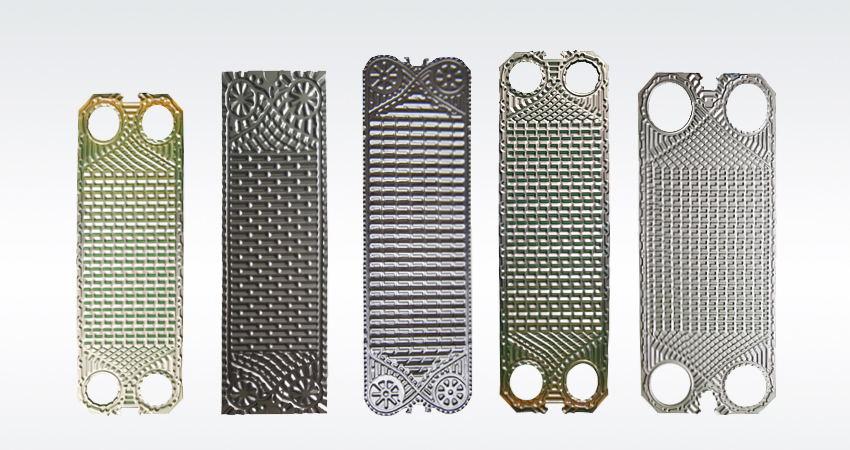
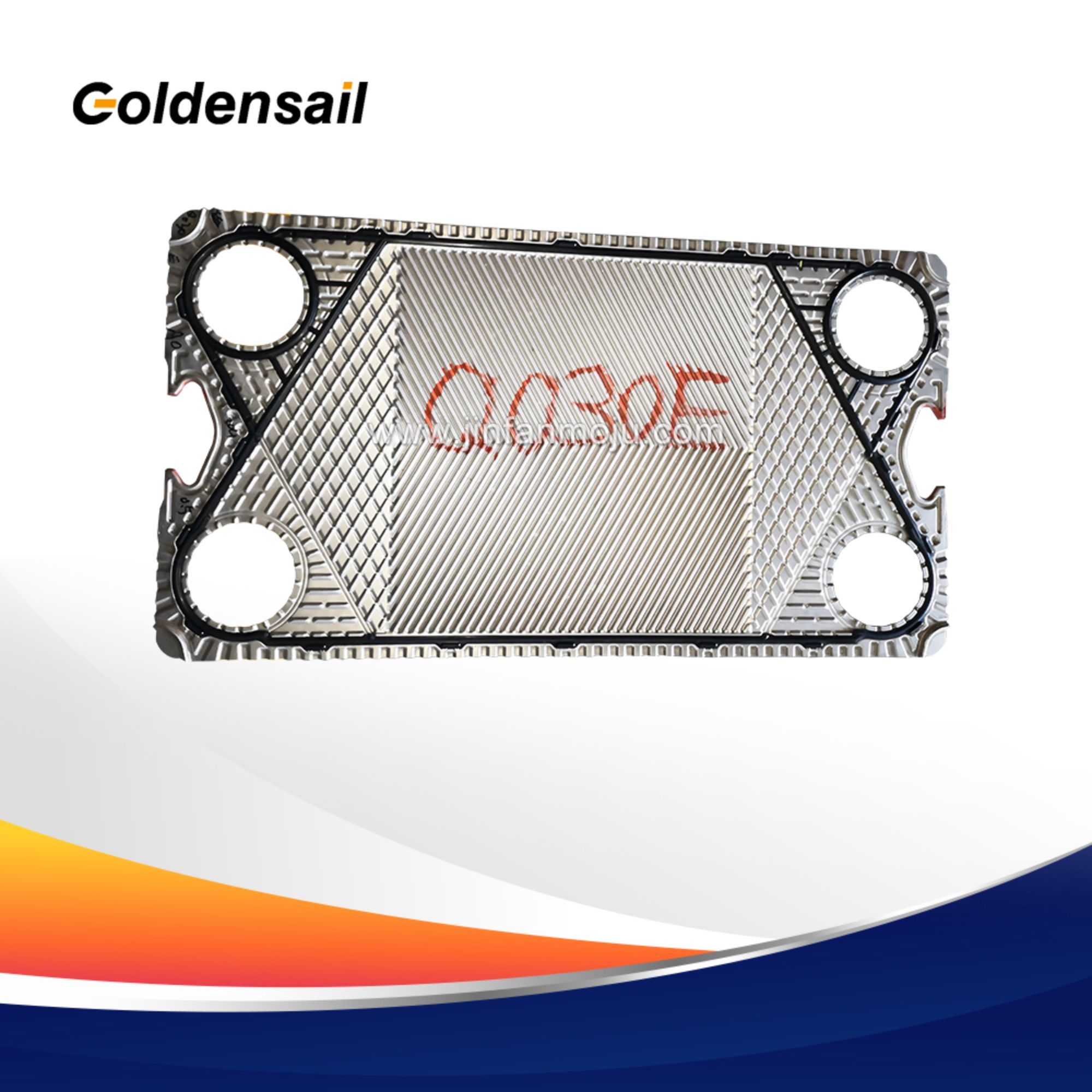
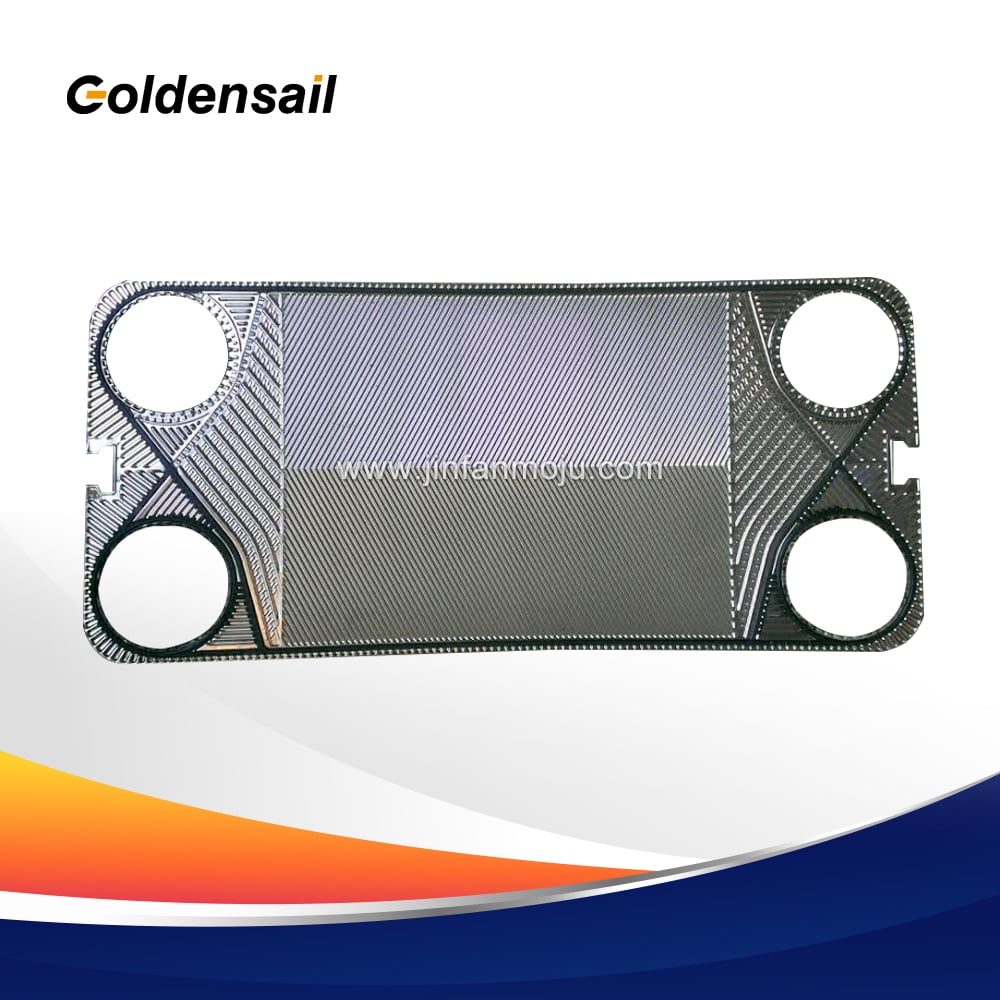
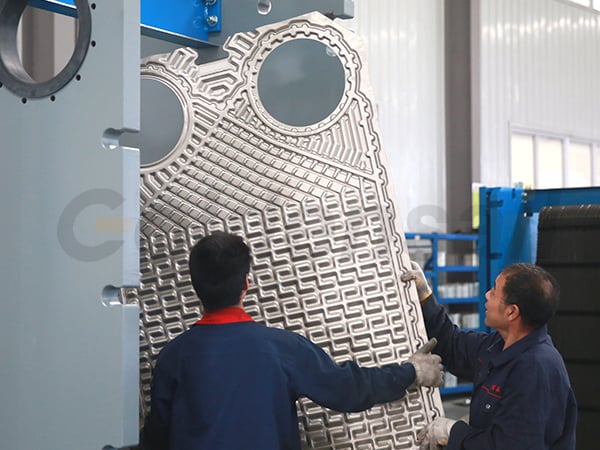
The corrugation on the right of the image is pressed deeper and flatter than the standard chevron beside it. Fewer contact points mean a more open path, but also less inter-plate support, so the plate has to be pressed in a heavier gauge or supported at the edges. That trade is settled at the design stage: depth against area, and area against cost.
Get in touch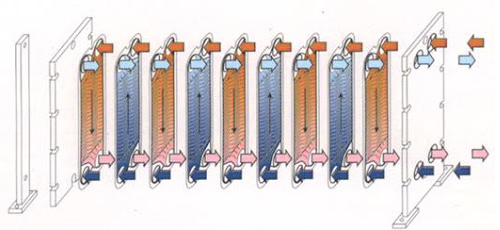
Alternating channels give the counter-current path that makes a close approach possible, but every additional pass adds ports, turns and pressure loss. On a fouling duty the pass count is usually kept low so the velocity stays usable and the plate pack stays openable, which is another reason a wide gap unit is rarely a one-for-one swap for a standard pack.
Get in touchWhere JINFAN builds these units, the disadvantages are handled in the selection rather than argued away. An asymmetric plate pack puts the wide channel on the dirty side and a standard chevron on the clean side, so the surface penalty appears once instead of twice. Plates are pressed in-house from JINFAN’s own moulds, which keeps special patterns and replacement plates available instead of tying the customer to a third-party tooling cost. Where pressure or temperature rules out a gasket, the same wide channel is built as a semi-welded or fully welded cassette. And because the pattern drawings stay with the project, replacement plates and gaskets can be pressed to the original geometry years later.
The same four duties come up again and again. In each of them the fluid is not dirty in the sense of being contaminated — it is simply carrying solid material that a standard plate pack was never shaped to pass.
Mixed juice, limed juice, molasses and syrups carry bagasse fiber, sand and crystallized sugar, and they are viscous enough that a narrow channel runs at a low Reynolds number. Heating surfaces also scale quickly once the juice is hot. A wide channel passes the fiber, keeps the velocity usable at the flow the process allows, and gives the operator a longer window between caustic washes.
Black liquor, white water, stock and filtrates carry wood fiber, fillers, pitch and fines. Fiber is the difficult part: in a 3 mm channel it wraps around the contact points and mats into a felt that blinds the plate progressively rather than suddenly. An open channel lets the fiber travel through, and the lower pressure drop suits the large volumes these mills circulate.
Digester feed, return activated sludge, centrate and industrial effluent carry suspended solids, biological flocs and grit. The fouling is a mixture of settling and biological growth, so the design has to keep the channel open and the unit accessible for flushing. Wide gap plates are also used ahead of digesters and in sludge heating, where a standard pack would need opening far more often than the maintenance team can support.
Fruit pulp, juice with pulp, tomato products, starch slurries and fermentation broths combine particulates with viscosity and a hygiene requirement. The wide channel handles the solids; the sanitary execution — sanitary gaskets, crevice-free ports and a cleanable frame — handles the microbiology. Units are normally specified for CIP and for the cleaning chemistry the plant already uses.
Selection starts from the fluid, not from the duty. The eight parameters below are the ones that change the answer; everything else — frame size, connection orientation, documentation — follows from them.
| Parameter | Why It Matters |
|---|---|
| Fluid Type | Decides whether a wide channel is needed at all: fibers, pulp, crystals and polymer slurries behave nothing like clean water, and each one fouls in its own way. |
| Solid Content | The mass fraction of solids drives blockage risk and cleaning interval more strongly than particle size alone, and it sets the realistic minimum velocity. |
| Particle Size | Compared against the channel depth, it shows whether a particle passes freely, passes with risk, or bridges at the inlet and between plates. |
| Flow Rate | With the channel cross-section it sets velocity, and velocity sets both the heat transfer coefficient and the scouring effect that keeps the plate clean. |
| Inlet / Outlet Temperature | Needed to calculate the heat load, to check the approach temperature the duty allows, and to stay inside the gasket’s temperature limit. |
| Operating Pressure | Sets the frame class and decides whether a gasketed unit is acceptable at all, or whether a semi-welded or welded cassette is required. |
| Pressure Drop | The allowable drop on each side limits plate count, pass arrangement and channel depth — and on a fouling duty a very generous allowance is not automatically an advantage. |
| Material Compatibility | Chloride level, pH and temperature decide the plate alloy and the gasket elastomer, and the solids decide whether abrasion resistance matters. |
A wider flow channel does not automatically guarantee clog-free operation. Channel geometry, particle size, fiber characteristics, flow velocity, and pressure drop must all be considered during equipment selection.
JINFAN is a plate heat exchanger manufacturer based in Tianjin, China, and presses its own plates, builds its own frames and assembles the units in one plant. That matters for a wide gap project more than for a standard one, because the plate pattern is the part that has to be specified, pressed and kept available for the life of the exchanger.
Wide gap plate heat exchanger manufacturing capability
Plate pressing, frame fabrication, gasket production, assembly and pressure testing are carried out in-house, so a special pattern is a production decision rather than an outsourced tooling project.
Different plate designs and channel configurations
Deep-corrugation wide gap patterns, contactless and single-sided contact variants, and asymmetric packs that combine a wide dirty side with a standard chevron clean side. Single-pass and multi-pass arrangements are both available.
Stainless steel and special alloy material options
304 and 316L as standard, with 904L, 254SMO, titanium and nickel alloys for chloride or acid service, matched to NBR, EPDM, HNBR or PTFE gaskets.
Replacement plates and gaskets
Plates are pressed to the original pattern from the drawing or from a sample plate, so an existing wide gap unit can be re-plated or re-gasketed without changing the frame.
Engineering selection support
Sizing from the fluid data you already have, with the resulting pressure drop checked against the allowable drop before the unit is quoted — the part of the job where a wide gap design is won or lost.
Customized heat exchanger solutions
Frame size, connection orientation, nozzle size and materials are set against the installation, and units can be supplied with the documentation, testing and spare parts package the project requires.
JINFAN WIDE GAP HEAT EXCHANGERS
Tell us your fluid characteristics, flow rate, operating temperatures, pressure, and solid content. Our engineering team can help evaluate the suitable plate design, channel configuration, and material selection.
 EN
 AR
 FR
 DE
 PT
 RU