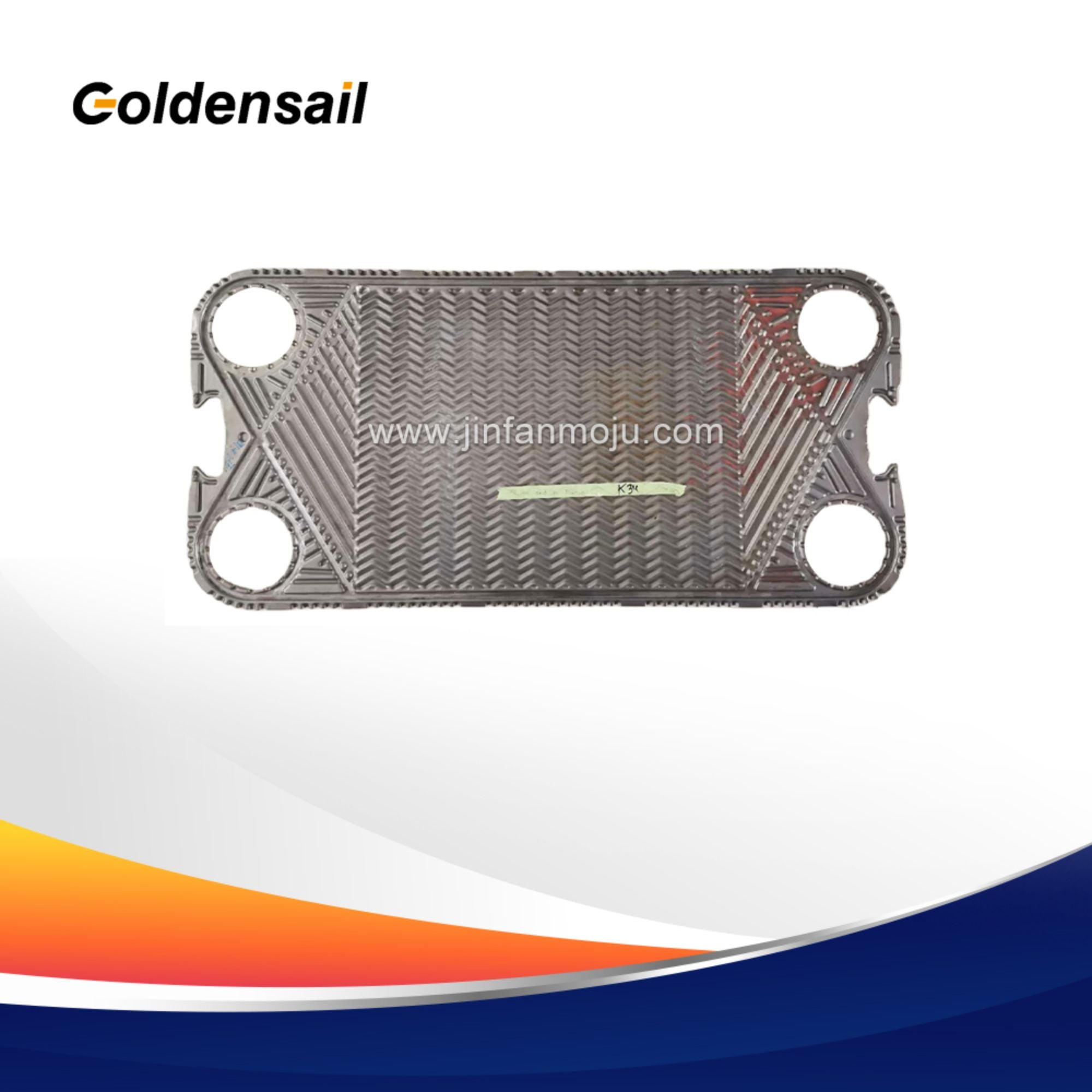
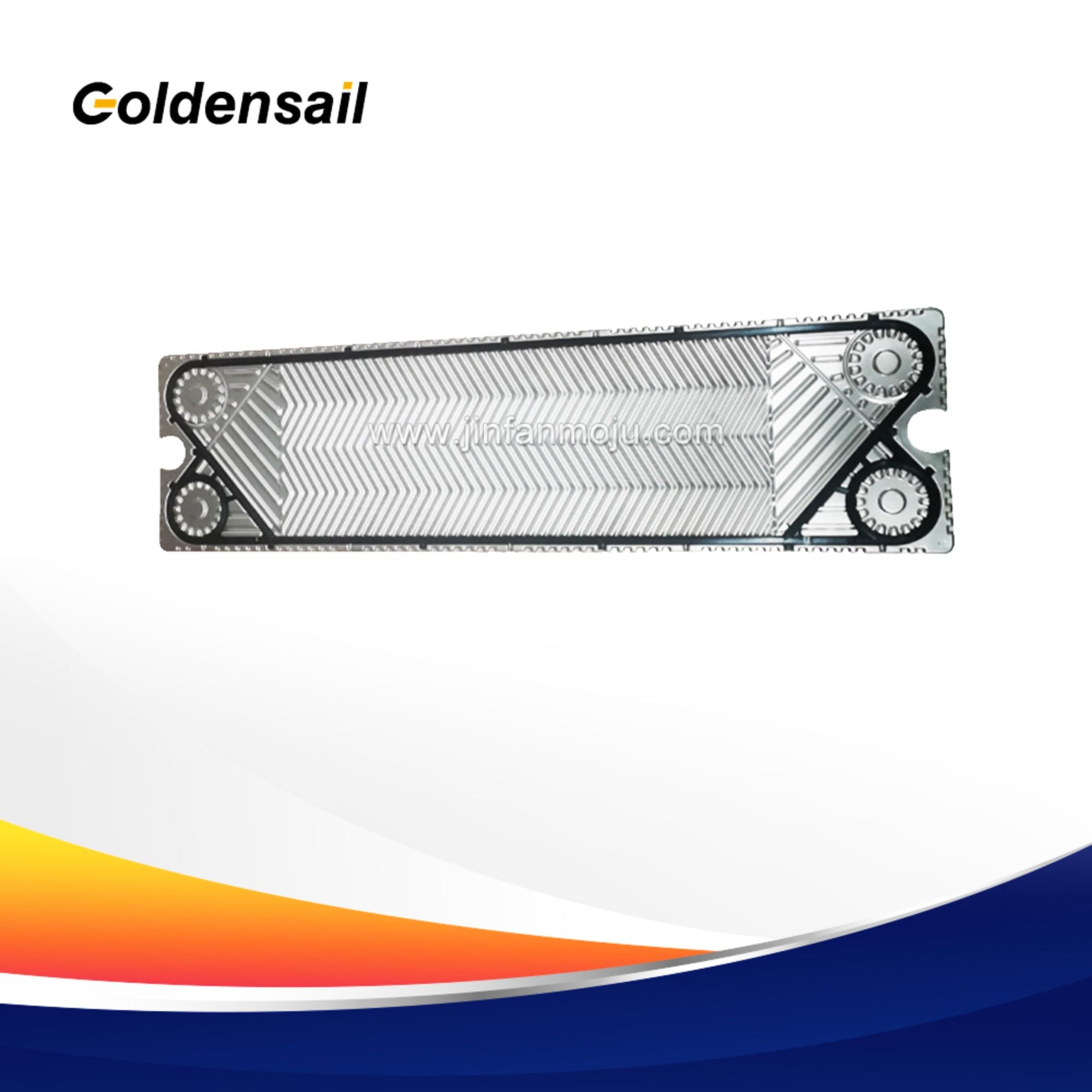
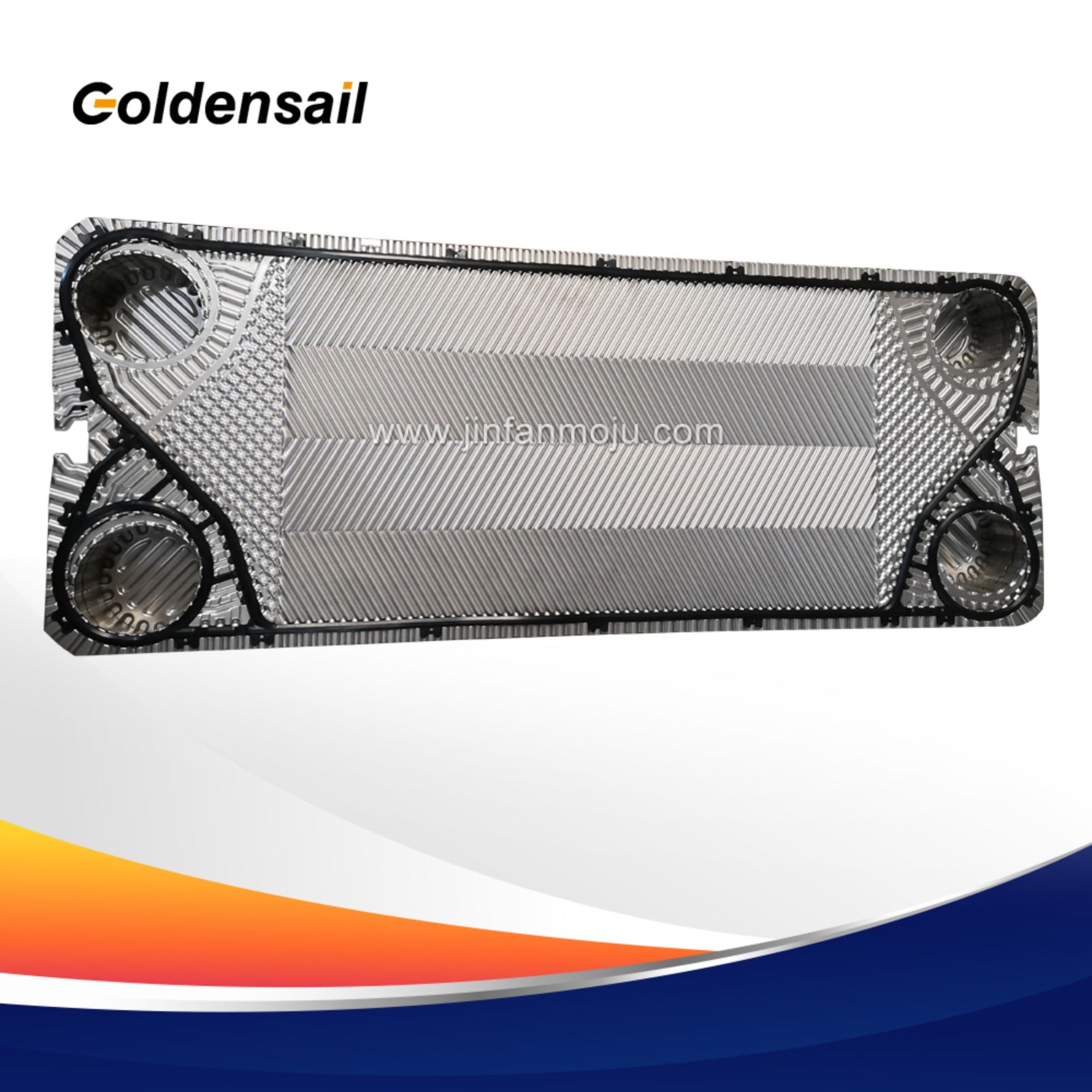
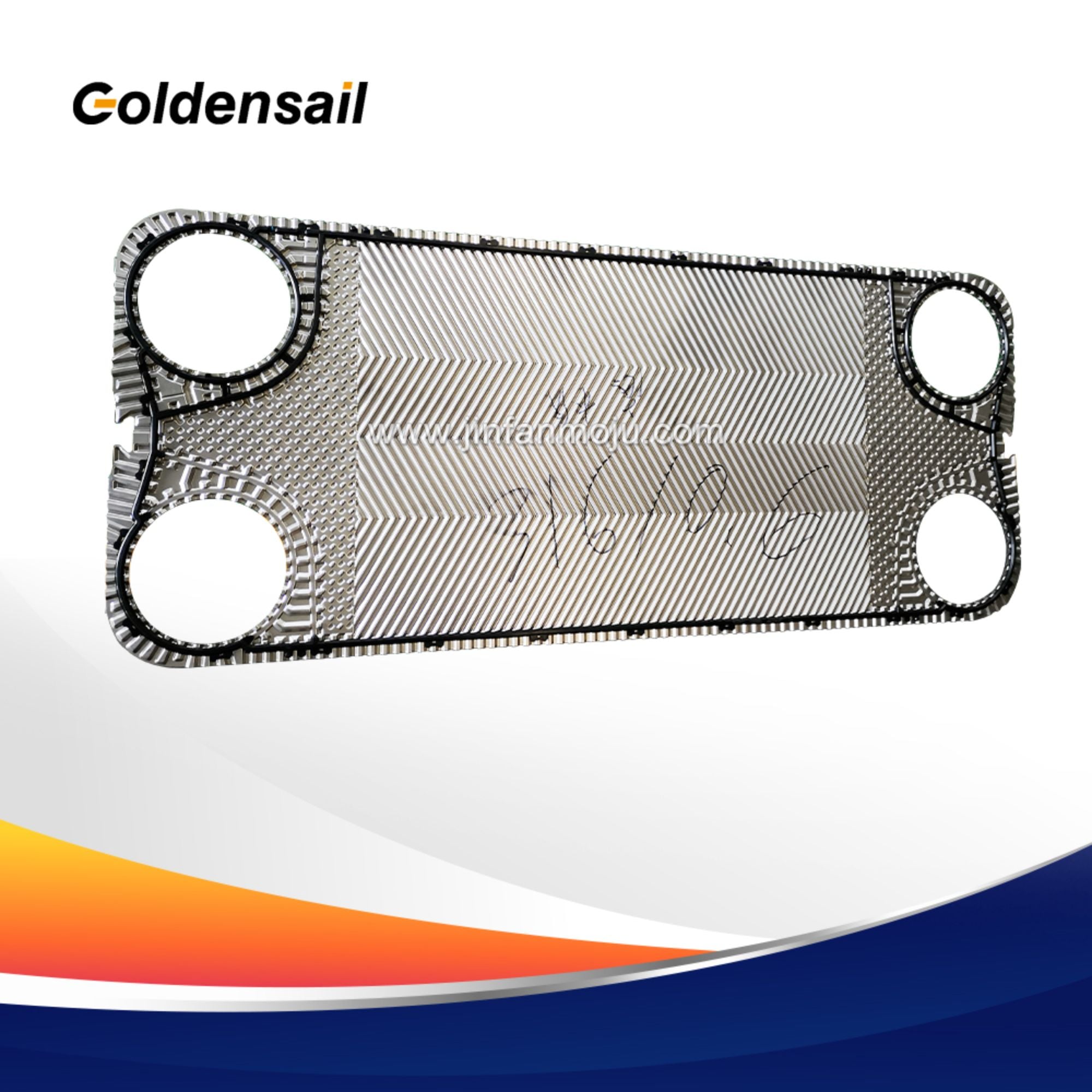
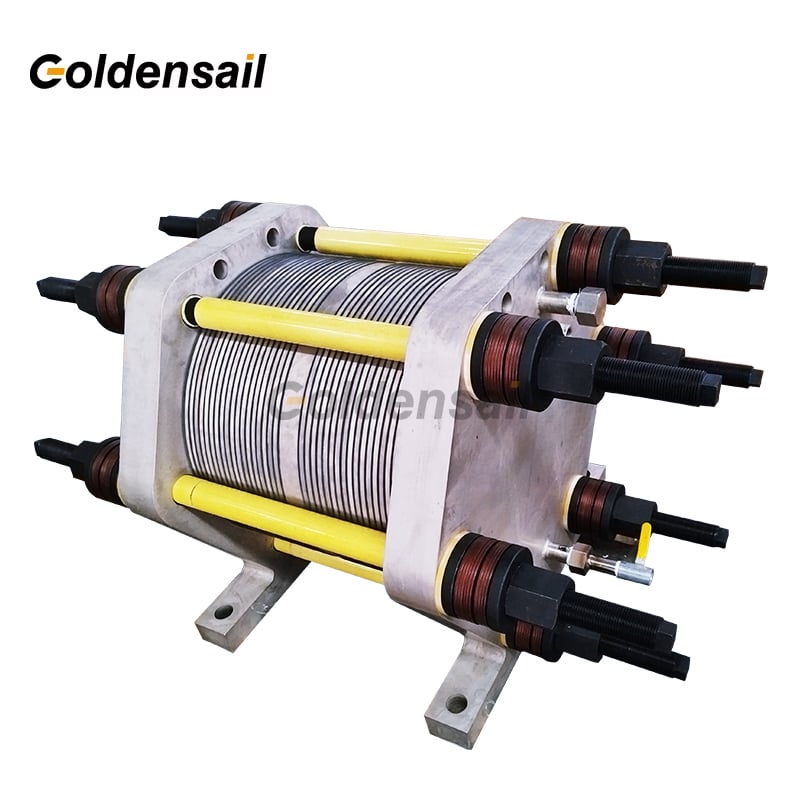
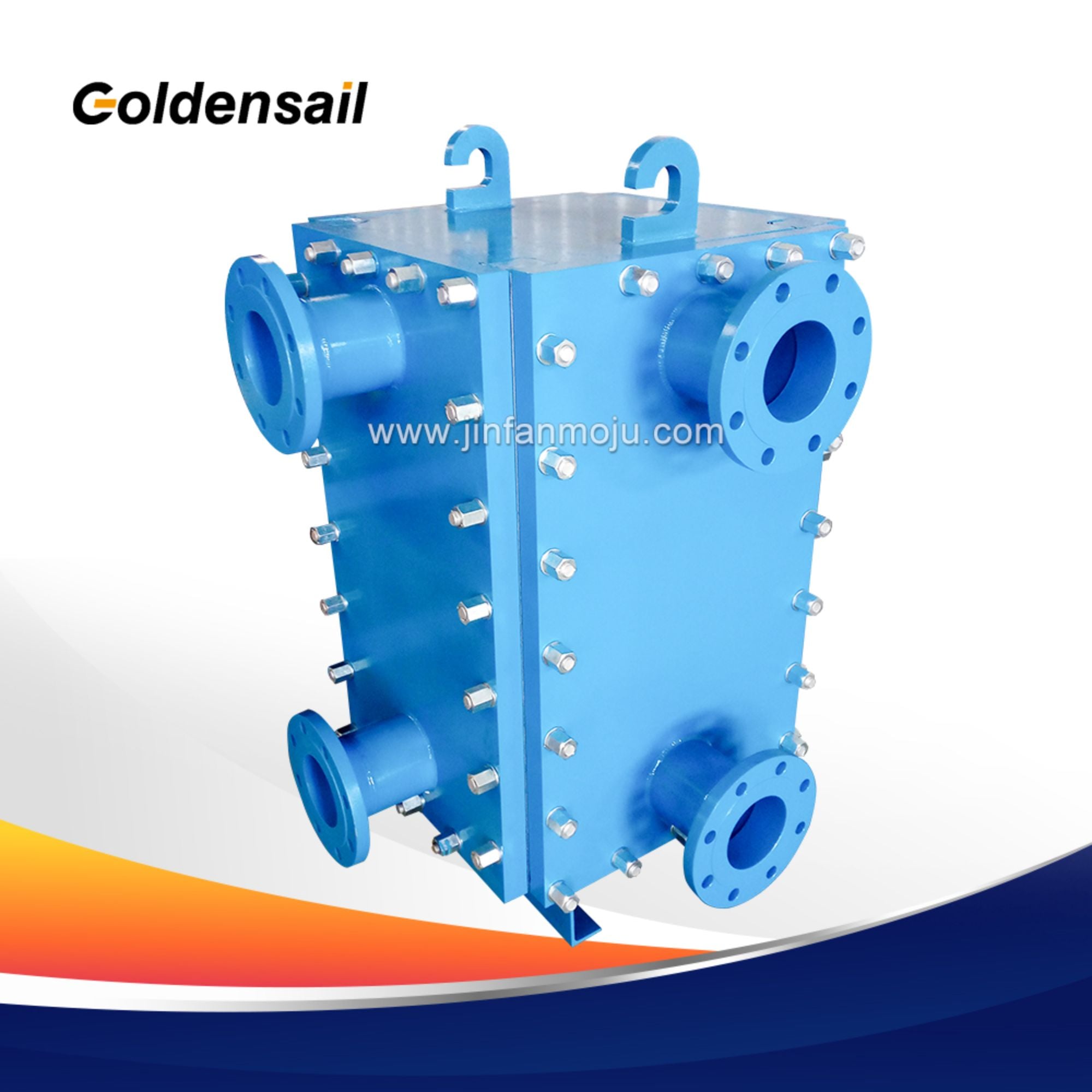
Plate and shell heat exchangers combine the structural features of both shell-and-tube and plate heat exchangers. They primarily consist of two parts: a plate-and-tube bundle and a shell. The core heat transfer element—the plate tubes—is formed by tightly welding pairs of cold-pressed metal strips along their edges, creating a plate-and-tube unit containing multiple flat flow channels. Subsequently, multiple plate tubes of varying widths are arranged in a specific order and fixed at both ends with metal strips, forming a tube sheet and ultimately a robust plate-and-tube bundle. This bundle is then assembled within a circular shell, thus completing the plate and shell heat exchanger.
This unique structural design allows it to possess both the high-efficiency heat transfer advantages of plate heat exchangers and the high-temperature and high-pressure resistance characteristics of shell-and-tube heat exchangers, making it widely used in numerous industrial fields such as chemical, petroleum refining, pharmaceutical, food processing, and HVAC.
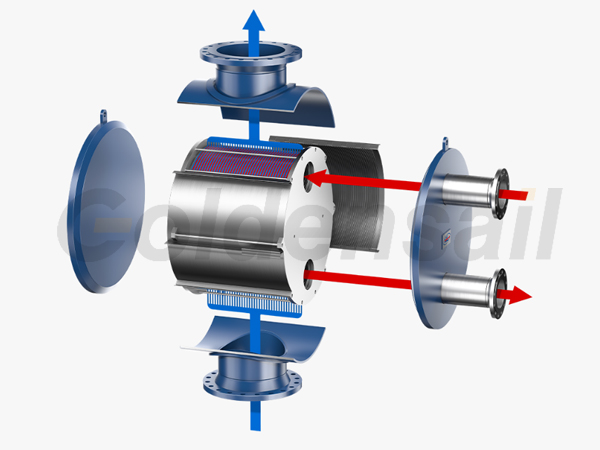
The working principle of a plate and shell heat exchanger is based on the heat exchange between two fluids in their respective independent channels.
Plate-side flow: Fluid A flows inside flat plate tubes welded together from pairs of plates.
Shell-side flow: Fluid B flows inside the shell, in the gaps between the plate tube bundles.
When the hot and cold fluids flow through the plate and shell sides respectively, heat is rapidly transferred from the high-temperature fluid to the low-temperature fluid through the thin metal plates. To achieve optimal heat exchange, the fluids in the plate bundles are typically designed to flow in a pure counter-current manner, meaning the overall flow directions of the two fluids are opposite. This helps to obtain the maximum average temperature difference, thus achieving a minimum end temperature difference of up to 1°C.
Plate and shell heat exchangers are favored in harsh industrial conditions due to a series of significant advantages:
2.1 Extremely high heat transfer efficiency
The use of thin-walled corrugated plates as heat transfer elements gives plate evaporators a notably higher heat transfer coefficient compared to conventional shell-and-tube heat exchangers. In practice, heat transfer efficiency is roughly twice that of shell-and-tube units, and can reach 2–4 times higher under certain operating conditions. The corrugated plate geometry generates a "static stirring" effect that induces turbulence even at low Reynolds numbers, which substantially improves heat recovery performance.
2.2 Strong temperature and pressure resistance
Unlike detachable plate heat exchangers that depend on rubber gaskets for sealing, plate-and-shell heat exchangers adopt a fully welded construction with no gaskets, allowing them to handle far higher temperatures and pressures. Standard units can operate at temperatures up to 800–900°C and pressures up to 6.3 MPa, while specially designed configurations can withstand pressures as high as 35 MPa.
2.3 Compact structure and small footprint
Because of their high thermal efficiency, plate-and-shell heat exchangers require considerably less heat exchange area than shell-and-tube units to achieve the same heat transfer load. This results in equipment that is both smaller and lighter. The reduced size not only saves installation space but also lowers the cost of supporting structures and foundations, which can be a meaningful advantage in facilities where floor space is limited.
2.4 Anti-fouling and easy maintenance
The flat flow channels inside the plate tubes and the complex flow channels in the shell side result in high fluid velocities. The high turbulence state provides excellent self-cleaning properties, effectively slowing down fouling deposition. Furthermore, many plate-and-shell heat exchangers feature removable tube bundles, facilitating mechanical or chemical cleaning and significantly extending the equipment's operating cycle.
2.5 Low operating costs
Highly efficient heat transfer translates to superior heat recovery, significantly reducing furnace load and energy consumption. Simultaneously, optimized flow channel design minimizes fluid pressure drop, thereby reducing pump and fan operating energy consumption.
| Advantage Dimension | Performance Description | Data & Quantitative Indicators |
|---|---|---|
| Heat Transfer Efficiency | High heat transfer coefficient, approximately twice that of shell and tube heat exchangers. | 2–4 times higher than traditional equipment |
| High Temperature & Pressure Resistance | Fully welded structure designed for harsh operating conditions with high temperature and pressure. | Temperature ≤ 900°C, Pressure ≤ 35 MPa |
| Compact Structure | Small footprint and lightweight design, significantly reducing installation space and infrastructure cost. | Weight is about 43% of a shell and tube heat exchanger |
| Easy Maintenance | High flow velocity reduces fouling; plate bundle can be removed for cleaning. | Long operating cycle and shorter maintenance downtime |
| Economic Operation | High heat recovery efficiency and low pressure drop help reduce energy consumption. | Temperature difference as low as 1–3°C, pressure drop ≤ 80 kPa |
3.1 Petroleum Refining and Petrochemicals
Petrochemical is one of the core application areas for plate-and-shell heat exchangers. They are widely used in catalytic reforming, aromatics disproportionation, isomerization, and hydrogenation units as critical feed heat exchangers. In these units, they efficiently recover the high heat from reaction products to preheat the reaction feed, thereby significantly reducing furnace load and lowering energy consumption and investment costs. Additionally, they are used as overhead condensers, amine heat exchangers, and media cooling in fractionation towers.
3.2 Coal Chemical and Energy Industries
In coal-to-oil plants, plate-and-shell heat exchangers are adapted into circulating heat exchange separators that combine efficient heat transfer with precise gas-liquid separation in a single unit, cutting down process complexity and reducing the overall footprint. In methanol and ethylene glycol production, they serve as gas-to-gas heat exchangers, recovering heat from syngas leaving the reactor tower. These units are also found in district heating systems, cogeneration plants, LNG cold energy recovery, and ORC-based low-temperature power generation.
3.3 Food and Pharmaceutical Industries
Due to their structural characteristics that meet stringent hygiene requirements, high heat transfer efficiency, and short material residence time, plate-and-shell heat exchangers are widely used in food and pharmaceutical processing industries. For example, they are used in the heating and cooling processes of vegetable oils, and in condensation, demisting, and solvent recovery stages in pharmaceutical processes.
3.4 General Industry and Utilities
In industries such as steel and papermaking, they can be used for process fluid cooling and heat recovery. In refinery utilities, plate heat exchangers are commonly used as heat exchangers between closed-loop cooling water systems and seawater/lake water. Their corrosion-resistant materials and high-efficiency heat exchange capabilities enable them to handle high flow rates and small temperature differences. They are also capable of handling process media containing suspended solid particles or fibers.
Plate heat exchangers, through ingenious structural design, successfully combine the advantages of plate and shell-and-tube heat exchangers, providing excellent solutions for high-temperature, high-pressure, high-volume, and high-energy-consumption industrial scenarios. Although their manufacturing process is complex and welding requirements are high, potentially leading to relatively high initial investment, their energy-saving benefits, stability, and long-term operational reliability make them a key piece of equipment for modern large-scale industrial plants to achieve energy conservation, emission reduction, and improved economic efficiency. With continuous advancements in manufacturing technology and the deepening of domestic production, plate heat exchangers will undoubtedly play an even more important role in a wider range of industrial sectors.
 EN
EN
 AR
AR
 FR
FR
 DE
DE
 PT
PT
 RU
RU